























































































Understanding the Physics of Sound in Virtual Reality
The science of sound in virtual reality (VR) hinges on replicating real-world acoustics. This involves head-related transfer functions (HRTFs), precision in sound wave propagation, and real-time spatial audio rendering. By simulating how sound interacts with environments, VR achieves realism, enhancing user engagement. As VR technology evolves, these scientific principles are crucial, offering more immersive experiences and paving the way for innovations in entertainment and education.

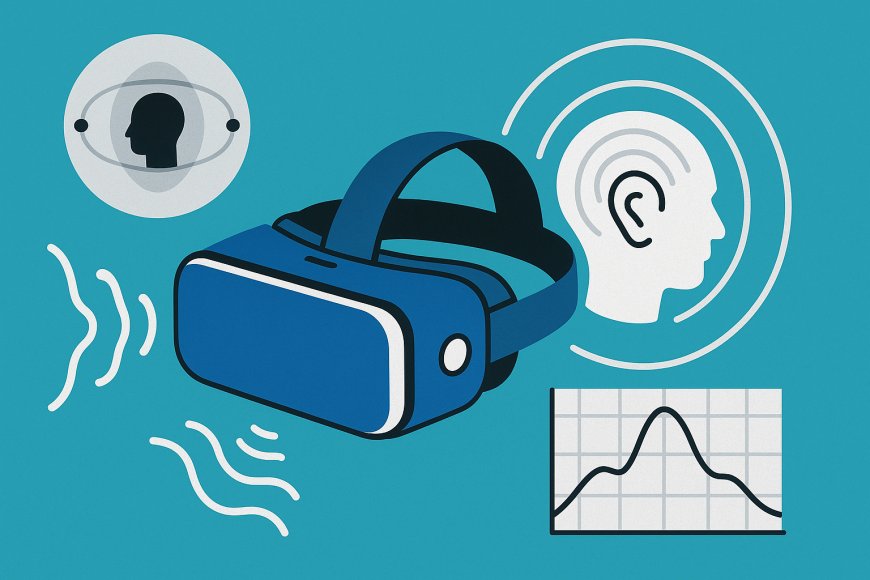
In the realm of virtual reality (VR), visual immersion often takes center stage. Yet, the auditory component is equally crucial in crafting a truly immersive experience. The physics of sound in VR is a complex interplay of acoustics, psychoacoustics, and computational modeling, striving to replicate the intricate ways sound interacts with the environment and the human auditory system.


Consider a scenario where a player navigates through a virtual rainforest in a VR game. The rustling of leaves, distant animal calls, and the gentle trickle of a stream must not only be heard but felt as if they were occurring in the physical world. Achieving this level of realism requires a deep understanding of sound propagation and perception.
Sound, unlike light, is a mechanical wave that travels through air, causing molecules to vibrate and eventually reach the eardrum. In VR, replicating this phenomenon involves creating virtual sources of sound and simulating how sound waves would travel through a virtual space, a task that demands both precision and computational power.
Head-Related Transfer Functions: The Key to Localization
Central to the auditory realism in VR is the concept of Head-Related Transfer Functions (HRTFs). HRTFs describe how sound waves are filtered by the shape of the listener's outer ear, head, and torso before reaching the eardrum. This filtering process allows humans to determine the direction and distance of sound sources.
In a typical VR setup, developers measure or calculate HRTFs for each user, allowing the system to tailor sound delivery in a way that mimics natural hearing. This personalized auditory experience is crucial for convincing users of the spatial reality presented by VR.
Imagine a virtual concert where the sound of each instrument must appear to emanate from its actual location on stage. By employing HRTFs, developers can ensure that each note and beat is heard from the correct direction, enhancing the sense of presence and immersion.
However, obtaining accurate HRTFs presents challenges. Variability in ear shape and head size among users means that standard HRTFs might not suit everyone. Advances in machine learning and computational modeling are exploring adaptive algorithms that can dynamically adjust HRTFs in real time, offering a more universal solution.
The Complexity of Sound Wave Propagation
Beyond localization, VR sound must convincingly replicate how sound waves interact with virtual environments. This requires modeling reflections, diffractions, and absorptions of sound waves off virtual surfaces.
Consider a behavioral experiment in which volunteers navigate a virtual urban environment. Accurate sound modeling means capturing how traffic noise bounces off buildings or how a voice echoes in narrow alleyways. These auditory cues are essential for users to feel present and oriented within the virtual space.
Recent developments in computational acoustics have enabled more realistic sound propagation simulations. Techniques such as ray tracing and finite-difference time-domain methods are employed to calculate how sound waves travel and interact with objects in real-time.
These methods demand significant computational resources. Therefore, optimizing algorithms for efficient processing without sacrificing realism is an ongoing area of research, aiming to balance performance with immersive quality.
Real-Time Spatial Audio Rendering
The final piece of the VR sound puzzle is real-time spatial audio rendering. This involves dynamically adjusting audio output based on user movements within the VR environment, ensuring that audio cues remain consistent and convincing.
Imagine a user exploring an art gallery in VR. As they turn their head, the audio perspective must shift seamlessly, preserving the illusion of a stable sound stage. Real-time spatial audio rendering achieves this by continuously recalculating sound positions relative to the user's orientation and position.
This process requires high-speed processing and low-latency systems, as any delay can disrupt the illusion of reality. Advances in hardware and software are making it increasingly feasible to deliver such experiences, supporting VR's growing role in entertainment and education.
In a typical observational study, researchers might examine user engagement levels with and without spatial audio rendering. Results consistently indicate that immersive audio significantly enhances the perception of realism, underscoring its importance in VR applications.
As VR technology evolves, the science behind sound continues to push boundaries, offering new opportunities for creating richer, more engaging experiences. The fusion of acoustic physics and digital processing is not merely about enhancing entertainment; it extends to educational applications, therapy, and beyond, where the accurate replication of audio cues can transform user interaction and learning.
What's Your Reaction?