Reimagining Economic Indicators: The Subtleties of Financial Market Predictions
In recent years, the use of big data and machine learning has transformed the way economic indicators predict financial market trends. This article examines how new methodologies, including AI-driven algorithms and granular data analysis, are reshaping traditional economic forecasting models. It discusses the role of high-frequency data in capturing market sentiments and the impact of these innovations on investment strategies. By exploring these shifts, the article highlights the nuanced challenges and opportunities in improving the accuracy and reliability of economic predictions.

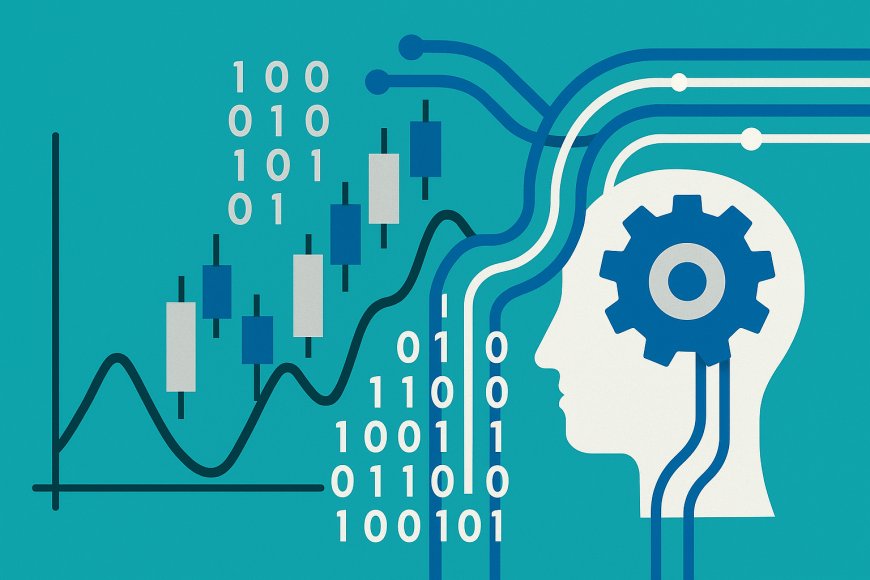
Economists often confront the challenge of predicting financial markets. Traditionally, they relied on static indicators such as GDP growth and unemployment rates. However, the dynamism of markets reveals the limitations of these approaches, especially in volatile conditions. A striking example is the 2008 financial crisis, where traditional models failed to foresee the impending collapse. In contrast, today's landscape is drastically shifted by big data and machine learning, offering more granular insights into market behavior.


In a typical financial analysis, machine learning algorithms sift through vast quantities of data, identifying patterns that were previously invisible. Consider a scenario where an investment firm utilizes AI to analyze real-time transaction data from global markets. By processing this high-frequency data, the firm predicts shifts in market sentiment far faster than conventional methods. These predictions are then used to inform trading strategies, adjusting portfolios dynamically in response to emerging trends. Such applications represent a quantum leap from traditional models, which often depended on backward-looking data, thus lagging behind current market movements.
Big Data and the Transformation of Economic Forecasting
The advent of big data has revolutionized economic forecasting. In conventional setups, analysts were constrained by the limited datasets typical of quarterly reports and historical trends. Now, the incorporation of high-frequency data streams—ranging from social media trends to transaction records—enables a more responsive forecasting model. A financial institution, for instance, might monitor social media platforms for sentiment analysis, gauging public reactions to economic policy changes or corporate earnings reports. Such data, when processed through sophisticated algorithms, can provide actionable insights into market directions.
Artificial Intelligence (AI) models excel in processing this data, transforming it into predictive analytics. By employing machine learning, these models continuously adapt, improving their predictions based on new data inputs. Unlike traditional econometric models, which are static and often prone to parameter misestimation, AI-driven forecasts are dynamic and iterative. They can adjust to the nuances of data in real-time, capturing the ebb and flow of market sentiment with unprecedented accuracy.
Consider a behavioral experiment where a financial consultancy develops a machine learning model trained on both structured and unstructured data. This model incorporates various factors, from interest rate changes to geopolitical events, providing a multifaceted perspective on potential market shifts. The resulting forecasts can anticipate movements with a precision that conventional models cannot match, offering clients a competitive advantage in market positioning.
The Role of Machine Learning in Refining Economic Indicators
Machine learning not only refines existing economic indicators but also creates new ones. In a typical setup, traditional indicators are enhanced through machine learning algorithms, which can identify subtle correlations and causal relationships that human analysts might overlook. Consider a scenario where a central bank employs AI to refine its inflation models. By integrating data from diverse sources such as retail sales, commodity prices, and international trade flows, the bank's models provide more nuanced inflation forecasts, informing monetary policy with greater efficacy.
Moreover, machine learning enables the creation of composite indicators—a synthesis of multiple economic variables into a single, more robust predictive tool. For example, a hedge fund might develop a 'market health' index that combines data from stock volatility, bond yields, and currency fluctuations. This index offers a holistic view of economic conditions, serving as a leading indicator for investment decisions.
This shift towards data-driven indicators represents a significant departure from traditional economic theory, which often relies on simplified assumptions about market behavior. In reality, markets are influenced by a complex interplay of factors, many of which are non-linear and interdependent. Machine learning's ability to model these complexities provides a more realistic framework for economic analysis, aligning theoretical models with empirical reality.
Implications for Investment Strategies
The integration of AI and big data into economic forecasting has profound implications for investment strategies. Investors equipped with these advanced predictive tools can better anticipate market shifts, optimizing their portfolio allocations accordingly. Consider a hedge fund that leverages AI to simulate multiple market scenarios, evaluating the potential impact of various macroeconomic and geopolitical events. The fund's strategies are continuously adjusted based on these simulations, ensuring resilience against market volatility.
Furthermore, AI-driven analytics democratize access to sophisticated economic insights, leveling the playing field between small investors and large institutions. By reducing the information asymmetry that traditionally favored large firms with extensive research resources, these technologies empower a broader spectrum of market participants.
Yet, the reliance on AI and big data is not without challenges. Issues such as data privacy, algorithmic biases, and the interpretability of complex models must be addressed to ensure ethical and effective application. Transparency in algorithm design and ongoing scrutiny are crucial to maintain trust and reliability in AI-driven economic analysis.
The future of economic forecasting lies in the continued integration of big data and machine learning. As these technologies evolve, they promise to further refine our understanding of market dynamics, offering more accurate and timely predictions. This evolution will undoubtedly reshape investment strategies, regulatory frameworks, and economic policymaking, heralding a new era of data-informed decision-making.
What's Your Reaction?