




















































































Teleology vs. Etiology: The Adlerian Approach to Overcoming Trauma
Explore the fundamental divergence between Adlerian teleology and Freudian etiology. This article explains how Adler's focus on future goals, rather than past traumas, offers a powerful tool for behavior change and overcoming adversity.

In the history of psychology, few intellectual divergences have been as foundational as the one between Sigmund Freud and Alfred Adler. Their disagreement was not about minor theoretical differences, but about the very direction from which human behavior should be understood. Freud looked backward. Adler looked forward. Between these two directions lies a fundamental question: Are we shaped by what happened to us, or by what we aim to become?


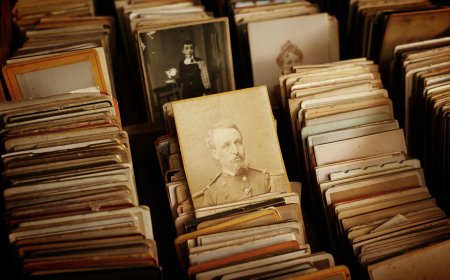
Freud’s framework was built on etiology—the study of causes. He believed that the roots of human behavior are buried in the past, particularly in early childhood experiences and unresolved trauma. According to this view, the psyche is constructed through layers of memory, repression, and conflict. To understand a person’s present struggles, one must excavate the past, uncover hidden wounds, and bring unconscious material into awareness. Healing, in this sense, is an act of discovery—an intellectual and emotional return to origins.
Adler rejected this orientation. He did not deny that the past exists, but he denied its authority as the decisive force. Instead, he introduced the concept of teleology—the study of goals. In Adler’s view, human behavior is not driven by what has happened, but by what a person is trying to achieve. The individual is not a passive product of past events, but an active agent moving toward a purpose, even if that purpose is not fully conscious.
This shift changes everything. Under an etiological lens, trauma becomes the explanation. Under a teleological lens, behavior becomes a strategy. What appears as a symptom is reinterpreted as a function. The question is no longer “What caused this?” but “What is this serving?”
Adler’s position is often misunderstood as a denial of trauma, but it is more precise to say that he deprioritized it. He believed that excessive focus on the past can become a form of psychological stagnation. When individuals anchor their identity in what happened to them, they risk losing the ability to redefine themselves. For Adler, the real power lies not in understanding the past, but in choosing a direction that reshapes the present.
This is where teleology becomes not just a theory, but a tool.
Consider a case of self-imposed isolation. An individual remains confined at home, reporting physical symptoms such as rapid heartbeat, shortness of breath, and agitation, attributing these experiences to childhood trauma. A Freudian approach would explore the origin of this trauma, seeking to uncover the emotional events that produced the current symptoms. Adler, however, would approach the situation differently.
He would ask: What purpose does this isolation serve?
This question reframes the entire situation. Isolation is no longer seen as a passive consequence, but as an active choice—conscious or unconscious—directed toward a goal. That goal may be self-protection, avoidance of judgment, escape from responsibility, or fear of failure. The symptoms, in this context, are not merely reactions. They are mechanisms that support the behavior.
From this perspective, Adler would guide the individual through a series of reflective inquiries. What are you avoiding by staying home? What situations feel threatening, and why? What kind of life are you moving toward by maintaining this pattern? These questions do not dismiss the past, but they refuse to let it define the future.
The next step is reconstruction.
If behavior is goal-oriented, then changing behavior requires changing goals. The individual is encouraged to identify new directions—developing social confidence, engaging gradually in external activities, building tolerance to discomfort, and redefining personal identity beyond fear. The focus shifts from explanation to movement. Progress is not measured by how well the past is understood, but by how effectively the present is reshaped.
This is the strength of teleology. It introduces agency.
Instead of being a product of trauma, the individual becomes a designer of direction. Instead of asking, “Why am I like this?” the question becomes, “Where am I going, and what must I change to get there?” This does not erase pain, but it prevents pain from becoming destiny.
At a broader level, this distinction reflects two different philosophies of human nature. Freud’s model emphasizes depth, complexity, and the hidden forces that shape behavior. It provides powerful tools for understanding internal conflict and unconscious dynamics. Adler’s model emphasizes direction, purpose, and the capacity for change. It provides tools for action, reconstruction, and forward movement.
The most effective application is not necessarily choosing one over the other, but understanding when each is useful. There are moments when the past must be understood to release its grip. But there are also moments when continued analysis becomes a barrier, and the individual must shift toward building something new.
In the end, the difference is not simply theoretical.
It is practical.
Freud asks you to understand where you came from.
Adler asks you to decide where you are going.
And for many, the turning point does not occur when the past is fully explained, but when the future becomes more compelling than the past is heavy.
What's Your Reaction?