























































































Systems Biology and the Architecture of Cellular Decision-Making
In systems biology, understanding how cells make decisions involves intricate networks of genes and proteins. By examining experimental scenarios, this article explores the architecture of cellular decision-making, revealing the nuanced mechanisms that govern biological responses.

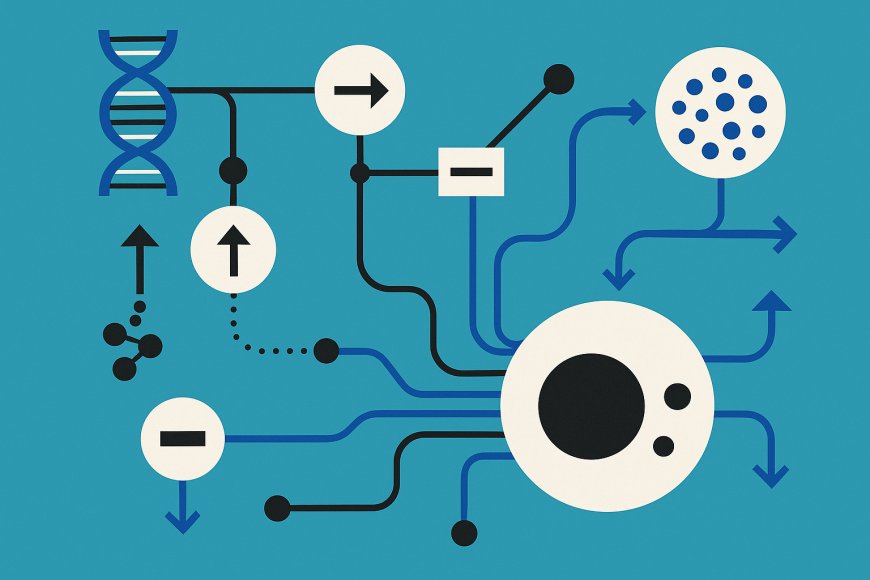
Imagine a single cell deciding when to divide, differentiate, or even self-destruct. This seemingly straightforward process is orchestrated by a complex interplay of signals, genes, and proteins. Within systems biology, the exploration of cellular decision-making has revealed that biological responses are not simple linear pathways but involve a web of interactions that mirror the complexity of a city's transportation network. This article delves into the frameworks that underpin these cellular decisions, highlighting the elegant intricacies of the biological systems at play.


When one considers a typical observational study in systems biology, researchers often deploy fluorescent markers to track the expression of specific genes over time. Such studies illuminate the dynamic nature of gene expression, showing that decisions at the cellular level are not static but fluctuate in response to internal and external stimuli. In one notable experiment, a set of cells was exposed to varying concentrations of a growth factor. The immediate response of these cells was mapped, revealing distinct phases of gene activation and repression. These phases suggested a temporal sequence resembling a symphony, where specific genes 'play' at defined moments to orchestrate a coherent biological response. Such findings emphasize that cellular decisions are not just reactions to stimuli but are orchestrated events encoded within the cellular machinery.
Network Topologies in Cellular Decision-Making
In the context of cellular decision-making, the architecture of biological networks plays a pivotal role. Networks consist of nodes and edges—representing genes, proteins, or small molecules and their interactions, respectively. Distinct topologies within these networks influence cellular behavior. Consider a scenario where perturbations are introduced in a cell's environment. These perturbations can lead to changes in the network's topology, resulting in altered cellular outcomes. For instance, feedback loops within these networks can either stabilize or amplify specific responses, a concept analogous to how feedback in audio equipment can create either harmony or chaos.
An example of this can be seen in a study focused on the metabolic networks of liver cells. By manipulating the availability of glucose, the study demonstrated how the network's topology adapted, rerouting metabolic fluxes and prioritizing certain pathways over others. The adaptability observed in these networks underscores the importance of topology, not only in maintaining cellular homeostasis but also in facilitating rapid responses to environmental changes.
Moreover, the robustness of these networks allows cells to buffer against noise and fluctuations. In a computational model simulating a cell's response to a viral infection, the model predicted that redundancy within the network was crucial in dampening the effects of viral-induced perturbations. Such redundancy ensures that vital functions are maintained even under stress, highlighting an evolutionary advantage in the redundancy of biological systems.
The Role of Cross-Talk in Gene Regulation
Cross-talk between pathways is another key feature of cellular decision-making. Pathways that were once thought to operate independently are now understood to engage in intricate communication, influencing each other's activity. In a series of experiments utilizing high-throughput sequencing, researchers observed the influence of signaling molecules, such as cytokines, on seemingly unrelated pathways. This cross-talk can lead to unforeseen consequences where the activation of one pathway inadvertently modulates another.
Take, for example, a cellular model of inflammation where cytokine signaling was observed to impact metabolic pathways. When inflammatory signals were introduced, a shift in metabolic enzyme expression was noted, modifying the cell's energy balance. Such findings suggest that cellular decision-making is not restricted to isolated pathways but involves a holistic integration of multiple signals, akin to an orchestra where each instrument, though capable of solo performance, contributes to a collective symphony.
Furthermore, the implications of cross-talk extend to therapeutic strategies. In disease models, the unintended activation of pathways through pharmacological intervention highlights the complexity of designing targeted therapies. Researchers are now exploring multi-target approaches that consider the interconnectivity of pathways, aiming to modulate entire networks rather than single molecular targets.
The exploration of cellular decision-making in systems biology not only enriches our understanding of life’s fundamental processes but also opens avenues for advanced therapeutic interventions. As the sophistication of our tools increases, so too does our ability to decipher the complex language of cells. Future research may focus on the integration of computational models and real-time biological data, striving for predictive frameworks that can anticipate cellular responses with precision.
As we journey deeper into the molecular intricacies of cellular decision-making, systems biology promises to unravel the enigmatic mechanisms that govern life. The potential to rewrite cellular narratives using this knowledge holds immense promise, hinting at a future where we can influence destiny at the cellular level with unprecedented accuracy.
What's Your Reaction?