The Science of Circularity: Sustainable Systems in the Wake of Entropy
The concept of circularity in sustainable systems challenges the linear paradigm of resource consumption by closing loops of production and waste. This article delves into the scientific principles underlying circular systems and their potential to counteract the entropy in ecological and industrial settings. By examining case studies and theoretical models, the article provides a robust framework for understanding how circularity can inspire sustainable practices, reducing ecological footprints and fostering resilience. It outlines how entropy management can transform resource use and addresses the methodological challenges in measuring and implementing circular systems. Future research directions suggest integrating complex adaptive systems with circular principles to enhance sustainability.

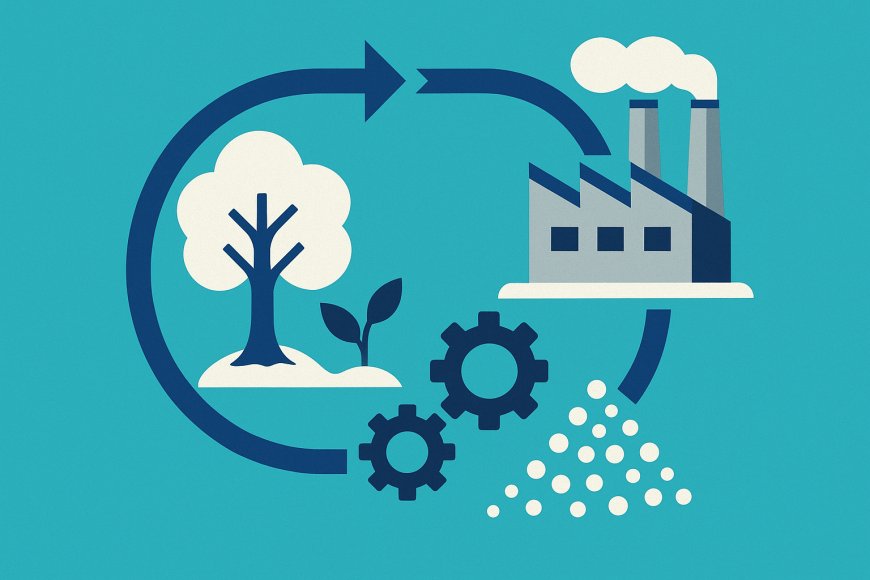
In the pursuit of sustainability, circular systems present a paradigm shift from the traditional 'take-make-dispose' approach, offering a strategic counteraction to entropy. Entropy, a fundamental concept in thermodynamics, represents the irreversible dispersal of energy, often leading to increased disorder. When applied to ecological and industrial systems, entropy manifests as resource depletion and waste. Circularity, however, envisions a model where resource inputs are minimized, waste is systematically reused, and outputs are redirected back into the system, thereby counterbalancing the inherent disruptions caused by entropy.


Consider a closed-loop agricultural model. By integrating livestock waste as fertilizer for crop growth, and utilizing crop residues as animal feed, farms can effectively manage nutrient cycles. This symbiosis not only optimizes resource use but also maintains soil health, enhancing agricultural resilience. Such practices embody the principles of circularity, effectively reducing external inputs and minimizing waste.
In industrial settings, the adoption of circular systems requires a rigorous reassessment of product life cycles. For instance, designing products for longevity and remanufacturability can extend their utility, thus mitigating the energy costs associated with production. In a hypothetical scenario, a company reimagines its manufacturing process by recovering and refurbishing used components, thereby reducing the need for virgin resources and lowering emissions. This approach demonstrates how circular systems can substantially decrease a company's ecological footprint while promoting economic efficiency.
Entropy Management: A Core Principle of Circular Systems
Entropy management is pivotal to the efficacy of circular systems. In thermodynamic terms, entropy is an inevitable aspect of energy transfer, often resulting in the degradation of systems over time. However, by adopting circular strategies, systems can be designed to retain energy flows and reduce disorder. An ecological system, for example, may optimize its energy consumption by cycling nutrients within a natural reserve. Through these means, ecosystems can stabilize themselves against external pressures such as climate fluctuations and resource scarcity.
In a similar vein, an industrial ecosystem might employ energy recovery systems, capturing excess heat from manufacturing processes for reuse in other operational domains. This not only improves energy efficiency but also lessens the environmental impact. Here, the strategic design of energy flows and resource cycles exemplifies the potential of circular systems to manage entropy actively.
Moreover, measuring entropy in such systems requires sophisticated methodologies that consider both quantitative and qualitative factors. Metrics like the Material Circularity Indicator (MCI) provide insights into how resources are cycled within systems. However, challenges persist in accurately capturing the dynamic interactions and feedback mechanisms inherent in circular systems, necessitating continuous innovation in measurement techniques.
Methodological Challenges in Implementing Circular Systems
Implementing circular systems is not without its methodological challenges. Traditional assessment frameworks often fall short in capturing the holistic benefits of circularity, such as reduced ecological footprints and enhanced resilience. As a result, new models that integrate systems thinking are essential to gauge the real impact of circular systems.
In a typical observational study, researchers might analyze the life cycle of a product from raw material extraction to disposal, identifying opportunities to integrate circularity. However, the complexity of modern supply chains and the intricate network of stakeholders involved complicate this task. Effective implementation demands collaboration across sectors and disciplines, bringing together insights from engineering, ecology, and economics.
Furthermore, the lack of standardized metrics and the need for real-time data collection pose additional hurdles. For instance, while digital technologies such as IoT and blockchain offer promising avenues for tracking material flows, their integration into existing systems often requires significant overhauls. Addressing these challenges necessitates a multifaceted approach that includes policy support, technological innovation, and cultural shifts toward valuing sustainability.
As we look to the future, the potential for circular systems to redefine sustainability is profound. By managing entropy and closing resource loops, these systems offer a blueprint for resilient ecosystems and economies. The challenge lies in overcoming methodological barriers and fostering interdisciplinary collaboration. By integrating insights from complex adaptive systems, researchers can enhance the robustness and adaptability of circular models. In doing so, we not only address pressing environmental concerns but also lay the groundwork for a more sustainable and equitable future.
What's Your Reaction?