




















































































Rethinking Cache Coherence: A New Framework for Scalable Systems
Cache coherence is a cornerstone of multiprocessor systems, ensuring data consistency across caches. Traditional methods, like the MESI protocol, face scalability challenges in modern distributed systems. Innovative approaches now explore directory-based protocols, leveraging distributed hash tables and data-centric architectures to address these limitations. This shift redefines computer engineering, focusing on decentralization, adaptability, and efficiency. Such advancements promise not only enhanced system performance but also lower energy consumption, marking a significant evolution in multiprocessor design strategies. As research progresses, the implications for cloud computing and edge processing are profound, offering a glimpse into the next era of scalable computing.

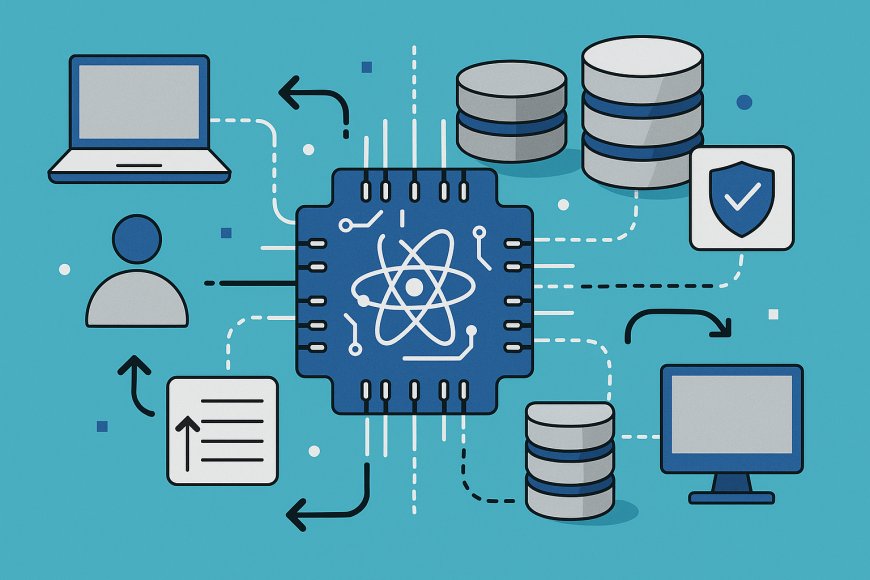
In a typical multi-core processor, cache coherence is paramount in maintaining data uniformity across different cores. Traditional coherence protocols, such as the MESI (Modified, Exclusive, Shared, Invalid) protocol, have long served as the backbone of this uniformity. However, as architectures evolve towards more distributed systems with an increasing number of nodes, these conventional methods exhibit significant limitations in scalability and efficiency. This necessitates a re-evaluation of coherence strategies, especially in the context of modern distributed computing environments.


Challenges of Traditional Coherence Protocols
Consider a multi-core system employing the MESI protocol. Each cache line can exist in one of four states, and transitions between these states ensure that all cores have a consistent view of the memory. While effective in small-scale systems, the MESI protocol struggles in large-scale, distributed environments. As the number of cores increases, the state transition overhead grows significantly, leading to congestion and increased latency. For instance, in a scenario involving hundreds of processors, the sheer volume of coherence traffic can overwhelm the interconnect, causing delays that negate the benefits of parallelism.
Moreover, the MESI protocol relies heavily on broadcast mechanisms to maintain coherence. This broadcasting is inherently inefficient in energy consumption and bandwidth usage, particularly as system sizes continue to expand. The inefficiencies become even more pronounced in cloud and edge computing environments, where energy and bandwidth are premium resources. In these contexts, ensuring coherence could lead to stark trade-offs between performance and power efficiency, a dilemma not easily resolved within traditional frameworks.
The limitations of such classical approaches are further highlighted in heterogeneous systems, where different processors might require distinct coherence strategies. As systems grow more complex, the one-size-fits-all nature of traditional protocols becomes increasingly inadequate. Consequently, there is an urgent need for novel frameworks that can dynamically adapt to the diverse needs of modern computing environments.
Innovative Approaches to Coherence
Recent advancements propose alternative methods that eschew the constraints of conventional coherence models. Directory-based protocols are gaining traction, offering a promising solution to the scalability woes of existing systems. Unlike broadcast-based models, directory protocols maintain coherence by tracking cache line states within a directory, significantly reducing unnecessary data traffic. For instance, in a distributed setup, each node may maintain a partial directory of cache states, interacting only with relevant nodes rather than broadcasting to all.
Consider a behavioral experiment in a distributed system employing a directory-based coherence protocol. Each node in this setup maintains a directory for only a subset of the memory, significantly reducing the coherence traffic. This localized management not only enhances performance but also optimizes energy usage, a crucial factor in large-scale deployments such as hyper-scale data centers. The results demonstrate substantial improvements in latency and throughput, underscoring the potential of directory-based protocols.
Further innovation is seen in leveraging distributed hash tables (DHTs) for coherence management. DHTs offer a scalable approach to state management by distributing the coherence metadata across nodes, thus promoting a decentralized architecture. In a large-scale system, this decentralization mitigates the bottlenecks associated with centralized coherence management, offering a pathway to more robust and scalable designs.
Implications for Future Systems
These novel approaches to cache coherence herald significant implications for future computing systems. The shift towards decentralized and adaptable coherence models aligns well with the broader trends in computer engineering, particularly as the industry moves towards cloud-native and edge-focused architectures. The ability to maintain efficient and scalable coherence in these environments promises not only enhanced computational performance but also reduced energy consumption, a critical factor in sustainable computing practices.
Furthermore, as these coherence strategies mature, they may redefine the architectural paradigms of multiprocessor systems. The integration of data-centric coherence models could lead to a new era of computer architecture, where adaptability and efficiency are prioritized. This evolution in thinking could have profound impacts on emerging fields such as artificial intelligence and machine learning, where processing demands are ever-increasing.
As research continues to push the boundaries of what is possible, the future of scalable systems looks promising. With innovative coherence strategies, modern distributed systems are poised to overcome the challenges of the past, paving the way for more flexible, efficient, and powerful computing resources.
The journey towards reimagining cache coherence in scalable systems is not merely technical; it reflects a philosophical shift towards decentralization and adaptability in technology. As we advance, these principles will likely guide the design of future systems, heralding a new era in computer engineering where scalability and sustainability go hand in hand.
What's Your Reaction?