
















































































Rethinking Authenticity: The Role of Machine Learning in Establishing Trust in Scientific Research
Trust and authenticity in scientific research, often threatened by inaccuracies and biases, require innovative approaches for preservation. Machine learning, with its ability to analyze vast datasets and discern patterns, emerges as a powerful tool in ensuring research integrity. By understanding its role in data verification, bias identification, and reproducibility, science can harness machine learning to redefine trust. This article explores how machine learning can safeguard authenticity in research, proposing novel frameworks that challenge traditional assumptions. It underscores the need for ethical implementation and highlights the potential for machine learning to establish new standards of trust in scientific inquiry.


Consider a scenario where a team of researchers embarks on a study to understand the environmental impact of a new agricultural technology. Their methodology involves collecting and analyzing vast amounts of data from numerous sources, including satellite imagery, soil sensors, and meteorological databases. The immense volume of information poses significant challenges in terms of data verification, bias detection, and reproducibility. In such instances, machine learning offers a promising solution to uphold the authenticity and trustworthiness of the findings.


Machine learning algorithms excel at processing large datasets, identifying patterns, and making predictions based on historical data. This capability can be leveraged to verify data authenticity by cross-referencing datasets from multiple sources, detecting anomalies, and highlighting inconsistencies. For the research on agricultural technology, machine learning can systematically compare satellite imagery with on-ground sensor data, ensuring that the information aligns accurately. Any discrepancies identified can prompt further investigation, thereby safeguarding the research's integrity.
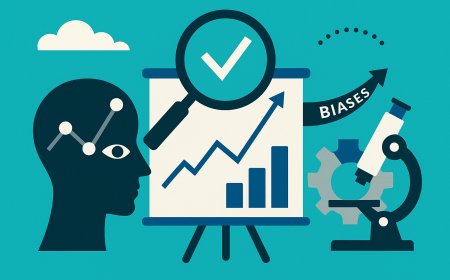
Furthermore, the potential of machine learning in identifying biases is particularly pertinent. In a typical observational study, biases may arise from data collection methods, sample selection, or even inherent assumptions in the analytical models. Machine learning can scrutinize the dataset, identify underlying biases, and suggest corrective measures. For instance, if the agricultural research inadvertently over-represents regions with certain climatic conditions, machine learning can adjust for this imbalance, ensuring a more representative analysis. By addressing biases proactively, machine learning contributes to more reliable and trustworthy scientific outcomes.
Machine Learning and Reproducibility in Research
Reproducibility, a cornerstone of scientific research, has become increasingly challenging in the context of complex data-driven studies. Machine learning can play a pivotal role in enhancing reproducibility through standardized data processing and analysis pipelines. Consider a behavioral experiment where researchers aim to replicate findings from previous studies on cognitive responses to stimuli. Machine learning can automate data preprocessing, normalize variables, and apply consistent analytical models, reducing human-induced variability.
In this scenario, machine learning algorithms can create detailed logs of the analytical process, documenting each step taken in data transformation and analysis. These logs serve as a comprehensive record, enabling other researchers to replicate the study precisely. Such documentation is invaluable for enhancing transparency and trust in research findings. By facilitating reproducibility, machine learning ensures that scientific claims can withstand scrutiny and verification, thus reinforcing authenticity.
Moreover, machine learning's ability to synthesize information from diverse sources allows researchers to cross-validate findings against independent datasets. Suppose a researcher in the behavioral experiment uses a machine learning model trained on publicly available datasets to validate their results. This approach can corroborate the study's conclusions, strengthening confidence in the findings and promoting trust among the scientific community.
Ethical Considerations and Implications
Despite its potential, the integration of machine learning into scientific research necessitates careful consideration of ethical implications. One pertinent issue is the potential for algorithmic bias, where machine learning models inadvertently perpetuate existing biases in the data. To mitigate this risk, researchers must implement rigorous validation protocols, ensure diverse training datasets, and continuously monitor model performance across different contexts.
Another ethical consideration involves the transparency of machine learning models. Researchers must strive to develop interpretable models that offer insights into the decision-making process, fostering trust and accountability. In the context of the agricultural technology study, an interpretable model could elucidate how specific variables influence predictions, enabling stakeholders to understand the rationale behind recommendations.
Finally, the role of machine learning in reinforcing trust must align with existing ethical standards in research. This involves safeguarding data privacy, securing consent from data providers, and maintaining openness in sharing methodologies and findings. By adhering to these principles, the scientific community can harness machine learning's capabilities while preserving authenticity and integrity.
In an era where scientific research faces unprecedented challenges, machine learning emerges as a powerful ally in maintaining authenticity and trust. By verifying data, identifying biases, and enhancing reproducibility, machine learning can redefine trust in research. However, its implementation must be guided by ethical principles to ensure responsible use. As machine learning continues to evolve, its role in scientific inquiry promises to transform how authenticity is achieved, setting new standards for trust in research.
What's Your Reaction?