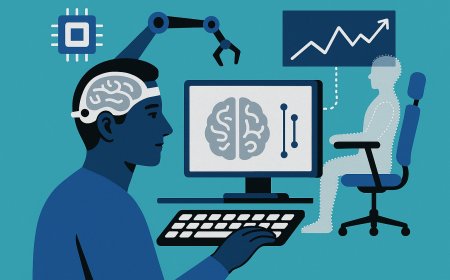
Reimagining the Boundaries of Scientific Paradigms: A Call for Intellectual Audacity
In the pursuit of knowledge, the scientific community often finds itself confined by established paradigms—conceptual frameworks that define the norms and methods of scientific inquiry. This article explores the necessity of challenging these paradigms to foster innovation and discovery. It advocates for intellectual audacity, urging scientists to question deep-rooted assumptions and venture beyond traditional epistemological boundaries. By examining historical shifts in scientific thought, the article underscores the potential of revolutionary ideas to transform our understanding of the world. It calls upon the scientific community to cultivate an environment that encourages creative thinking and embraces uncertainty, ultimately driving the progression of human knowledge.


Reimagining the Boundaries of Scientific Paradigms: A Call for Intellectual Audacity
In the tapestry of human understanding, scientific paradigms serve as the foundational threads, weaving together the fabric of knowledge. These paradigms, manifested in the theories and models that govern scientific inquiry, provide the scaffolding upon which the edifice of science is erected. Yet, like all constructs of human intellect, they are subject to evolution, refinement, and sometimes, radical overhaul. It is in this context that the notion of intellectual audacity emerges as a crucial element in the pursuit of knowledge, challenging the confines of established paradigms and paving the way for groundbreaking breakthroughs.


Scientific paradigms, as historically observed, have a propensity to solidify into rigid frameworks, dictating the rules and methodologies deemed acceptable within the scientific community. These paradigms serve as both guiding beacons and invisible chains that bind the intellectual pursuit within delineated boundaries. They create an epistemological comfort zone, wherein the familiar and the tested are favored over the novel and the uncertain.
Yet, it is precisely within the crucible of challenging these paradigms that the most profound scientific revolutions have occurred. History is replete with instances where audacious thinkers, unbound by the constraints of their time, have dared to question the very foundations of scientific thought, ushering in new eras of understanding. Their contributions are not merely evolutionary but revolutionary, prompting a paradigm shift that redefines the landscape of knowledge.
Consider the profound shift from the geocentric to the heliocentric model of the solar system—a transformation that not only reconfigured astronomical thought but also precipitated a reevaluation of humanity's place in the cosmos. Similarly, the advent of quantum mechanics challenged the deterministic nature of classical physics, introducing an element of uncertainty that has since become a cornerstone of modern scientific inquiry.
Such paradigm shifts are not mere intellectual exercises; they are the catalysts for innovation and discovery. They compel the scientific community to transcend established dogmas, exploring uncharted territories and embracing uncertainty as an intrinsic component of the scientific endeavor. In doing so, they expand the horizons of human understanding, pushing the boundaries of what is conceivable and achievable.
Yet, the path to such transformative insights is fraught with challenges. Intellectual audacity requires a willingness to venture into the unknown, to confront entrenched beliefs, and to navigate the turbulent waters of skepticism and resistance. It demands a boldness of thought, a readiness to embrace failure as a stepping stone to success, and an unwavering commitment to the pursuit of truth.
To cultivate an environment conducive to this intellectual audacity, the scientific community must foster a culture that values creativity and open-mindedness. It must encourage a diversity of perspectives and methodologies, recognizing that the seeds of innovation often germinate in the most unexpected of places. It must also embrace the inherent uncertainty of scientific exploration, understanding that ambiguity is not a hindrance but a catalyst for deeper inquiry.
In reimagining the boundaries of scientific paradigms, we are called to celebrate the courage of those who dare to dream beyond the confines of convention, who challenge the status quo with visionary ideas that defy the ordinary. As custodians of knowledge, the scientific community must remain vigilant against the ossification of thought, perpetually seeking to expand the frontiers of understanding.
In conclusion, let us heed the call for intellectual audacity, embracing its transformative power in the pursuit of knowledge. As we stand at the precipice of discovery, let us remember that it is through the audacious questioning of established paradigms that humanity has charted its most profound courses through the cosmos of understanding. Let us continue to reimagine, to innovate, and to inspire, forging new paths through the ever-evolving landscape of scientific inquiry.
What's Your Reaction?