






































































Challenging the Duality of Particle-Wave Phenomena in Modern Physics
The duality of particles and waves is a cornerstone of quantum mechanics. However, recent experimental evidence suggests that this classic dichotomy may require reevaluation. By exploring new approaches and experimental setups, researchers are beginning to question whether the traditional particle-wave duality truly encapsulates the full complexity of quantum phenomena. This article examines the implications of these findings for our understanding of quantum mechanics and the fundamental nature of reality.

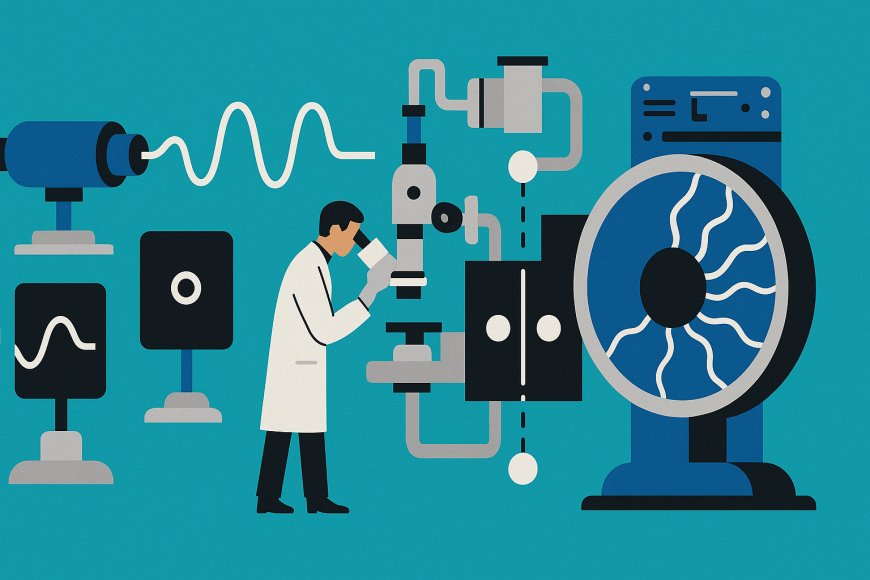
In the lexicon of quantum mechanics, the duality of particle and wave is a conceptual stalwart, forming a fundamental basis for understanding the behaviors of subatomic entities. Consider an experiment wherein electrons are passed through a double-slit apparatus. The resulting interference pattern seems to defy classic particle intuition, suggesting instead a wave-like behavior. This dual nature, however, has been taken for granted for nearly a century, rarely questioned since its inception. Yet, emerging research invites profound scrutiny of this assumption, challenging the conventional wisdom of wave-particle duality as an exhaustive descriptor of quantum phenomena.


Recent experimental innovations have cast a spotlight on the limitations of the traditional dichotomy. In an advanced laboratory setting, sophisticated detectors recorded the behavior of photons as they traversed a series of narrow channels, displaying characteristics not wholly particle nor wave. This ambiguous behavior raises the question: is our current dualistic framework adequate, or does it obfuscate a deeper understanding of quantum reality?
To investigate these anomalies, physicists have began employing more intricate methodologies. In one study, particles were subjected to extreme isolation and monitored under varying conditions of energy and spin. The observations revealed phenomena that resisted classification within the current binary paradigm. Such results underscore the potential need for a third descriptor, potentially redefining our understanding of quantum mechanics.
Revisiting Historical Contexts
The particle-wave duality has historically been viewed through a set lens, with experiments like those conducted at early 20th-century institutions bolstering its acceptance. The now-iconic double-slit experiment, for instance, is often cited as definitive evidence for the duality’s veracity. However, it is crucial to acknowledge the era’s technological constraints which may have influenced these early interpretations.
Consider, too, the philosophical implications prevalent at the time when quantum mechanics was first emerging as a discipline. The era’s intellectual climate, heavily influenced by positivist philosophy, favored models that offered direct, observable predictions over abstract theorizing. This context undeniably shaped how phenomena such as wave-particle duality were conceptualized.
Contemporary researchers, equipped with advanced instrumentation and a broader epistemological toolkit, are now revisiting these foundational assumptions. They are questioning whether the duality model was an expedient simplification rather than an ultimate truth, suggesting that it may have inadvertently constrained the scope of inquiry in quantum mechanics.
Innovative Experimental Approaches
Novel experimental designs are at the forefront of this paradigm shift. In high-energy physics laboratories, experimental setups now incorporate quantum entanglement phenomena to test the limits of wave-particle duality. A study involving entangled pairs of particles demonstrated that their interaction effects could not be purely accounted for by traditional duality interpretations.
Another experimental approach involves manipulating boundary conditions within a quantum system to explore phenomena beyond dualistic categorization. In a cutting-edge experiment, researchers manipulated electromagnetic fields to observe particles and wave interactions under previously unexplored conditions, yielding data that resist classic interpretative frameworks.
These studies are crucial as they illuminate the potential for new theoretical models that transcend the established binary categorization. They suggest that instead of viewing quantum entities as particles or waves, we might consider them as manifestations of a more intricate, underlying structure.
Theoretical Implications and Future Directions
The potential dissolution of the wave-particle duality model beckons a reconsideration of quantum mechanics at its core. If future research corroborates these findings, it could prompt a theoretical overhaul, echoing the pivotal shifts witnessed in scientific paradigms throughout history.
Looking forward, this burgeoning research trajectory encourages a renaissance in theoretical physics. It invites scholars to construct models that better encapsulate the nuanced behaviors observed. Such efforts might guide the development of a more comprehensive quantum theory, one that accommodates phenomena currently marginalized by the dualistic model.
As researchers forge ahead with innovative experiments and revised theoretical frameworks, the future of particle physics seems poised for transformation. This evolution not only promises to refine our understanding of quantum mechanics but also to deepen our insight into the fundamental nature of reality itself. The journey is ongoing, and its destination remains as intriguing as the questions it seeks to answer.
What's Your Reaction?