









































































The Cognitive Architecture of Misinformation: Understanding Bias and Validity
Misinformation is intricately woven into the human cognitive architecture, driven by biases and the challenges of validating information. By exploring how individuals process and interpret information, we can better understand the persistence of misinformation in society. This article examines the cognitive underpinnings that contribute to the spread of misinformation, highlighting the role of confirmation bias, cognitive dissonance, and the tendency to seek coherence. Methodical approaches to understanding and addressing these cognitive phenomena are imperative for mitigating misinformation's impact. Future research should focus on developing tools to enhance information validity and reduce bias in information consumption.

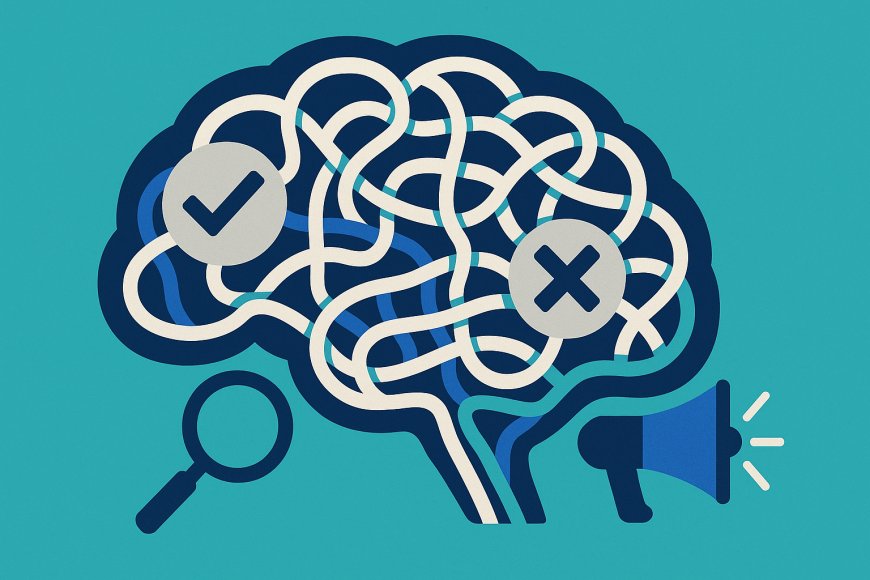
Picture a society where every individual receives identical factual information. Despite this, interpretations and beliefs diverge, sparking debates not only in social settings but also in scientific discourse. This scenario, though hypothetical, mirrors the persistent reality of misinformation, deeply embedded in the cognitive architecture of human minds. Misinformation thrives not just because of its content but due to the intricacies of how individuals process and internalize information.


In a typical cognitive experiment, participants might be asked to evaluate conflicting news articles about a recent scientific breakthrough. Remarkably, despite identical evidence presented, individuals' pre-existing beliefs color their conclusions, illustrating a phenomenon known as confirmation bias. This cognitive bias, where individuals favor information that aligns with their pre-existing beliefs, underscores a fundamental challenge in combating misinformation: the brain's innate tendency to validate existing mental frameworks rather than challenge them.
The Role of Cognitive Dissonance in Misinformation
Cognitive dissonance theory, first proposed over half a century ago, remains a cornerstone in understanding why misinformation persists. When confronted with information that contradicts their beliefs, individuals experience psychological discomfort—cognitive dissonance. To alleviate this discomfort, people often rationalize or dismiss the new information. Consider a behavioral experiment where participants are shown evidence contradicting their strongly held beliefs about climate change. Those experiencing cognitive dissonance might downplay the evidence's credibility or exaggerate the reliability of their initial belief.
This tendency is not merely a defensive mechanism but a fundamental aspect of maintaining cognitive coherence. The mind is not inclined to harbor conflicting beliefs and will strive for consistency, even at the expense of disregarding valid information. The challenge for researchers lies in developing strategies to encourage individuals to engage with conflicting information constructively, thus broadening their cognitive frameworks rather than entrenching existing biases.
One approach involves educational interventions designed to make individuals more comfortable with ambiguity and uncertainty, crucial elements when dealing with complex scientific topics. By fostering a mindset that values inquiry over certainty, it becomes possible to mitigate the rigid adherence to misinformation.
Methodological Approaches to Validity and Bias
Ensuring the validity of information is paramount in a world rife with misinformation. Validity refers to the degree to which evidence and arguments accurately reflect the truth and are free from bias. Methodologists are tasked with developing frameworks to assess and enhance validity in information dissemination.
In a project spearheaded by a leading institution, researchers developed a model to evaluate information validity using a multi-criteria approach. This model accounts for source credibility, evidence coherence, and logical consistency. By applying these criteria systematically, the model aims to filter misinformation effectively, providing a template for future methodologies in information validation.
Yet, enhancing validity is not solely a methodological challenge; it also depends on public receptivity. Educational programs that teach critical thinking and information literacy are essential. These programs can equip individuals with the skills necessary to scrutinize information sources critically, fostering a populace better equipped to discern misinformation from factual content.
The Imperative of Reducing Cognitive Bias
Reducing cognitive biases is integral to addressing the misinformation challenge. It involves understanding the cognitive mechanisms that lead to biased information processing and developing strategies to counteract these biases. In experimental settings, interventions such as counter-bias training have shown promise. These exercises are designed to make participants aware of their biases, encouraging more objective information processing.
For instance, in a controlled study, participants underwent a program where they were exposed to information contradicting their beliefs in a structured environment. Over time, these participants demonstrated increased openness to new information, highlighting the potential for cognitive bias reduction to foster more accurate information processing.
Such interventions indicate a path forward in the fight against misinformation. By addressing the cognitive roots of bias, it becomes possible to cultivate a more discerning public, capable of navigating the complexities of the information landscape.
The battle against misinformation is, at its core, a quest to understand and refine the cognitive processes that govern information consumption. As we deepen our comprehension of biases and strive for validity, the tools we develop can empower society to distinguish between misinformation and truth. The future of this endeavor lies in interdisciplinary collaboration, merging cognitive science, education, and methodological rigor to create a resilient framework for truth in an age of information overload.
What's Your Reaction?