























































































Redefining Geopolitical Boundaries Through Scientific Innovation
Scientific advancements challenge traditional geopolitical boundaries, reshaping resource management and power dynamics. This article examines how technology-driven resource accessibility, such as desalination and geothermal energy, influences nation-states. It highlights the role of predictive modeling in strategic planning and explores the ethical implications of technological interventions in global politics. The transformative potential of scientific innovation in geopolitics underscores the necessity for adaptive governance frameworks and anticipatory policy-making, ensuring equitable access and minimizing conflicts over resources.

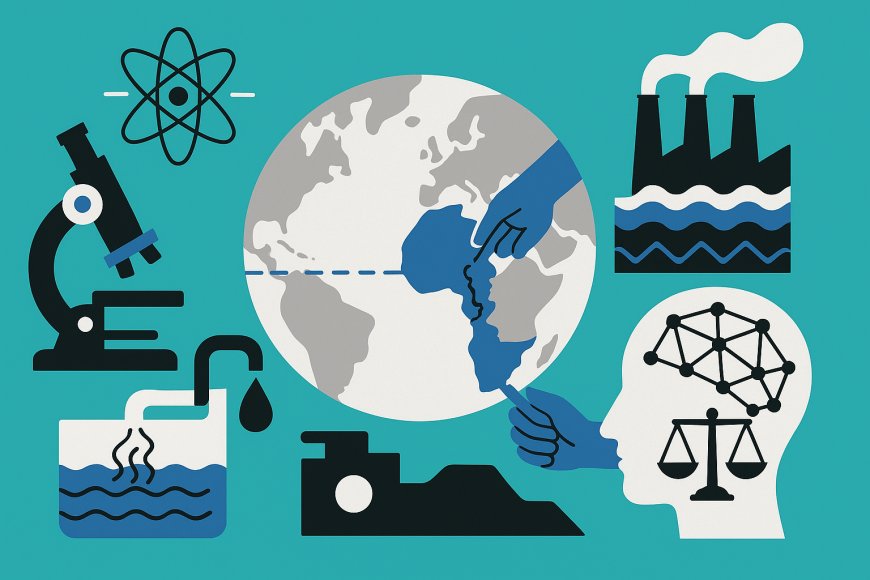
In an observational study of boundary redefinitions, the impact of scientific innovation on global geopolitics becomes evident. Traditional borders, often delineated by natural features or historical treaties, face a new challenge: technology-driven shifts in resource distribution and availability. This transformation is most evident in the realms of water and energy, where scientific advancements have redefined accessibility, compelling nations to reassess their geopolitical strategies.


Consider the advancements in desalination technology. Once reliant on freshwater sources within their borders, nations now tap into the vast reserves of oceanic water, processed through increasingly efficient desalination plants. This shift not only alters the dynamics of water scarcity but also influences geopolitical alliances and tensions. Nations previously under pressure due to water scarcity now find themselves in positions of newfound leverage, altering regional power structures and necessitating diplomatic recalibrations.
Similarly, the harnessing of geothermal energy has profound implications. In regions where energy resources were historically linked to fossil fuel deposits, scientific breakthroughs in geothermal technology offer alternative paths. Countries with geothermal potential gain strategic advantages, challenging the hegemony of traditional energy-rich nations. This reallocation of energy resources demands a reevaluation of geopolitical alliances, as countries seek to align themselves with new energy hubs to secure sustainable energy futures.
The Role of Predictive Modeling in Strategic Planning
Predictive modeling emerges as an essential tool in navigating these shifting geopolitical landscapes. By integrating vast datasets and advanced algorithms, predictive models enable nations to anticipate resource trends and potential conflicts. In a theoretical scenario, a nation employing sophisticated predictive analytics could foresee a regional water conflict due to projected climate shifts, allowing for preemptive diplomatic initiatives and resource-sharing agreements.
These models also facilitate strategic infrastructure investments. For instance, a government might prioritize the construction of desalination plants in anticipation of future water shortages, mitigating potential crises before they escalate. The ability to predict and plan for such scenarios underscores a shift in geopolitical strategy towards proactive rather than reactive measures.
However, reliance on predictive modeling is not without challenges. The accuracy of predictions is contingent upon the quality of data and the robustness of analytical frameworks. Inaccuracies could lead to misguided policies, underscoring the need for continuous refinement of modeling techniques and validation against empirical observations.
Ethical Implications and Global Governance
The integration of scientific innovations into geopolitical strategies raises significant ethical considerations. As technological advancements empower certain nations with resource abundance, the risk of exacerbating global inequalities intensifies. Ensuring equitable access to these innovations becomes paramount to prevent the deepening of existing geopolitical divides.
Global governance frameworks must evolve to address these ethical challenges. International bodies could facilitate technology transfer agreements, ensuring that nations lacking scientific capabilities are not left behind. Such collaborations could mitigate tensions and foster a more cooperative international environment.
Furthermore, the ethical use of predictive technologies in geopolitics necessitates transparency and accountability. Nations must navigate the fine line between strategic advantage and ethical responsibility, balancing national interests with global welfare. In this context, developing universal standards for the ethical application of scientific advancements in international relations is imperative.
The transformative potential of scientific innovation in redefining geopolitical boundaries is undeniable. As nations continue to integrate technological advancements into their strategic frameworks, the global political landscape will evolve in unprecedented ways. This evolution necessitates adaptive governance, where policies are anticipatory rather than reactionary, embracing the dynamic nature of scientific progress.
Looking toward the future, the challenge lies in harmonizing technological potential with ethical governance. As we stand on the brink of a new geopolitical era driven by scientific innovation, the imperative for collaborative, just, and forward-thinking policies becomes ever more pressing. By embracing this challenge, we pave the way for a future where technology serves as a bridge rather than a barrier in global relations.
What's Your Reaction?