























































































From a National Choice to the First Choice: The Art of Crafting Excellence
Learn how local products can become a consumer's first choice by focusing on value and innovation, not just national loyalty. This article challenges the inferiority mindset and explains how to build a superior product that dominates the market.
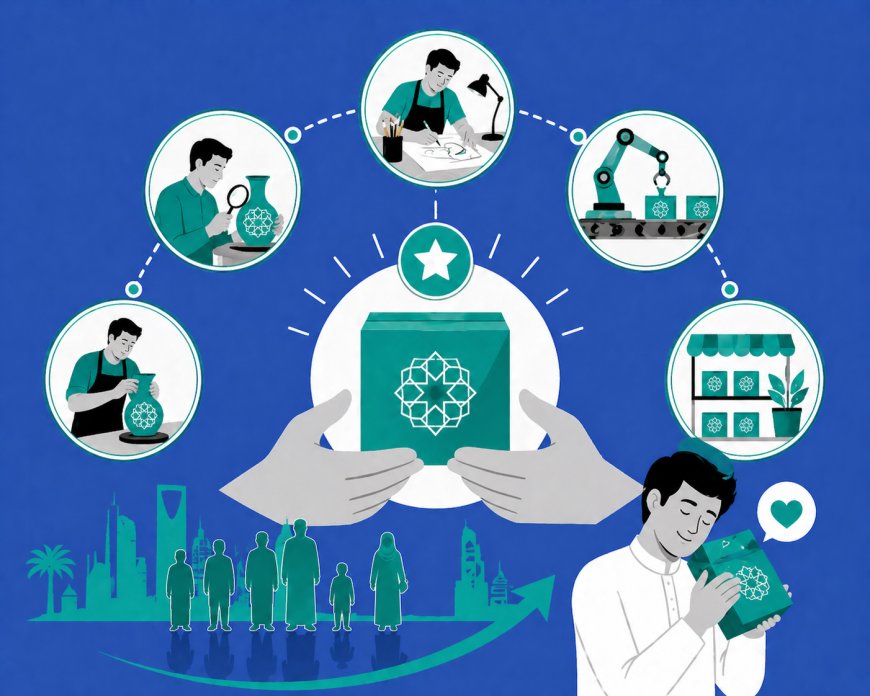
There is a recurring assumption in many developing markets that local products deserve preference simply because they are local. It is a comforting idea, one that appeals to national identity and collective responsibility. But the market does not operate on sentiment. The consumer does not make decisions based on obligation. He chooses based on value. And this is where the real challenge begins—not in producing locally, but in becoming the preferred choice without asking for it.


The transition from being an alternative to becoming the first choice is not achieved through campaigns that ask consumers to “support local.” It is achieved when the product itself eliminates the need for that request. When the experience it offers is so clear, so superior, that the decision becomes logical, not emotional. At that point, the identity of the product as local becomes an additional advantage, not the primary reason for purchase.
Yet many companies begin from the wrong point. They choose to manufacture what is easy, not what is necessary. Products such as plastic cups, garbage bags, and generic daily-use items dominate local production strategies. These products are simple to produce, widely available, and highly competitive in price. But they suffer from a structural limitation: they do not create differentiation. They do not alter consumer behavior. They do not build loyalty. They enter the market as commodities, where the only variable that matters is cost. And in a cost-driven market, the lowest price always wins, regardless of origin.
This creates a trap. Companies find themselves in a continuous race to reduce costs, sacrificing margins, quality, and long-term positioning. They become efficient producers, but not influential players. They participate in the market, but they do not shape it.
In contrast, companies that understand the deeper logic of competition do not begin with what is easy to make. They begin with what is difficult to replace. They look for gaps in the market—needs that are unmet, experiences that are incomplete, expectations that can be redefined. They do not ask, “What can we produce?” They ask, “What can we create that others cannot easily replicate?”
This shift changes everything. The product is no longer evaluated based on price alone, but on the value it introduces. It may offer a new function, a different design philosophy, a superior material, or an experience that surprises the user. In this context, the competition is no longer between local and imported products. It becomes a comparison between different levels of value.
The most important transformation, however, occurs in the mind of the consumer. For decades, a mental image has been formed in many markets that imported products represent higher quality, while local products are the cheaper alternative. This perception is not changed through messaging. It is changed through experience. A single product that exceeds expectations can do more than years of awareness campaigns. When a consumer encounters a product that is clearly better—more refined, more thoughtful, more reliable—the old assumption begins to weaken.
This is how standards are redefined. Not through argument, but through evidence.
At this stage, marketing takes on a different role. It is no longer the primary driver of demand. The product itself becomes the message. Customers who experience something exceptional do not remain silent. They share it. They recommend it. They become, without being asked, ambassadors. This form of organic advocacy is more powerful than any campaign, because it is based on trust, not persuasion.
But such outcomes are not accidental. They are designed. Every detail matters—the material, the usability, the packaging, the interaction, even the small, unexpected elements that create delight. Excellence is not a single feature. It is the accumulation of many small decisions made consistently.
At the center of this process lies innovation.
Innovation is often misunderstood as the addition of new features. In reality, it is the redefinition of the product itself. It is the ability to set a new standard that competitors must respond to. Companies that lead markets do not wait for others to innovate. They create the rhythm. They release a product while already developing the next one. They do not compete on what exists. They compete on what is coming.
This requires a fundamental commitment to research and development. Not as a department, but as a core function of the company. Without R&D, companies become reactive. They observe the market, replicate what works, and attempt to compete on cost. This approach guarantees one outcome: permanent delay. The company is always behind, always adjusting, always following.
In contrast, companies that invest in R&D operate differently. They experiment, test, fail, and iterate. They generate knowledge internally, not just apply what is available externally. Over time, this creates a compounding advantage. They are not only producing products; they are producing the capability to produce better products continuously.
One of the most significant barriers to this transformation is psychological. Many local companies operate under an implicit assumption that their role is to be the cheaper option. This mindset shapes decisions from the beginning—what to produce, how to position it, how to price it. It limits ambition before the product even exists.
Breaking this mindset is essential.
The goal should not be to compete on price.
It should be to compete on superiority.
There are numerous global examples of companies that entered markets dominated by established players and succeeded not by being cheaper, but by being better. They focused on quality, design, and user experience. They built trust over time. And eventually, they became the standard others had to follow.
For national industries, the path forward is clear but demanding. It requires shifting from imitation to creation, from cost competition to value competition, from short-term gains to long-term positioning. It requires investing in R&D, building strong brands, and developing products that offer something distinct.
Most importantly, it requires a redefinition of success.
Not “Is our product cheaper?”
But “Is our product the best, without question?”
Because the market does not reward effort.
It rewards impact.
And a product does not lead because it is local.
It leads because it cannot be ignored.
What's Your Reaction?