Navigating the Complex Network of Causality in Systems Biology
Systems biology aims to understand complex biological systems through the lens of causality, focusing on the interactions and feedback loops within networks. This approach challenges traditional reductionist methods by highlighting the emergent properties of systems, where the whole often exceeds the sum of its parts. Causality in systems biology is intricately linked to multi-scale interactions, requiring sophisticated computational models to predict system behavior accurately. The interplay of causative elements in biological networks offers insights into diseases, cellular processes, and ecological dynamics, pushing the boundaries of traditional scientific inquiry and offering a holistic view of life processes.

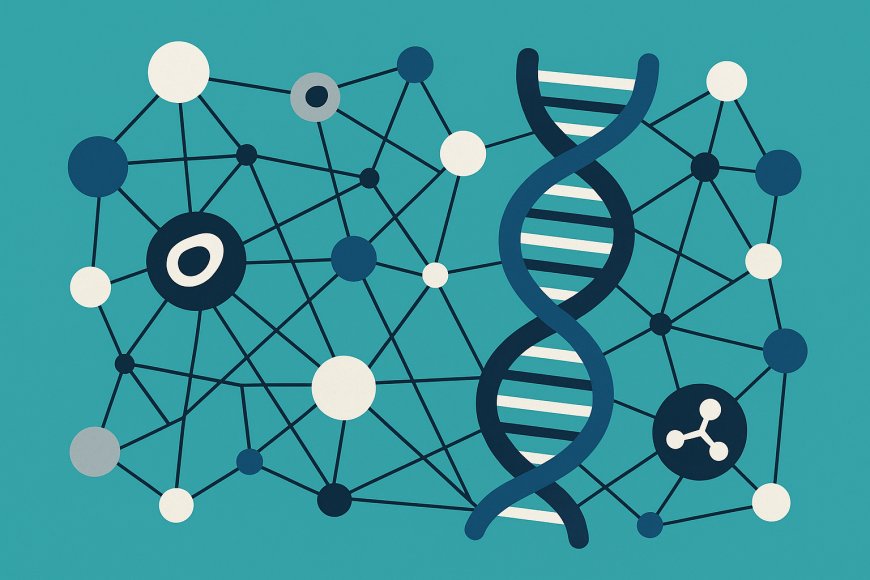
In the realm of systems biology, causality serves as an indispensable framework for understanding the intricate web of interactions that characterize biological systems. Unlike traditional reductionist approaches, which focus on isolated components, systems biology emphasizes the interconnectedness and complexity of biological networks. These networks are not merely a collection of individual elements but an ensemble of dynamic interactions that give rise to emergent properties. This perspective challenges scientists to rethink causality, not as a linear sequence of events, but as a multi-layered construct that operates across diverse biological scales.


Consider a hypothetical study examining the regulatory networks governing cellular metabolism. Researchers employed a combination of high-throughput data collection techniques, such as RNA sequencing and mass spectrometry, to capture the vast array of molecular interactions within a cell. Using computational models, they constructed a network map illustrating how genes, proteins, and metabolites interact to maintain cellular homeostasis. This network revealed intricate feedback loops and cross-talk between pathways that were not evident in traditional linear models. By simulating perturbations to specific genes or proteins, researchers could predict cascading effects across the network, thus uncovering causal relationships that underpin cellular function.
Multi-Scale Interactions and Emergent Properties
The notion of causality in systems biology extends beyond simple cause-and-effect relationships, embracing the concept of emergent properties that arise from multi-scale interactions. Biological networks often exhibit behaviors that cannot be easily inferred from the properties of individual components. For instance, in a mouse model exploring immune response, scientists observed that altering a single cytokine receptor led to unexpected changes in the overall immune system dynamics. This was attributed to the non-linear interactions within the immune network, where multiple feedback loops create a system that is more responsive and adaptive than the sum of its parts.
These emergent properties present a formidable challenge to traditional experimental design, necessitating the integration of computational tools capable of handling vast amounts of biological data. Predictive modeling and machine learning algorithms have become essential for simulating biological systems, allowing researchers to explore complex networks and identify potential causal links. The ability to predict how changes at one scale, such as molecular interactions, influence higher-order processes, like tissue development or disease progression, exemplifies the holistic approach systems biology offers.
Moreover, the study of emergent properties in systems biology has profound implications for understanding diseases. In cancer research, for example, a systems biology approach can reveal how genetic mutations disrupt cellular networks, leading to unregulated cell growth and metastasis. By mapping these disruptions, scientists can identify novel therapeutic targets and design interventions that restore normal network function.
Complexity and Feedback Loops in Biological Networks
Feedback loops are a cornerstone of causality in systems biology, contributing to the stability and adaptability of biological networks. These loops enable systems to maintain homeostasis and respond to environmental changes. In a typical observational study on plant physiology, researchers explored the role of feedback mechanisms in regulating photosynthesis. By manipulating environmental conditions, such as light and carbon dioxide levels, they observed how feedback loops modulate the expression of photosynthetic genes, optimizing energy capture and resource allocation.
Feedback loops also contribute to the robustness of biological systems, allowing them to buffer against perturbations. In neural networks, feedback mechanisms are critical for maintaining synaptic plasticity—a foundational element in learning and memory. By dissecting the feedback interactions within these networks, neuroscientists can gain insights into cognitive processes and potential therapeutic avenues for neurodegenerative diseases.
The interplay between feedback loops and causality underscores the importance of holistic experimental design in systems biology. Traditional methods, which often isolate components for study, may overlook the systemic interactions that govern biological function. In contrast, systems biology seeks to capture the full scope of these interactions, providing a more accurate representation of biological complexity and causal relationships.
Implications for Future Research
The exploration of causality within systems biology has opened new avenues for scientific inquiry, challenging researchers to embrace complexity and rethink conventional methodologies. By integrating multi-scale data and sophisticated computational models, systems biology offers a powerful framework for unraveling the intricate causal networks that define life processes. This approach not only deepens our understanding of biological systems but also informs the development of innovative solutions to pressing health and environmental challenges.
As we continue to refine our methodologies and expand our computational capabilities, the potential to decode the vast complexity of life becomes increasingly attainable. Systems biology stands at the forefront of this endeavor, paving the way for a future where the intricacies of biological networks are not only understood but harnessed to improve human health and sustainability.
What's Your Reaction?