The Hidden Topology of Information Flow in Network Theory
Network Theory offers profound insights into complex systems by revealing hidden topologies that dictate information flow. Recent studies emphasize the role of dynamic interactions within networks, illustrating the subtle interplay of structure and function.

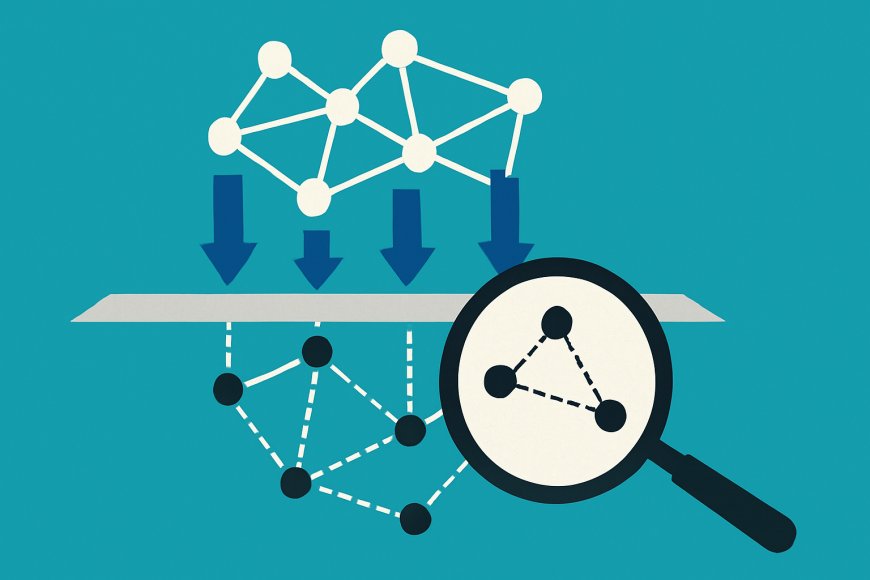
In the world of interconnected systems, Network Theory emerges as a powerful lens to understand the complexity of interactions. A surprising facet of this field is the hidden topology that underpins information flow within networks. A typical communication network, comprising nodes and edges, might seem straightforward. Yet, it conceals intricate patterns that dictate how information travels and evolves. A recent study from a leading technological institute emphasizes that understanding these hidden topologies is crucial in optimizing communication networks, enhancing data transfer efficiency, and minimizing network congestion.


Consider the case of a financial trading network where information about stock prices is exchanged. Here, traders, represented as nodes, share information through transactions, which serve as edges. While these networks exhibit a superficial linear structure, under the surface, they reveal a more complex topology driven by dynamic interactions. This hidden structure influences the speed and accuracy of information dissemination and, consequently, the success of trading strategies. Such insights into the hidden topology enable financial analysts to devise algorithms that predict market trends more accurately and ensure regulatory compliance by identifying unusual trading patterns.
The Subtle Interplay of Structure and Function
The relationship between structure and function in networked systems is not merely linear but intricately woven. In a complex network, alterations in topology can ripple through, affecting both local and global behaviors. Consider an electrical grid network, where power stations and users form a dynamic system of nodes and edges. Any change in the network’s topology, such as a failure in a transmission line, can have cascading effects, potentially leading to large-scale power outages. By mapping the hidden topology, engineers can develop resilient networks that anticipate failures and adapt in real-time to minimize disruptions.
An observational study on public transportation networks provides another example. Here, subway stations and bus terminals act as nodes, with routes serving as edges. These networks are often disrupted by unforeseen events like accidents or construction. However, the hidden topology, revealed through advanced network analysis, suggests alternative pathways that maintain connectivity and ensure the smooth transit of passengers. This demonstrates that an understanding of hidden topology is vital for urban planners aiming to design efficient and adaptive transportation systems.
Furthermore, in biological networks, such as neural networks in the brain, the interplay between structure and function is critical. Neurons and synaptic connections form a complex web that facilitates cognitive processes. The hidden topology of these networks is dynamic, constantly evolving with learning and adaptation. Studies in neuroinformatics have shown that by tapping into these hidden structures, new pathways for treating neurological disorders can be explored, offering hope for patients suffering from conditions like Alzheimer's and Parkinson's disease.
Dynamic Interactions in Networked Systems
The dynamic nature of interactions within networks is pivotal in shaping their evolution. Changes in network topology are often driven by the feedback loops within the system. Consider a social network, where individuals form nodes and their interactions create edges. The network's topology is not static; it changes as relationships evolve over time, influenced by social, cultural, and technological factors. Social scientists have employed network theory to understand these dynamics, revealing patterns of influence and community formation that were previously obscured.
In ecological networks, such as food webs, the dynamic interactions between species determine the stability and resilience of ecosystems. Predators and prey form a network of energy transfer, with changes in species populations altering the network topology. Ecologists have used network theory to predict the impact of species extinction on ecosystem stability, providing critical data for conservation efforts.
Additionally, in the realm of computer networks, cybersecurity relies heavily on understanding the dynamic interactions within network topologies. Cyber-attacks often exploit hidden pathways within a network, bypassing conventional security measures. By modeling these interactions, cybersecurity experts can identify vulnerabilities and develop strategies to safeguard digital infrastructures. This highlights the significance of a dynamic approach in network theory, where understanding the interplay of structure and function can lead to breakthroughs in protecting critical digital assets.
Network Theory: Bridging Knowledge and Innovation
The hidden topologies within networks offer a rich field for innovation. By uncovering these concealed structures, researchers can bridge the gap between theoretical models and real-world applications. This fusion of knowledge and practice is evident in various domains, from enhancing financial systems to safeguarding ecosystems and improving urban infrastructures.
Looking forward, the potential of Network Theory to drive innovation is vast. As computational capabilities grow, the ability to simulate and analyze complex networks will only improve. This will lead to deeper insights into the fundamental principles of connectivity, resilience, and adaptability in systems across scientific disciplines. In essence, by unlocking the hidden topologies of networked systems, we prepare ourselves to harness the interconnectedness of the world in novel and impactful ways.
What's Your Reaction?