






















































































Understanding the Science of Market Sentiment in Investment Decisions
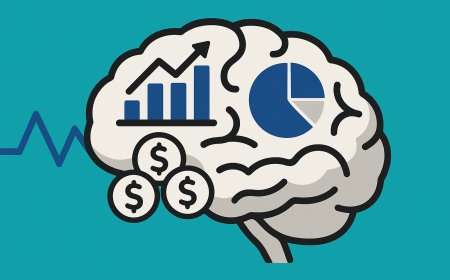
Market sentiment profoundly influences investment decisions, intertwining behavioral finance with economic indicators. Neuroscientific insights reveal how emotional responses affect market dynamics, illustrating complex phenomena like herding behavior and irrational exuberance. Understanding these elements allows for strategic investment approaches that balance rational analysis with emotional awareness.


In an investment landscape where data reigns supreme, the psychological underpinnings of market sentiment often go unexamined. The role of emotional and cognitive biases in shaping market dynamics is profound, yet elusive. At its core, market sentiment reflects collective investor attitudes, which can override fundamental analysis, leading to phenomena such as asset bubbles or market corrections. Scientific inquiries into these behaviors reveal nuanced interactions between psychological biases and economic indicators, providing a fertile ground for strategic investment frameworks.


Consider an investment firm examining the effects of market sentiment on asset valuation. The firm's analysts utilize sentiment analysis tools to distill investor attitudes from social media and news outlets. They compile this data into indices that track emotional trends, correlating them with traditional economic indicators such as GDP growth, inflation rates, and employment figures. Surprisingly, they discover that sentiment-driven fluctuations often precede substantial changes in market valuations, underscoring the predictive power of psychological factors.
This scenario illustrates a critical divergence in investment strategy: balancing quantitative data with qualitative sentiment analysis. The unpredictability of human behavior introduces an element of uncertainty that traditional models struggle to quantify. By weaving psychological analytics into their frameworks, investors can better navigate the complex emotional currents influencing financial markets, thus enhancing the robustness of their strategic approaches.
The Neuroscientific Foundations of Market Behavior
Beyond the observable phenomena lies a deeper, cognitive layer of market dynamics. Neuroscience unveils how brain processes influence financial decisions, revealing the intricate neural mechanisms that generate emotional reactions to economic stimuli. In a controlled experiment, researchers monitor the brain activities of participants engaged in simulated trading environments. Functional MRI scans show heightened activity in the amygdala during market volatility, indicating that fear and anxiety significantly impact decision-making.
The implications are profound: investors are not just rational agents but are also driven by emotional and psychological factors. Understanding these influences allows for the development of more comprehensive models that account for both rational analysis and emotional responses. This intertwining of neuroscience and investment strategy has given rise to behavioral finance, a field that systematically examines how cognitive biases and emotions skew financial decision-making.
Moreover, neuroscientific insights aid in decoding the herd mentality often observed in financial markets. When investors mimic others’ actions, often irrationally, it can lead to market bubbles. By recognizing the neural underpinnings of such behavior, investment professionals can devise strategies that mitigate the risks associated with herd-induced market volatility, thereby fostering more sustainable investment environments.
Economic Indicators vs. Sentiment Analysis: A Dual Approach
The juxtaposition of economic indicators and sentiment analysis marks a paradigm shift in investment strategies. Traditional economic indicators, while valuable, often fail to capture the emotional undertone that sentiment analysis provides. This dual approach offers a more holistic view of market dynamics, facilitating a deeper understanding of the forces driving investment decisions.
In practice, this involves an integrated model combining quantitative measures, like stock price indices and bond yields, with qualitative assessments of market sentiment derived from digital platforms. For example, a financial institution might employ natural language processing algorithms to sift through vast datasets from social media, extracting sentiment metrics that are then juxtaposed with economic forecasts.
Such synthesis not only enhances predictive accuracy but also equips investors with tools to anticipate market shifts prompted by behavioral trends. By adopting a dual approach, investors can better navigate the inherent uncertainties of financial markets, aligning their strategies with both quantitative forecasts and qualitative insights.
The interplay of economic indicators and sentiment analysis fosters a new era of investment strategies, where psychological insights are seamlessly integrated into traditional financial models. This evolution in investment science underscores the necessity of adaptability in the face of ever-changing market conditions.
The future of investment strategy lies in this nuanced understanding of market sentiment and its scientific underpinnings. As technological advancements refine sentiment analysis tools, investors remain poised to harness these insights, crafting strategies that anticipate and adapt to the emotional currents of the market. This fusion of neuroscience, behavioral finance, and sentiment analysis represents a frontier in economic science, where the complexity of human behavior is not a hindrance but a valuable asset in the pursuit of financial stability and growth.
What's Your Reaction?