


















































































Demographics: The Science That Shapes the Future of Nations
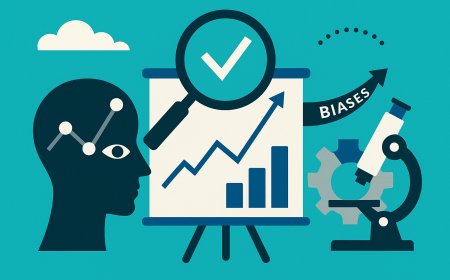
Demographics is a crucial science that studies population changes to shape national strategies. This article defines demographics and explores its strategic applications in public policy, economy, and national identity.
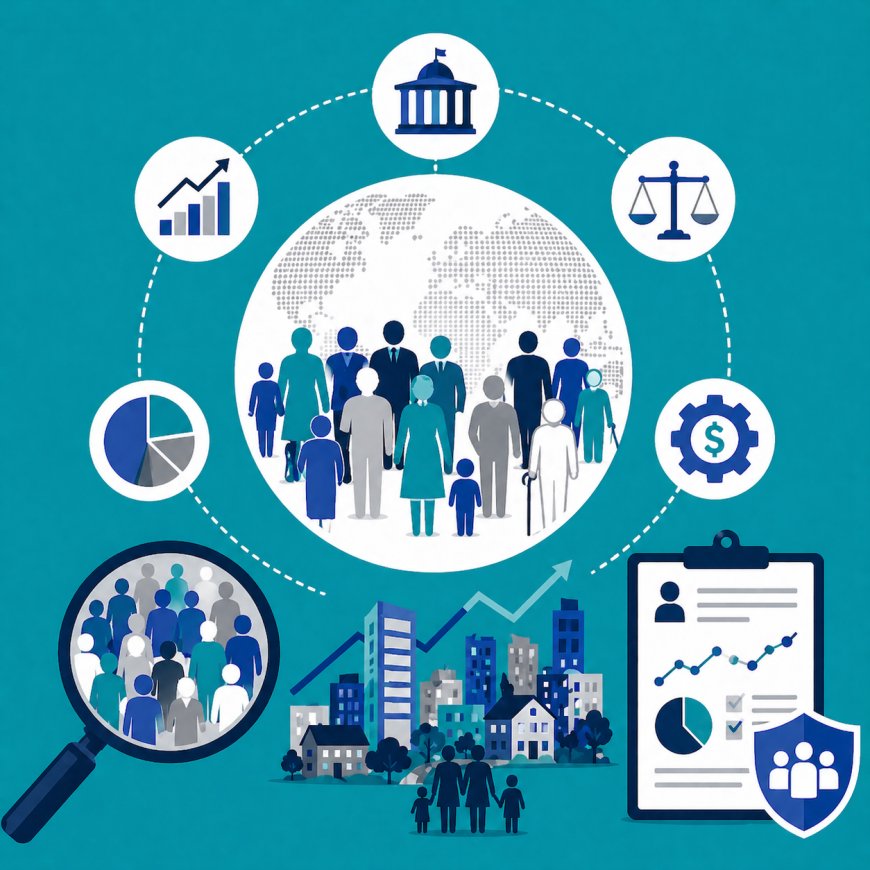
Demographics is often introduced as a technical discipline concerned with counting people—how many they are, where they live, and how they change over time. But this description, while correct, is incomplete. Demographics is not merely the science of numbers. It is the science of human movement in its collective form. It studies populations not as static units, but as dynamic systems shaped by birth, death, and migration, continuously evolving and redefining the structure of societies.


At its foundation, demographics examines four essential dimensions: size, structure, distribution, and change. Yet behind each of these dimensions lies a deeper narrative. Population size reflects capacity and pressure. Structure—especially age composition—reveals future trajectories of labor, dependency, and productivity. Distribution exposes spatial inequalities and urban concentration. And change, driven by fertility, mortality, and migration, determines the direction in which a society is moving.
What makes demographics a crucial science is not its descriptive power, but its strategic relevance. It allows nations to read their human landscape with clarity. By understanding who their people are—how old they are, how educated they are, where they are concentrated, and how they are changing—governments can design policies that anticipate rather than react.
Consider a society with a rapidly growing youth population. This is not merely a statistic. It is a signal. It demands expansion in education, job creation, housing, and social integration. If ignored, it transforms into unemployment, instability, and lost potential. Conversely, a society with an aging population faces a different challenge: sustaining productivity while increasing healthcare and pension burdens. In both cases, demographics does not just describe reality—it warns, guides, and directs.
Its influence extends across multiple domains.
In public policy, demographic data shapes long-term planning in education, healthcare, infrastructure, and food security. In economics, it defines the size of the labor force, consumption patterns, and investment priorities. Young populations tend to produce, consume, and innovate, while aging populations shift toward consumption and care. In culture and politics, demographic shifts—especially migration—reshape identity, social cohesion, and even electoral dynamics. And in national security, population imbalances can either strengthen or weaken a nation’s resilience and strategic position.
But beyond these applications lies a deeper transformation in how demographics should be understood.
The greatest mistake is to treat it as a neutral, statistical exercise. Numbers in demographics are never silent. Each percentage, each rate, each trend carries a human story. A decline in fertility is not just a number—it reflects changing values about family, work, and identity. An increase in migration is not just movement—it reveals economic disparities, political tensions, and aspirations for better living conditions.
In this sense, demographics becomes a mirror—not just of population, but of consciousness.
It reveals how individuals relate to time, to place, and to each other. It exposes the hidden structure of societies—their fears, their priorities, their transformations. And when read with depth, it becomes more than a tool for planning. It becomes a framework for understanding existence at a collective level.
This is where the shift from counting to strategy becomes essential.
Many nations collect demographic data, but few transform it into actionable insight. Reports are produced, tables are filled, but the connection between data and decision remains weak. True demographic strategy requires more than measurement. It requires interpretation. It demands that policymakers ask not only how many people are there, but what kind of society is being formed.
When this shift occurs, demographics becomes a design tool.
Education systems are no longer built around capacity alone, but around the type of human being they aim to produce. Urban planning is no longer about infrastructure, but about shaping environments that align with demographic realities. Economic policy is no longer reactive, but anticipatory—aligned with future labor supply and consumption trends.
In regions undergoing rapid transformation, such as many Arab societies, this shift becomes even more critical. Population growth, urbanization, and migration are not isolated phenomena. They intersect with identity, language, culture, and economic structure. Without a strategic demographic vision, these forces remain unmanaged, leading to fragmentation rather than development.
A society that does not understand its population is a society moving without direction.
It reacts instead of planning. It responds to crises instead of preventing them. It becomes shaped by external pressures rather than shaping its own future.
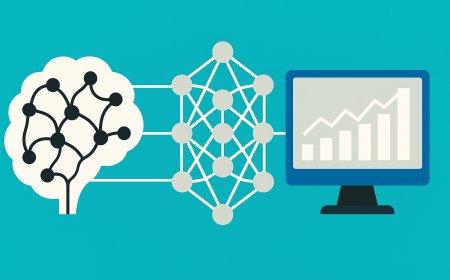
This is why demographics must evolve from a descriptive science into a thinking system. A system that not only measures change, but interprets its meaning. That does not stop at identifying trends, but translates them into long-term vision.
Ultimately, demographics answers a question deeper than numbers:
Not just how many people exist, but what kind of future those people are creating.
And for any nation seeking stability, growth, and identity, this is not optional knowledge.
It is a strategic necessity.
What's Your Reaction?