












































































How Weight Loss Drugs are Shaking Up the Food Industry
Explore the seismic shift in the food industry as new weight loss injections like Ozempic threaten traditional business models and redefine consumer habits.
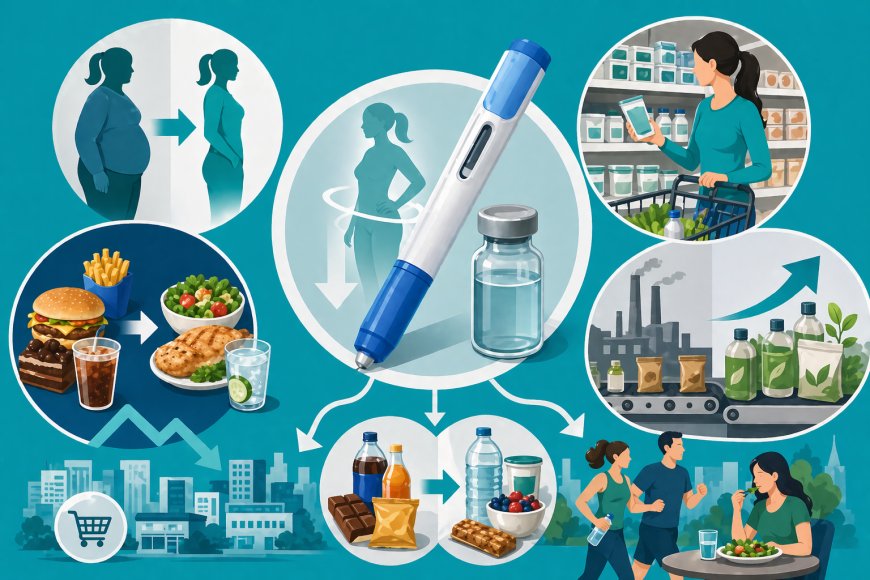
Panic has begun to target the food industry sector around the world due to the impact of weight loss programs such as different types of diets, in addition to injections and weight loss surgeries.


Let us go back to the history of nutritional programs or diets twenty years ago, specifically through the revolution launched by Robert Atkins, the spiritual father of the Atkins diet, who authored many books, the most important of which was Diet Revolution, whose sales for a short time exceeded the books and novels of Harry Potter. His message was not about refraining from eating or deprivation, but about indulging in foods such as steaks, salmon, eggs and cream. At that time, wheat prices fell significantly due to many consumers refraining from eating bread and pastries, which led to losses for many food companies. For example, Unilever blamed the Atkins diet for shrinking its sales during that period.
As 2003 approached, this era ended and the Atkins system faded with the death of its founder, as boredom, side effects, and negative publicity weakened its momentum. As one newspaper summarized it: Atkins is a waste of time.
If we observe closely, every decade brings a new system with new rules. In the 1970s, there was a revolution in calorie counting. In the 1980s, the focus shifted to reducing salt. In the 1990s, attention moved toward reducing fat consumption. Later, carbohydrates were accused of being the main cause of obesity, and in the 2010s, gluten and dairy were also targeted.
By 2021, the shift took a different direction. The latest disruption did not come from a diet, but from pharmaceutical companies through appetite suppressant injections such as Wegovy, approved in 2021 for obesity treatment, and drugs like Ozempic and Mounjaro, originally developed for diabetes but widely used for weight loss.
These GLP-1 drugs stimulate insulin production while restoring the feeling of fullness and suppressing appetite. Their effect resembles dietary self-control, but with less reliance on willpower. This has led to significant enthusiasm among investors in companies such as Novo Nordisk and Eli Lilly, who have benefited from substantial financial gains.
In contrast, food companies, especially those operating in soft drinks and snacks, have faced pressure. In recent weeks, stock prices of companies such as Coca-Cola and PepsiCo, as well as retailers like Walmart and Costco, have declined. Some analysts linked these changes to reports that individuals using weight loss drugs tend to purchase less food.
At the same time, demand for GLP-1 drugs exceeds supply, leading to shortages of medications such as Wegovy and Ozempic. This has even resulted in the emergence of counterfeit versions, raising concerns about potential health risks.
The scale of the issue is significant. Around 70 percent of Americans are overweight or obese, and in Saudi Arabia, more than half of the population falls into these categories. Projections suggest that by 2035, obesity and overweight could affect half of the global population.
Obesity is not only the result of unhealthy demand, but in some contexts appears structurally embedded. Studies indicate that a large proportion of high-calorie foods are primarily consumed by individuals who are already overweight.
Speculation around the broader impact of these drugs extends even to sectors such as aviation, where reduced passenger weight could theoretically lower fuel consumption. However, such projections remain uncertain and require more comprehensive analysis.
Factors such as insurance coverage, willingness to undergo treatment, long-term health effects, and the risk of weight regain after discontinuation all influence the actual impact of these medications. Estimates suggest that the overall reduction in calorie demand may remain modest.
The global food industry, valued at over one trillion dollars, is deeply established and unlikely to remain passive. Industry leaders have already indicated that they can adapt by offering smaller portions or healthier options aligned with new consumption patterns.
Large food companies also retain the ability to influence public perception by raising concerns about the cost and safety of emerging treatments. Given the scale and entrenchment of the industry, shifting global consumption patterns away from unhealthy foods may prove as complex as reducing dependence on other long-standing systems.
What's Your Reaction?