




















































































The Epigenetic Landscape: A Molecular Symphony of Adaptation and Memory
Epigenetics, a dynamic field of study, delves into the regulatory mechanisms behind gene expression that transcend the genetic code itself. Beyond DNA sequences, epigenetic processes involve chemical modifications and structural rearrangements affecting chromatin architecture, allowing organisms to adapt to environmental changes and encode biological memory. Key players such as DNA methylation, histone modifications, and non-coding RNAs orchestrate this molecular symphony. These modifications can dictate developmental pathways and potentially influence evolutionary trajectories. The implications of epigenetic research are profound, offering insights into diseases, adaptation processes, and heritable memory forms. As we advance our understanding, epigenetics promises to unravel the complexities of organismal adaptability and the persistence of life in fluctuating environments.

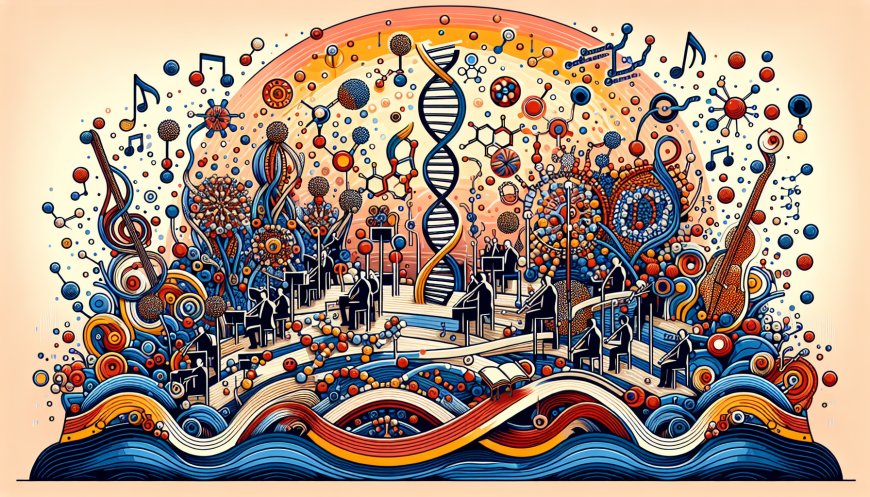
In the realm of molecular biology, epigenetics stands as a sophisticated field elucidating the regulatory mechanisms that modulate gene expression beyond the static nucleotide sequences. This landscape is not just a reflection of the genetic code but a dynamic system in which chemical modifications and structural rearrangements orchestrate an organism's adaptability to its environment. The study of epigenetics seeks to understand how these modifications create a malleable genome—capable of responding to internal and external stimuli—while maintaining structural and functional integrity across cellular generations.


Epigenetics involves a diversity of molecular players, chief among them DNA methylation, histone modification, and non-coding RNA activity, each contributing to the complex tapestry of gene regulation. These players do not alter the genetic sequence itself but rather influence the way genes are expressed. The implications of such mechanisms extend into numerous biological processes, including development, cellular differentiation, and the maintenance of organismal homeostasis. From an evolutionary perspective, epigenetic modifications present a layer of adaptability that can influence an organism's fitness and, by extension, evolutionary trajectories.
DNA Methylation: The Silent Architect of Gene Expression
DNA methylation, a well-studied epigenetic modification, involves the addition of methyl groups to the cytosine bases of DNA. This process is pivotal in gene regulation, often leading to transcriptional repression when occurring in gene promoter regions. Methylation patterns are established early in development, yet they are dynamic, capable of being rewritten in response to environmental stimuli. This adaptability enables organisms to fine-tune gene expression profiles in response to changing conditions, a key aspect of survival in fluctuating environments.
The enduring nature of DNA methylation marks supports their role in long-term biological memory. These chemical tags can be inherited through cellular replication, ensuring the maintenance of gene expression patterns across cell generations. However, the inheritance of methylation patterns is not absolute, and some marks are erased in germ cells, ensuring the plasticity required for developmental processes in offspring. In this way, DNA methylation embodies a dual role, acting both as a preserver of established cellular states and as a facilitator of adaptability and change.
Research into DNA methylation has profound implications for understanding complex diseases. Aberrations in methylation patterns can lead to dysregulation of gene expression, contributing to the onset of cancer and other diseases. Thus, unraveling the intricacies of DNA methylation is pivotal not only for comprehending fundamental biological processes but also for advancing medical research and therapeutic approaches.
Histone Modifications: The Chromatin Sculptors
Histones, the protein components around which DNA is wrapped, play a crucial role in the higher-order organization of chromatin. Post-translational modifications of histones, including acetylation, methylation, phosphorylation, and ubiquitination, constitute another layer of epigenetic regulation. These modifications alter chromatin structure, influencing the accessibility of DNA to transcriptional machinery and thereby modulating gene expression.
The addition or removal of chemical groups from histone tails can induce chromatin condensation or relaxation, thus regulating gene activity. For instance, histone acetylation typically correlates with transcriptional activation, whereas histone methylation can lead to either activation or repression, depending on the specific amino acid residues targeted. This versatility allows histone modifications to serve as dynamic regulators of gene expression, capable of responding swiftly to cellular signals.
Histone modifications also contribute to the establishment of cellular identity. During development, distinct histone modification patterns guide the differentiation of pluripotent stem cells into various specialized cell types. This epigenetic memory ensures that once cells commit to a specific lineage, they maintain their identity through subsequent cell divisions. The ability of histone modifications to encode cellular memory underscores their importance in developmental biology and regenerative medicine.
Non-Coding RNAs: The Unseen Regulators
While historically overshadowed by protein-coding genes, non-coding RNAs (ncRNAs) have emerged as significant regulators within the epigenetic framework. ncRNAs, including microRNAs, long non-coding RNAs, and small interfering RNAs, participate in a variety of regulatory processes, from chromatin remodeling to mRNA degradation.
MicroRNAs, for instance, can downregulate gene expression post-transcriptionally by binding to complementary sequences on target mRNAs, leading to their degradation or translational repression. This post-transcriptional regulation adds a layer of control over gene expression, complementing the pre-transcriptional regulation mediated by DNA methylation and histone modifications.
Long non-coding RNAs, though less understood, are believed to participate in chromatin modification and the regulation of transcriptional networks. They act by interacting with chromatin-modifying proteins to alter local chromatin states or by serving as scaffolds to organize multi-protein complexes involved in gene regulation. The intricate roles of ncRNAs in the epigenetic landscape illustrate the complexity of gene regulation mechanisms required for organismal adaptation.
As our understanding of epigenetics deepens, the profound implications of this field become increasingly evident. By elucidating the mechanisms behind gene regulation, epigenetics offers insights into the adaptability and resilience of life. The study of these molecular symphonies not only enhances our comprehension of biological processes but also holds the promise of novel therapeutic strategies for combating diseases. In this ever-evolving field, the potential to harness epigenetic knowledge could redefine our approach to health and disease, paving the way for a future where we can actively modulate gene expression to improve human health and longevity.
What's Your Reaction?