











































































The Impact of Energy Drinks on Health and Society in Saudi Arabia
Examine the rising consumption of energy drinks in Saudi Arabia, their health risks, and the social and health implications based on recent research.
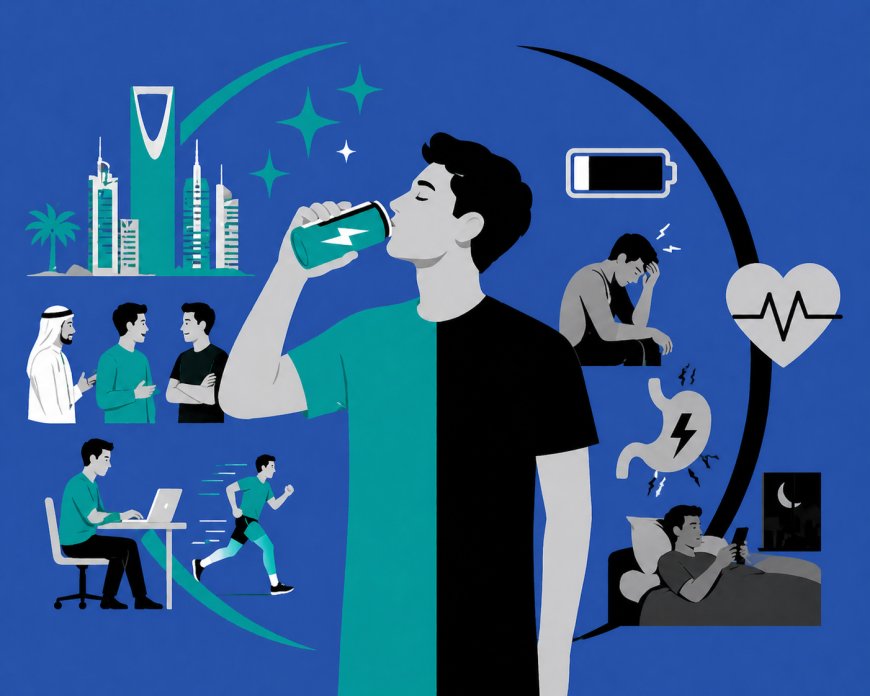
Energy drinks are commonly positioned as products that enhance energy, alertness, and physical performance, a definition aligned with what the National Institutes of Health describes. Yet behind this functional framing lies a composition that raises important health and behavioral questions. A single can often contains high levels of sugar—averaging around 25 grams—which already exceeds the recommended daily intake set by the American Heart Association at approximately 24 grams. This means that consumption is not merely about stimulation, but about exceeding metabolic thresholds in a single serving.


Soft drinks, while often perceived as less intense, share key characteristics with energy drinks. Both are non-alcoholic beverages, typically carbonated, and both contain caffeine, albeit in varying amounts. A standard 350 ml can of Coca-Cola contains about 34 mg of caffeine, while a similar volume of Red Bull contains approximately 114 mg. However, when adjusted to the more common 250 ml size of energy drinks, Red Bull provides around 70 mg of caffeine, which is still lower than a typical 250 ml cup of coffee, containing about 95 mg. This comparison is critical, because it reveals that the perceived “danger” of energy drinks is not solely due to caffeine content, but rather the combination of caffeine, sugar, and consumption patterns.
Globally, energy drinks have become highly prevalent, particularly among younger populations. In the United States, consumption is concentrated within the 18–34 age group, with significant usage also reported among teenagers aged 12–17. This demographic trend is not accidental. It reflects a convergence of taste preference, marketing strategies, and lifestyle patterns that make these products more accessible and appealing to younger individuals.
When shifting the lens to Saudi Arabia, the challenge historically was not in the presence of consumption, but in the absence of reliable, representative data. Earlier research efforts were often limited in scope, focusing on specific groups such as students or confined to major cities like Riyadh or Jeddah. These studies lacked demographic balance, particularly in gender and age representation, making it difficult to generalize findings at the national level.
This gap began to close with the initiative led by Sharik Association for Health Research, which launched a strategic effort in 2018 to build a comprehensive national database. Over four years, data was collected from more than 13,000 participants across all 13 administrative regions of the Kingdom, ensuring a balanced and representative sample. In collaboration with Informed Decision Making (IDM), this dataset provided a clearer and more reliable understanding of consumption patterns for both energy and soft drinks.
The findings challenge several assumptions. First, consumption rates continue to rise despite the implementation of a 50% selective tax on sweetened beverages in 2019. This indicates that price interventions alone are insufficient to alter behavior when cultural and lifestyle drivers remain unchanged. Second, men consistently consume more energy and soft drinks than women, suggesting gender-based behavioral differences that may be linked to social habits and exposure patterns.
Perhaps the most significant insight lies in the association between beverage consumption and lifestyle behavior. The strongest predictor of increased consumption was not age or awareness, but the frequency of eating meals outside the home. This suggests that energy and soft drinks are embedded within broader consumption environments rather than being standalone choices. They are part of a behavioral package that includes convenience, socialization, and external dining patterns.
Interestingly, no significant difference was observed in self-rated health status between frequent consumers and non-consumers. This disconnect between behavior and perceived health highlights a critical gap in awareness. Individuals may not associate their consumption habits with long-term health risks, particularly when immediate effects are not visible.
From a social perspective, the risks extend beyond individual health. Increased consumption of energy drinks has been linked to higher rates of emergency room visits, particularly among younger populations. The situation becomes more severe when energy drinks are combined with substances such as alcohol, marijuana, or medications, significantly increasing hospitalization rates. Data from the Centers for Disease Control and Prevention further indicates that alcohol consumption increases more than fourfold among individuals aged 15–24 when mixed with energy drinks, amplifying both behavioral and health risks.
Health implications are equally concerning. High caffeine intake can lead to cardiovascular complications, including irregular heart rhythms, increased heart rate, and elevated blood pressure. These risks are not exclusive to energy drinks but apply to all caffeine-containing beverages. However, energy drinks receive greater attention due to their high sugar content and their popularity among younger age groups, which increases the likelihood of excessive consumption.
The sugar component introduces another layer of risk. Both energy and soft drinks contribute to daily sugar intake levels that often exceed recommended limits, increasing the likelihood of metabolic disorders over time. Unlike caffeine, which has a threshold effect, sugar consumption accumulates, creating long-term consequences that are less immediately noticeable but more structurally damaging.
What emerges from this analysis is not a simple narrative of “good” versus “bad” beverages, but a more complex picture of consumption embedded within behavior, environment, and perception. Energy drinks are not inherently more dangerous than other caffeinated beverages when consumed in moderation. The risk lies in how they are consumed, by whom, and in what context.
The Saudi data highlights an important direction for future policy and research. Interventions must move beyond taxation and awareness campaigns toward addressing the environments that drive consumption. Restaurants, social settings, and lifestyle patterns play a central role in shaping behavior. Without addressing these factors, consumption is likely to persist regardless of regulatory measures.
Ultimately, the question is not whether these drinks exist, but how they are integrated into daily life. Because the real impact is not determined by the product alone, but by the system in which it is consumed.
And that system, more than the beverage itself, is what defines the outcome.
What's Your Reaction?