The Emergence of AI-Augmented Microscopy: Transforming Biological Research
AI-augmented microscopy is revolutionizing biological research by enhancing image clarity, automating data analysis, and enabling real-time observations. Through machine learning algorithms, researchers can now identify subtle cellular changes and accelerate the discovery of novel biomolecular interactions. This technology not only increases the precision of scientific studies but also opens new frontiers in understanding complex biological systems. As AI continues to integrate with microscopy techniques, the potential for breakthroughs in disease diagnosis, drug development, and synthetic biology is immense. This advancement marks a pivotal shift in the methodology of life sciences, ensuring more accurate and reproducible results.

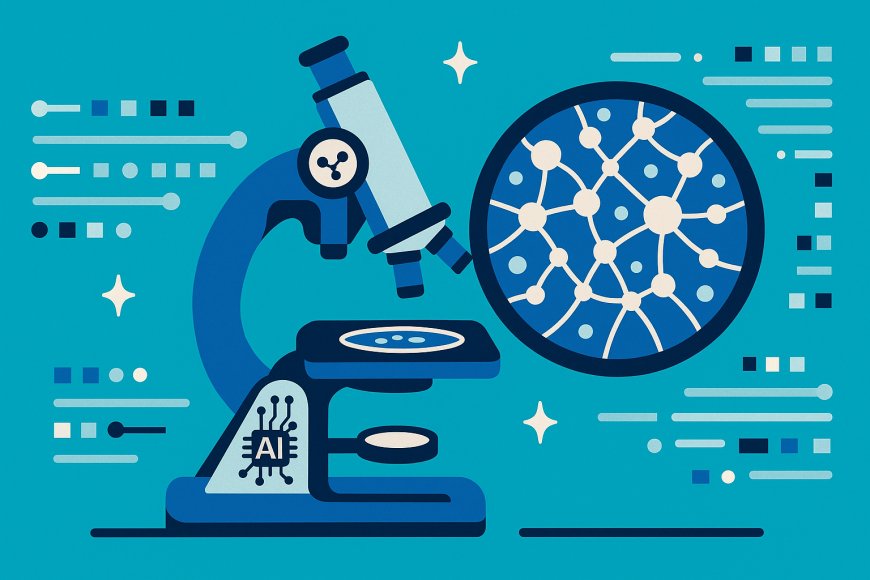
In a dimly lit laboratory, a biologist peers through an advanced microscope, observing the intricate dance of cells. The traditional beauty of microscopy is now paired with the analytical power of artificial intelligence (AI). AI-augmented microscopy is not merely a technical enhancement; it represents a paradigm shift in the way biological research is conducted, offering unprecedented precision and speed.


AI-enhanced microscopy combines deep learning algorithms with high-resolution imaging to provide instantaneous data analysis. Unlike conventional methods, which require extensive manual interpretation, this technology automates image processing, allowing researchers to focus on higher-level inquiries. The integration of AI algorithms enables the real-time observation of dynamic biological processes—transforming qualitative observations into quantifiable data. This capability is particularly revolutionary in fields like oncology and microbiology, where cellular behavior and structure must be understood at a nuanced level.
From Pixels to Patterns: The Role of Machine Learning
Machine learning serves as the backbone of AI-augmented microscopy. By training on massive datasets, machine learning models can identify patterns and anomalies that might escape the human eye. Consider an experiment where researchers are tasked with identifying subtle changes in cancerous tissues. Traditional methods involve manual histological examination, which is labor-intensive and subjective. AI, however, can process thousands of images within minutes, highlighting areas of interest with remarkable accuracy.
In a typical observational study, AI algorithms are employed to detect early signs of cellular transformation. Researchers have reported cases where machine learning models have identified precancerous conditions, potentially years before they would be visible to pathologists. This early detection is crucial in proactive disease management and paves the way for personalized medicine approaches.
Moreover, AI's ability to learn and adapt means that these systems continually improve with each new dataset. The implications for research are profound. As AI becomes more adept at recognizing biological patterns, it may redefine what is considered "normal" in cellular anatomy and physiology. This continuous evolution underscores the transformative potential of AI in scientific inquiry.
Enhancing Reproducibility and Accuracy in Research
Scientific rigor mandates precision and reliability. AI-augmented microscopy directly addresses these requirements by minimizing human error and variability. In the realm of drug discovery, for instance, the accurate evaluation of cellular responses to compounds is paramount. AI systems, devoid of subjective bias, provide consistent analysis, thereby enhancing the credibility of experimental results.
Consider a scenario in synthetic biology where researchers aim to engineer bacteria to produce biofuels. The precise manipulation of microbial pathways requires detailed observations of cellular interactions. AI-augmented microscopy can track these interactions with high fidelity, offering insights into metabolic processes that were previously unattainable. This level of detail not only facilitates innovation but also ensures that such findings are reproducible across different laboratories.
Furthermore, AI aids in the standardization of methodologies. By setting a benchmark for image analysis, AI ensures that deviations in research outcomes are due to biological variables, not analytical inconsistencies. This uniformity is crucial in collaborative research environments where data sharing and comparability are essential for collective progress.
Future Prospects: AI in Biological Frontiers
As AI continues to merge with biological research, its potential applications grow exponentially. One promising area is the use of AI-augmented microscopy in detecting and analyzing complex biomolecular interactions. Through real-time imaging and analysis, researchers can unravel the intricate networks that govern cellular functions, paving the way for breakthroughs in understanding autoimmune diseases and genetic disorders.
The marriage of AI and microscopy also holds promise in environmental biology. By meticulously analyzing the microscopic life within various ecosystems, AI can offer insights into biodiversity and ecosystem health, providing early warnings of ecological shifts. Such applications underscore the versatility and far-reaching impact of AI in scientific research.
In an era where data is abundant and time is a critical resource, AI-augmented microscopy offers a glimpse into the future of biological research—a future where discovery is limited only by our curiosity and capacity to innovate. As AI technologies evolve, they promise to further illuminate the complexities of life, driving humanity toward new scientific frontiers.
What's Your Reaction?