

















































































The Quantum Tapestry of Consciousness: Bridging Physics and Cognition
This article delves into the intricate interplay between quantum mechanics and consciousness, exploring how recent advancements in quantum physics could redefine our understanding of cognitive processes. As both fields evolve, the intersection opens a realm of possibilities, challenging traditional paradigms of cognition and offering profound implications for the future of neuroscience and artificial intelligence.

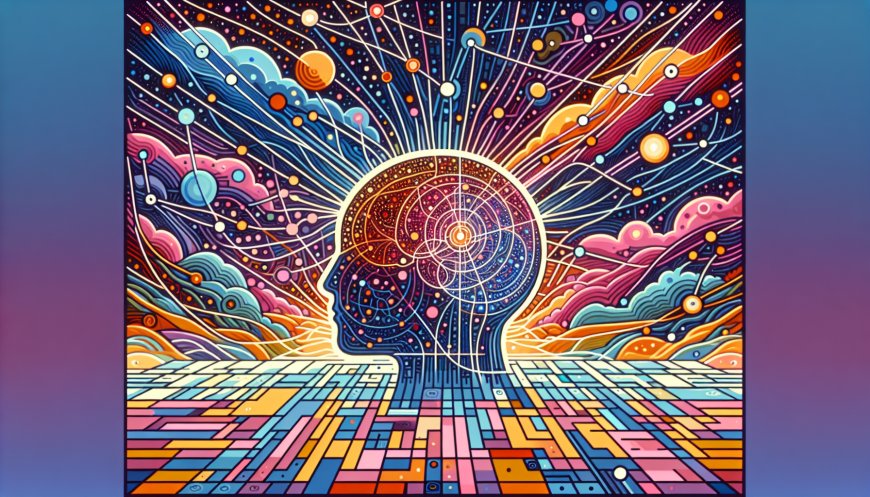
In the realm of scientific exploration, the intersection of quantum mechanics and cognitive science emerges as a fascinating arena. Historically, these disciplines have evolved in isolation, each with its distinct methodologies and philosophical underpinnings. Quantum mechanics, with its probabilistic nature and counterintuitive implications, has revolutionized our understanding of the physical universe. In contrast, cognitive science strives to unravel the complexities of consciousness, perception, and thought. The convergence of these fields heralds a new era of inquiry, challenging our traditional paradigms of mind and matter.


The notion of quantum consciousness posits that cognitive processes might, in some capacity, be influenced or explained by quantum phenomena. This hypothesis, while speculative, is grounded in the peculiar properties of quantum systems—such as entanglement and superposition—that defy classical explanations. If consciousness is indeed a quantum process, it could explain the intricate coherence and unity of subjective experience, bridging gaps left by classical neural explanations. This paradigm shift invites a re-examination of the foundations of cognitive science, prompting questions about the very nature of consciousness and its origins.
At the heart of this inquiry lies the concept of quantum cognition, a burgeoning field that seeks to apply quantum theory to cognitive processes. This approach draws upon the mathematical formalism of quantum mechanics to model decision-making, memory, and perception, offering novel insights into human cognition. By leveraging quantum principles, researchers aim to transcend the limitations of classical models, capturing the probabilistic and often paradoxical nature of human thought. This endeavor not only challenges the boundaries of cognitive science but also enriches our understanding of the human mind.
The Quantum Fabric: Mechanisms and Implications
Central to the exploration of quantum consciousness is the mechanism by which quantum processes allegedly influence cognition. One proposition is that microtubules within neurons could facilitate quantum coherence, acting as conduits for quantum information processing. This idea, though contentious, is supported by the structural properties of microtubules, which could theoretically support quantum states. Such a model suggests that consciousness arises from quantum computations, challenging the classical view that the brain is a purely classical system.
The implications of quantum cognition extend beyond theoretical musings, offering potential applications in artificial intelligence and neurology. By understanding the quantum underpinnings of cognition, we could develop quantum-inspired algorithms that mimic human decision-making processes. These algorithms might outperform classical counterparts in tasks involving uncertainty and complexity, paving the way for advancements in machine learning and computational neuroscience. Furthermore, insights from quantum cognition could inform therapeutic strategies for neurological disorders, offering novel approaches to treatment.
The idea of quantum consciousness also invites philosophical contemplation, particularly in relation to free will and the nature of reality. If consciousness is indeed a quantum phenomenon, it may imply that human decision-making is not wholly deterministic, influenced instead by quantum indeterminacy. This perspective offers a nuanced understanding of autonomy and choice, reframing longstanding debates about free will in light of quantum mechanics. Such philosophical considerations underscore the profound implications of integrating quantum theory into the study of consciousness.
Experimental investigations into quantum cognition are still in their infancy, constrained by the challenges of measuring and manipulating quantum states within biological systems. Despite these obstacles, advancements in quantum technology and neuroscience promise to illuminate the enigmatic relationship between quantum mechanics and cognition. As researchers develop novel techniques to probe the quantum realm, the potential for groundbreaking discoveries beckons, inviting collaboration across disciplines.
Critics of the quantum consciousness hypothesis caution against oversimplification and speculative leaps, advocating for rigorous empirical validation. Nevertheless, the dialogue between quantum physics and cognitive science enriches both domains, fostering a culture of interdisciplinary exploration. As this dialogue unfolds, it is poised to redefine how we perceive consciousness, challenging entrenched notions and inspiring innovative avenues of inquiry.
Navigating the Quantum-Cognitive Nexus: Context and Future Prospects
The intersection of quantum mechanics and cognitive science emerges at a pivotal juncture in scientific history, offering fertile ground for transformative research. As quantum technologies advance, they catalyze a re-evaluation of foundational concepts in cognitive science, prompting a renaissance of intellectual curiosity. This nexus encourages a synthesis of ideas, fostering a holistic understanding of cognition that transcends traditional disciplinary boundaries.
Historically, the mechanistic view of the brain as a deterministic system dominated cognitive science, shaping our perception of consciousness as an emergent property of neural networks. However, the integration of quantum theory into this framework challenges these assumptions, suggesting that consciousness may be more than the sum of its neural parts. This paradigm shift invites researchers to reconceptualize cognitive processes, embracing the probabilistic nature of quantum mechanics to account for the nuances of human experience.
The potential impact of quantum cognition extends beyond theoretical exploration, with profound implications for the future of neuroscience and artificial intelligence. By harnessing the principles of quantum mechanics, researchers could unlock new dimensions of cognitive modeling, enhancing our ability to simulate and understand complex mental phenomena. Such advancements hold promise for developing more sophisticated AI systems that can emulate human-like decision-making and learning processes.
Furthermore, the exploration of quantum consciousness could inspire novel therapeutic approaches, transforming the landscape of mental health treatment. By targeting the quantum mechanisms underlying cognitive processes, we may uncover new pathways for intervention in conditions such as depression, anxiety, and neurodegenerative diseases. This innovative perspective could lead to more effective and personalized treatments, improving the quality of life for individuals with neurological disorders.
As we navigate the quantum-cognitive nexus, the fusion of physics and cognition challenges us to reimagine the boundaries of scientific inquiry. This interdisciplinary dialogue not only enriches our understanding of consciousness but also inspires a broader appreciation for the interconnectedness of scientific disciplines. By embracing the potential of quantum cognition, we embark on a journey of intellectual discovery, poised to unravel the mysteries of the mind and redefine the frontiers of knowledge.
The exploration of quantum consciousness offers a glimpse into the future of scientific discovery, challenging established paradigms and inviting a radical reevaluation of cognitive processes. As we delve deeper into this quantum-cognitive nexus, we stand on the precipice of profound insights that could reshape our understanding of consciousness and its manifestations. The journey ahead promises to be one of intellectual adventure, guided by the principles of quantum mechanics and animated by the quest to uncover the secrets of the mind.
In this pursuit, we are reminded of the power of interdisciplinary collaboration, as researchers from diverse fields converge to explore the quantum tapestry of consciousness. This fusion of ideas not only enriches our scientific understanding but also inspires a new generation of thinkers to embrace the complexities of the mind with curiosity and rigor. As we continue to unravel the quantum fabric of cognition, we forge a path toward a deeper understanding of what it means to be conscious, inviting new possibilities for scientific and philosophical exploration.
What's Your Reaction?