
























































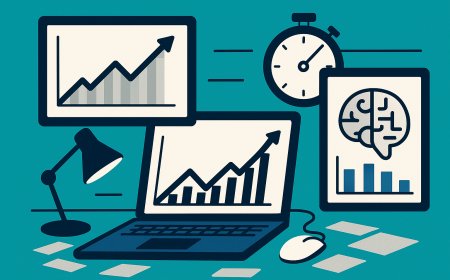






















Decoding Economic Causality: Navigating Complexity in Modern Econometrics
Economic causality remains a profoundly intricate area within econometrics, where establishing cause-and-effect relationships underpins policy-making and financial forecasting. Traditional methods often grapple with challenges such as bias and validity, necessitating innovative approaches to enhance accuracy and applicability. This article delves into the methodological complexities, examining observational studies, computational advancements, and their impact on economic insights.

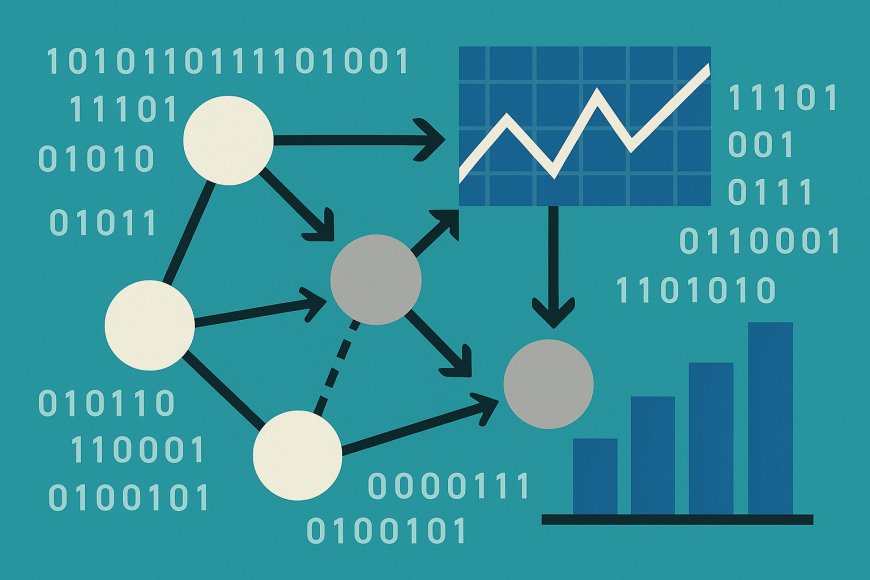
In the intricate world of economic research, causality serves as the keystone that holds the edifice of econometrics together. Yet, establishing cause-and-effect relationships in economics is fraught with challenges. A typical economic model might seek to determine how changes in interest rates affect employment levels. However, such models must grapple with an array of confounding factors that could skew results, such as inflation rates or global market trends. The stakes are high, as policy decisions and financial forecasts hinge on the insights drawn from these models.


Consider a scenario where a government attempts to assess the impact of new trade policies on domestic employment. Using observational data, researchers might notice a correlation between policy implementation and job growth. However, without a robust causal framework, this relationship could be misleading. The apparent correlation might be confounded by external variables like technological advancements that independently influence employment metrics. Such complexities necessitate sophisticated methodologies to disentangle these variables and establish genuine causal links.
Advancements in Causal Inference Methods
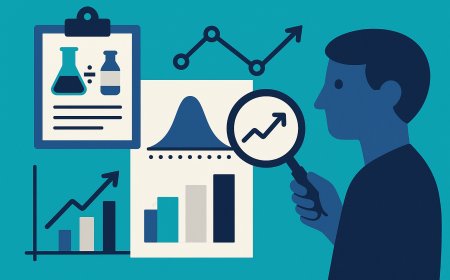
Advancements in econometric methods offer promising avenues for addressing the challenges of economic causality. One approach gaining traction is the use of natural experiments, where researchers exploit real-world situations that approximate a randomized experiment. For instance, economists might study regions affected by sudden policy changes, comparing them with unaffected areas to infer causality. These natural experiments can help mitigate bias by controlling for confounding variables, providing more reliable insights.
A behavioral experiment might illustrate this: researchers analyzing the effects of tax incentives on business investments could compare investment levels in states that implement these incentives against those that do not. The results, while compelling, still require careful statistical controls to ensure validity. This highlights the ongoing need for rigorous methodological scrutiny in the quest for causal clarity.
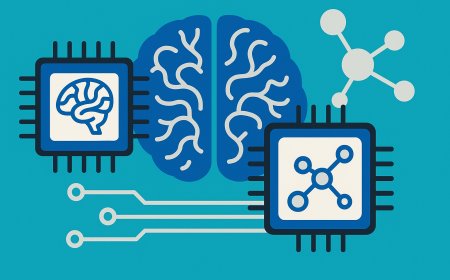
Moreover, the integration of machine learning techniques into econometric models has revolutionized causal inference. Machine learning algorithms can process vast datasets, identifying intricate patterns and potential causal relationships that traditional methods might overlook. For example, a machine learning model analyzing global trade data might uncover subtle causal interactions between currency fluctuations and export volumes, offering insights previously obscured by data complexity.
The Role of Bias and Validity in Economic Modeling
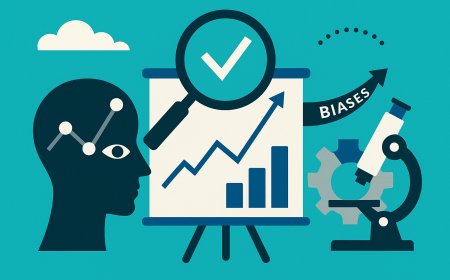
Bias remains a persistent challenge in economic modeling, where preconceived notions or incomplete data can skew results. In economic research, bias often stems from data selection or methodology. Consider a study aiming to evaluate the impact of education on income levels. If the dataset disproportionately represents certain demographics, the resulting model might inaccurately reflect broader economic realities.
To address such issues, researchers employ techniques like instrumental variable analysis, which helps control for unobserved confounding variables. This approach involves finding variables correlated with the independent variable but not directly with the dependent variable, isolating the causal impact. For instance, proximity to quality schools might serve as an instrument in evaluating education's effect on earnings, enhancing the model's validity.
Meanwhile, external validity ensures findings are applicable beyond the studied sample. A model showing causal links between urban infrastructure and economic growth in one city might not translate to another setting without adjustments for local conditions. This consideration is crucial for ensuring that economic policies derived from research can be effectively implemented across diverse contexts.
The Impact of Computational Advances
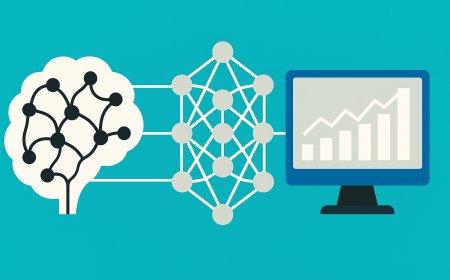
Computational advancements have significantly reshaped the econometric landscape, offering new tools to unravel economic causality. High-performance computing enables the analysis of complex, high-dimensional datasets, facilitating the exploration of intricate causal networks. In a hypothetical study on consumer spending patterns, researchers might employ computational models to analyze myriad influencing factors, from economic indicators to social trends, uncovering causative factors with unprecedented precision.
Bayesian networks, for instance, provide a framework for modeling probabilistic causal relationships in economics. These networks allow researchers to update models with new data continuously, adapting to changing economic landscapes. In practice, this might involve modeling the impact of monetary policy on inflation while accounting for dynamic changes in consumer behavior and global economic conditions.
Additionally, the advent of causal discovery algorithms—tools that automatically infer causal structures from data—represents a paradigm shift. In a study examining the effects of environmental regulations on industrial output, such algorithms might reveal previously unrecognized causal pathways, prompting reevaluations of policy impacts and economic forecasts.
As economic systems grow increasingly complex, the quest for causal understanding becomes ever more critical. The methodologies employed today, enriched by computational innovations, promise to refine economic models and enhance their predictive power. Looking to the future, the integration of interdisciplinary approaches, leveraging insights from fields such as data science and behavioral economics, holds the potential to unlock deeper, more nuanced understandings of economic causality.
In this evolving landscape, the ability to accurately infer causality will remain central to informing policy decisions, guiding investment strategies, and ultimately, shaping economic futures. The pursuit of this knowledge not only challenges traditional econometric paradigms but also inspires an ongoing revolution in how we comprehend the forces driving economic phenomena.
What's Your Reaction?