























































































Beyond the Scalpel: Why Behavior is Key to Bariatric Surgery Success
An in-depth look at why bariatric surgery alone is not a guarantee of long-term weight loss, focusing on the crucial role of lifestyle and behavioral changes.
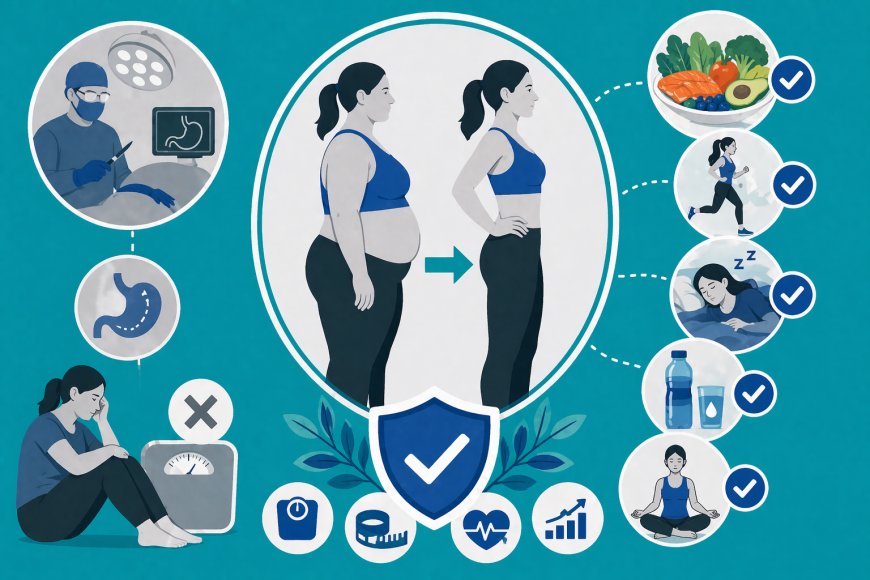
Bariatric surgery has become, for many, a decisive turning point in the journey against obesity. It promises rapid results, visible change, and a sense of control over a condition that often feels resistant. Yet beneath this promise lies a quieter reality: surgery may alter the body, but it does not automatically transform behavior.


Between solution and illusion
The widespread belief that surgery represents a final answer to weight struggles simplifies a far more complex process. Clinical evidence shows a clear divide between individuals who maintain their results and those who gradually return to previous patterns.
The difference is not in the procedure itself, but in what follows it.
Those who succeed tend to rebuild their daily structure: how they eat, how they move, and how they respond to hunger and stress. Those who rely on the operation alone often face a familiar cycle, where initial success is followed by gradual regain.
The return of weight: a predictable pattern
Weight regain after surgery is not rare. It is a known outcome when underlying habits remain unchanged.
The body adapts. Intake patterns shift. Metabolism responds. And without sustained behavioral alignment, the initial advantage of surgery diminishes over time.
This does not mean that surgery fails. It means that its effectiveness is conditional.
What determines long term outcomes
Several factors consistently separate those who maintain weight loss from those who do not:
- Consistent physical activity
- Structured eating patterns
- Reduced reliance on high sugar and highly processed foods
- Stable psychological state
- Lower engagement in behaviors that disrupt metabolic balance
These are not secondary elements. They are central to the outcome.
Surgery changes structure, not behavior
The procedure reduces stomach capacity and alters digestive signaling. But it does not redefine the individual’s relationship with food.
If eating remains driven by emotion, habit, or environment, the body will gradually find ways to compensate. This may occur through increased calorie density, altered timing, or reduced energy expenditure.
In this sense, surgery creates an opportunity, not a guarantee.
The role of movement
Physical activity is often treated as optional, yet it plays a decisive role.
Its value is not limited to energy expenditure. It influences metabolic rate, preserves muscle mass, and stabilizes long term weight.
Regular, moderate intensity activity, sustained over time, creates a physiological environment that supports maintenance rather than temporary change.
Reconstructing the relationship with food
Sustainable outcomes depend on a shift in how food is perceived and used.
This includes:
- Prioritizing nutrient dense foods
- Structuring meals to support satiety and stability
- Reducing reliance on added sugars
- Maintaining awareness of quantity and timing
Without this shift, the body remains within the same behavioral loop, regardless of surgical intervention.
The central question
The decision to undergo bariatric surgery is not only medical. It is behavioral.
The critical question is not whether the procedure works, but whether the individual is prepared to align daily life with its requirements.
Because without that alignment, the outcome is not transformation, but postponement.
Conclusion
Bariatric surgery is a powerful tool, but it is not self-sufficient.
Its success depends on integration into a broader framework of behavior, movement, and awareness. When this framework is absent, the initial results fade, and the underlying patterns reassert themselves.
The real intervention, then, is not only surgical. It is the reconstruction of habit, perception, and daily choice.
What's Your Reaction?