The Two Poisons: Why Nutritional Awareness is Our Only Defense
This article argues that modern food safety goes beyond bacterial contamination to include content poisoning from unhealthy, processed foods, and calls for greater consumer awareness.
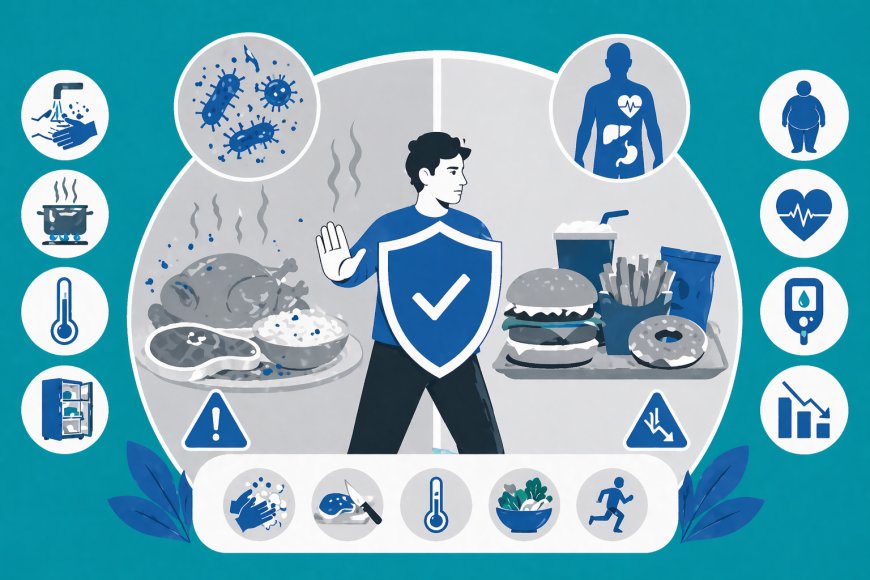
In a world where choices multiply while standards fade, the real question is no longer what should we eat, but why do we accept what is offered to us. Health risks today are not limited to visible contamination or microbial hazards that lead to restaurant closures or product recalls. They extend into a more subtle and dangerous domain: the normalization of low quality, high calorie content, engineered to appeal to taste while quietly eroding health.


Recent closures of well known food chains due to violations in storage, unsafe ingredients, and confirmed food poisoning incidents are not isolated failures. They are visible symptoms of a deeper structural issue. The problem is not only in how food is handled, but in how it is designed, marketed, and consumed. These incidents should not push us to avoid specific brands only, but to reassess our entire relationship with food.
Between contamination and consumption
Food poisoning, in its traditional sense, is measurable. It is linked to bacteria, hygiene, and compliance. But a more pervasive form of harm operates silently through everyday consumption. Products that meet safety standards may still carry nutritional compositions that promote long term disease.
When food becomes a marketing product rather than a biological necessity, consumption shifts from need to stimulation. Highly processed foods rich in sugar, saturated fats, and refined carbohydrates are no longer occasional indulgences. They have become daily habits, reinforced by design.
Are we victims or participants
It is easy to attribute this shift to the market. Yet the market responds to demand as much as it shapes it. The consumer is not entirely passive. Preferences are formed, repeated, and normalized.
Taste is engineered. Packaging is designed to attract. Language is crafted to persuade. Over time, these elements reshape expectations, making unhealthy options appear desirable and even necessary.
This creates a dual form of exposure: physical through consumption, and cognitive through messaging. The result is not only a burden on the body, but a gradual erosion of judgment.
Separating safety from value
A critical distinction must be made between product safety and nutritional value. A product may pass regulatory checks and still lack meaningful nutritional benefit.
Calories alone do not define harm. The composition of those calories, their density, and their cumulative effect determine long term outcomes. A system that prioritizes compliance without addressing nutritional quality allows harmful patterns to persist under the appearance of safety.
Rebuilding nutritional awareness
Addressing this reality requires a shift at multiple levels.
The first is individual awareness. Consumers must move from passive acceptance to active evaluation. Reading labels, understanding ingredients, and recognizing marketing strategies are no longer optional skills.
The second is cultural reframing. Healthy food must be redefined beyond stereotypes. It is not defined by restriction or simplicity, but by balance, composition, and sustainability.
The third is structural responsibility. Markets should not operate independently of health considerations. Regulation, corporate accountability, and public awareness must align to create an environment where healthier choices are accessible and prioritized.
The real battleground
Health today is not determined only in clinical settings. It is shaped daily through decisions made in restaurants, supermarkets, and homes. The most influential factor is no longer treatment, but prevention through informed choice.
The question is no longer whether harmful options exist, but whether awareness is sufficient to recognize and resist them.
Because the most dangerous form of harm is not the one that is avoided, but the one that is consumed willingly under the illusion of choice.
What's Your Reaction?