




































































Open Science vs. Closed Research: Why the Future of Knowledge Must Be Free
The open science movement is challenging the centuries-old model of restricted, paywalled research. This article argues that making scientific knowledge freely accessible is not just an ethical imperative — it is a strategic necessity for accelerating discovery, reducing inequality, and rebuilding public trust in science.


A System Built on Scarcity in an Age of Abundance
There is a profound contradiction at the heart of contemporary academic science. Research funded by public money, conducted by publicly employed scientists, evaluated by unpaid peer reviewers, and addressing problems of urgent public concern is routinely locked behind subscription paywalls that charge hundreds of dollars per article — accessible only to those affiliated with well-resourced institutions. In a world of digital abundance, where the marginal cost of sharing information approaches zero, the dominant model of scientific publishing continues to operate as if knowledge were a scarce commodity that must be rationed to those who can pay.


The open science movement is a direct challenge to this contradiction. It encompasses a broad set of practices — open access publishing, open data, open methodology, open peer review, open educational resources — all oriented toward a single principle: scientific knowledge, especially publicly funded scientific knowledge, should be freely and openly available to everyone. The debate between open and closed models of research is no longer merely academic. It has profound implications for the pace of discovery, the equity of global health, the integrity of the scientific record, and the relationship between science and democratic society.
The Economic Logic of Closed Publishing
To understand the current crisis, it helps to understand how the closed publishing model came to dominate science. Before the digital age, academic publishers performed a genuine and valuable service: they managed the logistics of peer review, typesetting, printing, and distribution in a world where physical copies were the only way to disseminate research. The subscription model made sense when journals were physical objects with real production costs.
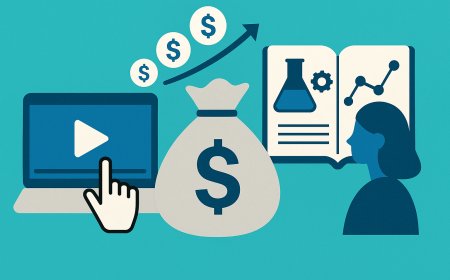
The internet eliminated most of those costs. Yet the subscription model not only survived the digital transition — it became vastly more profitable. The largest academic publishers now report profit margins of 30 to 40 percent, sustained by a system in which the inputs (researchers' time, institutional funding, peer reviewers' labor) are provided largely free of charge, while the outputs are sold back to the very institutions that funded the work in the first place. Universities in wealthy countries spend billions annually on journal subscriptions. Universities in low- and middle-income countries often cannot afford them at all, creating a two-tier scientific system in which the geography of your institution determines your access to human knowledge.
The Open Access Imperative
The case for open access rests on several converging arguments. The most fundamental is ethical: research funded by public money should produce public goods. When a government grants agency finances a study on cancer biology or climate dynamics, the resulting knowledge belongs, in a morally meaningful sense, to the public that funded it. Restricting access to that knowledge through commercial paywalls is a form of enclosure — privatizing the intellectual commons at public expense.
The second argument is practical: open access accelerates discovery. Research builds on research; science advances through the accumulation and synthesis of prior work. When papers are freely available, they are cited more, read more, built upon more quickly, and more easily integrated into systematic reviews and meta-analyses. Studies have consistently shown that open access papers receive more citations than comparable paywalled work. In fast-moving fields — as the COVID-19 pandemic dramatically illustrated — open access to preprints and published data can literally save lives by enabling the scientific community to collaborate and iterate at unprecedented speed.
The third argument concerns equity. The global scientific enterprise is increasingly international, but access to the literature remains profoundly unequal. A researcher at Harvard has access to virtually every journal ever published. A researcher at a university in sub-Saharan Africa may have access to almost none. Open access is not merely a convenience for wealthy institutions — it is a prerequisite for the genuine internationalization of science and for ensuring that the next generation of discoveries can come from anywhere in the world, not just from the institutions that can afford the paywalls.
The Counterarguments and Their Limits
Defenders of the current system raise legitimate concerns. Peer review, editorial curation, and the infrastructure of scientific publishing are not free, and someone must pay for them. The gold open access model — in which authors or their institutions pay article processing charges (APCs) to make their work immediately free to read — simply relocates the financial barrier rather than eliminating it. Researchers without access to APC funding, often those at less well-resourced institutions or in less commercially attractive fields, may find themselves unable to publish in high-status open access journals.
This is a real problem, but it is an argument for redesigning the funding model of open publishing, not for preserving closed access. A growing number of alternatives are emerging: diamond open access journals, funded through institutional consortia or learned societies, that charge neither authors nor readers; overlay journals that provide peer review for preprints hosted on open repositories; and national or funder-mandated open access policies that shift the cost of publishing away from individual researchers.
Open Science Beyond Open Access
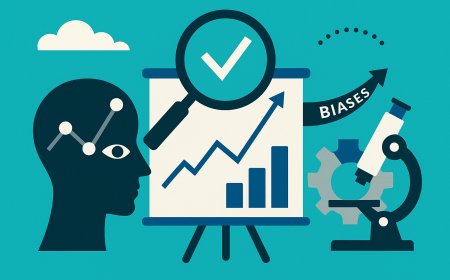
The open science agenda extends well beyond publishing. Open data — the sharing of research datasets alongside published papers — addresses the replication crisis by allowing independent researchers to check each other's work and conduct new analyses on existing data. Open methodology — pre-registering study designs and sharing analysis code — reduces the scope for post-hoc rationalization and selective reporting that have plagued many fields. Open peer review, in which reviewers' identities and reports are made public, introduces accountability into a process that has historically operated in opacity.
Together, these practices constitute a vision of science as a fundamentally collaborative and transparent enterprise — one that earns public trust not through the authority of institutions but through the demonstrable rigor of its processes. In an era when science communication has never been more important, and when public skepticism of expert consensus poses genuine risks to collective welfare, this transparency is not a luxury. It is a strategic necessity.
The Path Forward
The transition to open science will not be seamless. It requires changes to incentive structures, funding models, and the deeply embedded prestige hierarchies of academic publishing. Researchers are still evaluated primarily on the basis of where they publish rather than what they discover, and as long as high-impact closed journals confer the most career capital, many researchers will continue to prioritize them over open alternatives. Changing this requires coordinated action from funders, universities, and learned societies — not individual heroism.
But the direction of travel is clear. An increasing number of major funders — including the Wellcome Trust, the Bill and Melinda Gates Foundation, and a growing number of national research councils — now mandate open access as a condition of their grants. The European Commission's Plan S requires immediate open access for all funded research. In the United States, federal agencies are moving toward zero-embargo open access requirements. The question is no longer whether science will become more open. The question is how quickly, and whether the transition will be designed with equity and quality in mind.
The future of knowledge is open — not because openness is without costs or complications, but because the alternative is a scientific enterprise that serves itself rather than humanity. Open science is not a radical idea. It is the logical completion of what science, at its best, has always aspired to be.
What's Your Reaction?