The Psychology of Pain: Why We Endure Discomfort for Beauty
An exploration of the psychological motivations behind enduring physical pain from cosmetic surgeries, linking it to the pursuit of an ideal self shaped by societal pressures.
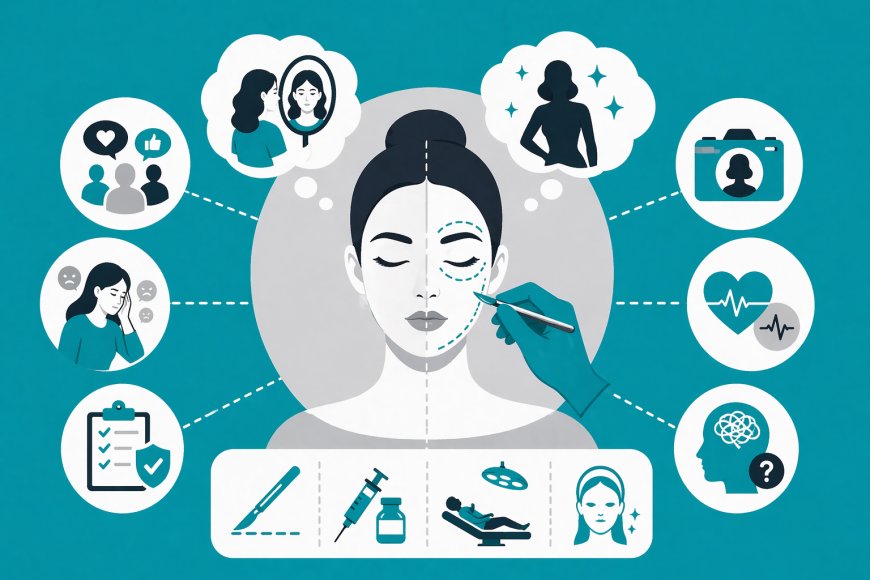
The physical pain associated with cosmetic procedures is often treated as a secondary consequence, yet in many cases it represents a deeper psychological signal. As demand for aesthetic interventions continues to rise, the question is no longer limited to outcomes, but extends to motives: is the pursuit of change purely aesthetic, or is it rooted in unresolved internal tensions shaped by personal and social expectations.


Psychological motivations behind enduring pain
The theory of self discrepancy, developed by Edward Higgins, explains this dynamic through three dimensions of identity:
The actual self reflects how individuals perceive themselves in reality.
The ideal self represents what they aspire to become.
The ought self reflects what they believe they should be according to social and moral standards.
When the gap between these dimensions widens, psychological discomfort emerges in the form of frustration, inadequacy, or shame. This gap becomes a driving force behind compensatory behaviors, including strict dieting, repeated cosmetic procedures, and continuous engagement with self improvement interventions.
Compensatory behavior and internal logic
These behaviors follow a structured psychological reasoning: aligning appearance with the ideal self is perceived as a path toward acceptance and reduced internal discomfort.
Empirical research has shown that a larger gap between actual and ideal self correlates with lower life satisfaction, higher anxiety and depression, and an increased likelihood of engaging in repeated or impulsive cosmetic interventions.
Cultural influence and constructed ideals
The ideal self is not formed independently but is shaped by cultural standards. In environments where appearance is heavily emphasized, specific body types and facial features become dominant ideals.
This creates a collective pressure that transforms cosmetic procedures from optional choices into forms of social adaptation. The decision is no longer entirely personal, but influenced by external expectations and perceived norms.
Pain as a psychological bridge
Physical pain in cosmetic procedures is not merely tolerated, but often interpreted as meaningful. It becomes a symbolic transition between the current and desired self.
This reframes pain as a necessary cost, giving it purpose and justifying the experience as part of a transformation process.
Facial aesthetics and social identity
The face functions as a primary marker of identity and social interaction. According to social identity theory, individuals seek acceptance and belonging through external presentation.
Cosmetic interventions targeting facial features are often attempts to enhance social perception, improve professional or interpersonal opportunities, and strengthen self confidence.
Research indicates that individuals whose features deviate from dominant aesthetic norms are more likely to experience social anxiety, increasing their willingness to undergo painful procedures to reduce perceived social risk.
The shift from improvement to identity alteration
In some cases, cosmetic practices extend beyond enhancement into transformation. The pursuit of alignment with external ideals can lead to gradual detachment from one’s original identity.
This pattern is reinforced by continuous exposure to idealized images and implicit social messaging that equates appearance with value. Over time, self worth becomes externally anchored and unstable.
Clinical evidence links excessive cosmetic intervention with increased rates of anxiety, body dysmorphic disorder, and depression. The repeated attempt to satisfy external expectations weakens internal stability and amplifies sensitivity to criticism.
Conclusion
Pain within the context of cosmetic transformation is not solely a physical phenomenon. It is intertwined with identity, value, and the human need for acceptance.
Medical procedures may alter appearance, but without addressing the psychological dimension, the underlying drivers remain unresolved. A comprehensive approach that integrates psychological support alongside medical intervention is essential to ensure that transformation does not come at the cost of deeper fragmentation.
What's Your Reaction?