















































































Diet vs. Zero: The Truth About Your Favorite Soft Drinks
This article breaks down the differences between Diet and Zero soft drinks, explaining how they are sweetened, their marketing strategies, and whether they are a truly healthy alternative.
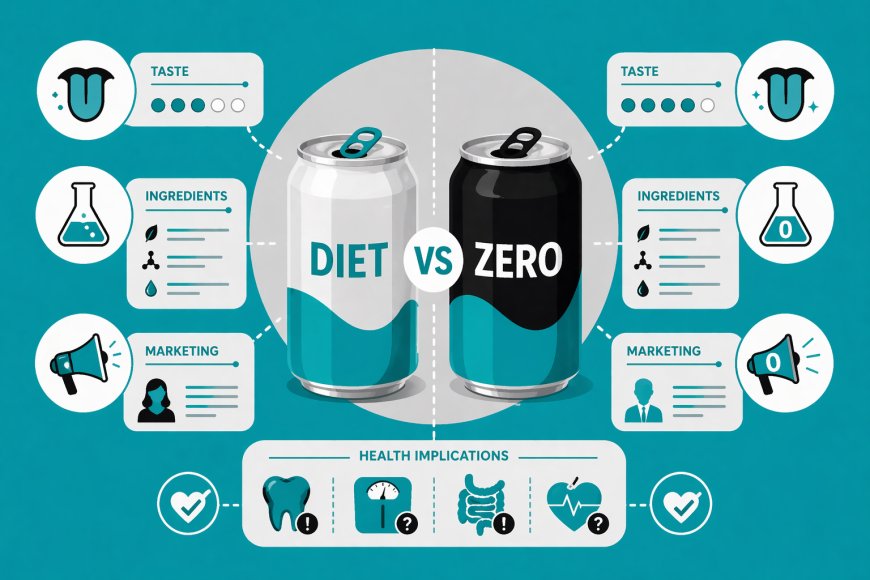
We hear frequently about Diet Coke and Coke Zero, and Diet Pepsi and Pepsi Zero, yet the real distinction between them is often misunderstood. The question is not only whether they are sugar free, but how their composition, taste, and positioning differ despite similar nutritional values.


Types of soft drinks
Soft drinks can be classified based on their composition and purpose:
Traditional soft drinks
They include common carbonated beverages such as cola and flavored sodas. They contain high amounts of sugar or high fructose corn syrup and are associated with increased caloric intake and metabolic risk when consumed excessively.
Diet and Zero soft drinks
These are almost free of sugar and calories and rely on artificial sweeteners such as aspartame or acesulfame potassium. Despite similar nutritional profiles, their taste differs due to formulation.
Fruit flavored soft drinks
They mimic flavors such as orange, grape, and lemon, and may also be available in Diet or Zero versions.
Carbonated energy drinks
They contain caffeine, taurine, and either sugar or artificial sweeteners. They are used for stimulation but may not be suitable for individuals with cardiovascular or sleep concerns.
Flavored carbonated water
Carbonated water with added flavors, considered a lower risk alternative for those seeking zero calorie options.
Is Coca Cola Zero sugar free
Coca Cola Zero contains no sugar and almost zero calories. However, many people notice a difference in taste compared to Diet Coke.
Difference between Diet Coke and Coke Zero
Both are sugar free and low in calories, but differ in three main aspects:
Taste
Coke Zero is designed to replicate the original Coca Cola taste, while Diet Coke has a lighter and more distinct flavor.
Ingredients
Diet Coke typically uses aspartame only. Coke Zero combines aspartame with acesulfame potassium, resulting in a taste closer to regular cola and less bitterness.
Marketing
Diet Coke is positioned toward calorie conscious consumers, while Coke Zero targets those seeking the original taste without sugar.
Difference between Diet Pepsi and Pepsi Zero
The same structure applies:
Diet Pepsi has a lighter flavor and is marketed toward calorie reduction.
Pepsi Zero or Pepsi Max is formulated to resemble the original Pepsi more closely and may contain multiple sweeteners and higher caffeine content.
Why taste differs despite zero sugar
The variation in taste is mainly due to:
Type of sweeteners
Different sweeteners or ratios create different taste profiles.
Flavor formulation
Zero products aim to replicate the original beverage, while Diet versions maintain a distinct identity.
Psychological factors
Branding, naming, and packaging influence perceived taste.
Comparison overview
Diet Coke: no sugar, zero calories, aspartame, light flavor, moderate caffeine, targeted at calorie conscious users
Coke Zero: no sugar, zero calories, aspartame with acesulfame potassium, taste close to original, lower caffeine, targeted at broader audience
Diet Pepsi: no sugar, zero calories, aspartame, moderate flavor, moderate caffeine, targeted at calorie reduction
Pepsi Zero: no sugar, near zero calories, mixed sweeteners, strong flavor, higher caffeine, targeted at those seeking stronger taste
Artificial sweeteners and health
Common sweeteners
Aspartame, acesulfame potassium, and sometimes sucralose are used to provide sweetness without calories.
Safety
Regulatory bodies consider these sweeteners safe within recommended daily limits. They are used in small quantities in beverages.
Ongoing discussions
Some research suggests potential effects on gut microbiota, appetite, and sugar cravings. However, no conclusive evidence confirms significant harm with moderate consumption.
Are they a healthy alternative
Compared to sugar rich soft drinks, they are a less harmful option. However, for optimal health, water and unsweetened beverages remain preferable.
Conclusion
Coca Cola Zero and Pepsi Zero are indeed sugar free, and their difference from Diet versions lies in formulation, taste design, and market positioning rather than calories alone. The essential principle remains moderation, regardless of the type of beverage chosen.
What's Your Reaction?