






































































The Hidden Dangers of Microwave Popcorn and Artificial Flavors
A critical look at the hidden health risks of microwave and cinema popcorn, focusing on dangerous chemical compounds in packaging and artificial flavors.
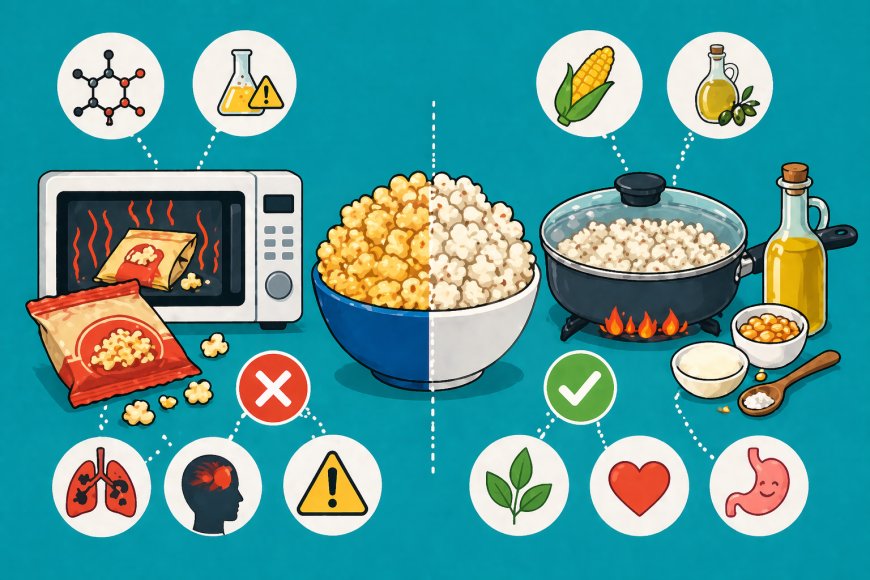
Popcorn is considered one of the most popular snacks in the world, consumed widely in homes and cinemas, and often associated with fast-paced lifestyles. However, with the proliferation of pre-packaged popcorn ready for heating in the microwave, serious questions have arisen in the scientific community regarding the chemical composition of the preparation bags and the industrial ingredients used for flavoring. These may cause grave health damage, especially with repeated consumption.


Natural Popcorn (Traditional Homemade)
Basic Ingredients:
- Popcorn kernels
- A spoonful of vegetable oil (sunflower, coconut, or olive oil)
Preparation Method:
The oil is heated in a deep pot on the stove, then the kernels are added and covered until they begin to pop. The pot is removed when finished, and salt or natural butter can be added as desired.
Benefits:
- Complete control over ingredients
- Free of artificial substances
- Adjustable fat content
- Contains no PFAS or artificial flavorings
Risks:
- Potential for using unhealthy oils out of ignorance
- Over-roasting may produce substances like Acrylamide
Air-Popped Popcorn
Technique:
An electric device blows hot air without using any fats, causing the kernels to pop.
Benefits:
- Virtually fat-free
- No need for oil or additives
- Suitable for low-calorie diets
Use:
Suitable for heart patients and those seeking to lose weight. It can be seasoned later in healthy ways.
Microwave Popcorn
Form:
Sold in paper bags lined on the inside with materials resistant to oil and heat.
Content:
- Popcorn kernels
- Partially or fully hydrogenated oils
- Artificial flavorings (such as butter, cheese, caramel)
- Preservatives and flavor enhancers
Preparation Method:
The bag is placed in the microwave according to instructions (usually 2–4 minutes) and opened after popping.
Health Risks:
- Bag linings often contain PFAS
- The oils used may be saturated or hydrogenated
- Flavorings like Diacetyl are harmful when heated and inhaled
- Potential for acrylamide accumulation due to direct heating
Movie Theater Popcorn
Method:
Prepared using a large heating machine, often with coconut oil or a special industrial oil for flavor. Large amounts of artificial butter or butter-oil blends are added.
Taste:
Rich, greasy, and distinctly salty. Dyes and sometimes strong flavorings are added.
Health Observations:
- The amount of fat can exceed 30 grams in a single container
- Contains over 400–600 calories in a large cup
- The butter used is often not real butter but flavored oil compounds
Packaged Ready-to-Eat Popcorn
Form:
Sold in bags as a ready-to-eat product, with multiple flavors such as cheese, caramel, paprika, and even chocolate.
Industrial Preparation:
Prepared and packaged in factories at high temperatures, with flavorings, dyes, and preservatives added to extend shelf life.
Health Issues:
- Often contains hydrogenated vegetable oils
- Sodium levels are very high
- Preservatives and flavorings are unreliable in some brands
Comparative Summary
| Type | Fats | Artificial Substances | Safety Level | Control over Ingredients |
|---|---|---|---|---|
| Traditional Homemade | Medium | Low | High | High |
| Air-Popped | Low | Almost Nil | Very High | High |
| Microwave | High | High | Low | Low |
| Cinema | Very High | High | Low | None |
| Packaged Ready-to-Eat | Variable | High | Varies by Company | None |
The subject of popcorn flavors may seem simple or trivial, but the chemical and health reality behind these flavors, especially in industrial products, presents a complex issue that touches upon concepts of taste, industry, and slow poisoning. From butter to cheese and caramel, every artificial taste carries behind it a series of chemical reactions that may be innocent in appearance but dangerous in essence.
General Classifications of Popcorn Flavors
Natural Flavors
- Real butter
- Olive oil or coconut oil
- Homemade spices (sea salt, pepper, cumin, paprika)
These are added after preparation or during heating at home and are relatively safe and of controlled origin.
Added Artificial Flavors
These include a mixture of:
- Volatile chemical compounds (to produce the smell of butter or cheese)
- Flavor and aroma stabilizers (such as Butyric acid)
- Food colorings (such as Yellow 5 and Yellow 6)
- Artificial sweeteners in sweet flavors
These are often listed under general names like natural flavors or artificial butter flavor without detailed specification.
Artificial Butter Flavor (Diacetyl)
Perhaps the most dangerous of all popcorn flavors. Diacetyl is used to mimic the taste of butter and is added to most types of microwave popcorn.
Effects:
- Inhaling it causes permanent damage to the bronchioles
- It is linked to Bronchiolitis Obliterans known as popcorn lung
- Its danger lies not just in eating it, but in inhaling it during heating
Many global health agencies, including the CDC and OSHA, have recommended reducing exposure to it, especially in workplaces.
Artificial Cheese Flavors
Composition:
- Lactic acid derivatives
- Compounds like Sodium Caseinate and Autolyzed Yeast Extract
- Hydrogenated fats or fats extracted from industrial dairy products
Potential Harms:
- Triggers allergic reactions in some people
- Contains high levels of sodium and saturated fats
- May contain MSG or its sensory nerve stimulating substitutes
Caramel and Chocolate Flavors
Basic Ingredients:
- High fructose corn syrup
- Artificial flavors such as Vanillin
- Artificial caramel colorings
Health Problems:
- Causes a rapid spike in blood sugar
- Some colorings contain nitrogenous compounds linked to cancer risks
- Associated with an increase in calories up to two to three times that of plain popcorn
Long Term Cumulative Effects
Even if a flavor itself does not cause acute poisoning, repeated consumption and the accumulation of these compounds in the body may be associated with:
- Gastrointestinal disorders
- Chronic food allergies
- Insulin resistance and obesity
- Impairments in liver and kidney functions
Comparison Table of Popcorn Flavors
| Flavor Type | Primary Source | Compounds Used | Main Health Harms | Safety Level |
|---|---|---|---|---|
| Natural Butter | Pure animal butter | Natural saturated fats | Increased cholesterol if overused | High with moderation |
| Artificial Butter Flavor | Diacetyl compound | Diacetyl Acetoin Butanedione | Lung damage upon inhalation popcorn lung | Very Low |
| Artificial Cheese Flavor | Dairy substitutes | Sodium Caseinate Autolyzed Yeast MSG | Food allergies headaches high sodium | Low to Medium |
| Caramel Flavor | Sugar based | High Fructose Corn Syrup Caramel Color | Blood sugar spikes possible carcinogenic compounds | Low |
| Other Flavors | Artificial spices | Synthetic flavorings dyes | Allergies in sensitive individuals | Medium |
| Homemade Flavors | Natural ingredients | Free of additives | No known harms | Very High |
Notes:
- Diacetyl is the most dangerous in terms of respiratory impact when heated even in small amounts
- Some products combine several flavors which multiplies the chemical exposure
- The closer the flavor is to its natural origin and the further from industrial processing the higher the degree of food safety
Latest Recommendations and Studies on Microwave Popcorn
While millions around the world search for quick snack options, microwave popcorn remains one of the most popular products in homes. But behind its paper wrapper and flavors lurks a health risk that can no longer be ignored.
Recent American and European studies have indicated that most commercially packaged microwave popcorn bags contain compounds known as PFAS in their inner lining. These industrial chemicals are used to make the bag resistant to oil and heat but they do not easily break down in nature or in the human body and accumulate over time.
The US Environmental Protection Agency has linked these substances to hormonal disturbances weakened immune system and potential developmental risks.
The concerns extend beyond packaging. Artificial butter flavor contains Diacetyl which has been linked through occupational exposure to a rare lung disease known as popcorn lung.
Experts indicate that the greatest risk lies not in occasional consumption but in repeated exposure especially in enclosed environments.
Doctors and nutrition experts recommend using air poppers that do not require oil or additives and then adding small amounts of natural fats afterward.
This analysis reveals a deeper issue in modern consumption patterns where convenience precedes awareness and where chemical exposure accumulates silently over time.
What's Your Reaction?