












































































Survival Is for the One with the Longest Breath
Life isn't a sprint; it's a marathon. This article argues that long-term success isn't for the fastest, but for those with the most patience and endurance. Learn why true will is born in moments of silence and how to cultivate self-motivation.

There is a quiet misunderstanding at the heart of how we think about success. We tend to admire beginnings—the sharp rise, the early momentum, the visible spark of enthusiasm that makes movement look effortless. The world celebrates the start because it is dramatic, because it is easy to witness, because it carries the illusion of inevitability. But life, in its deeper structure, is not organized around beginnings. It is organized around continuation.


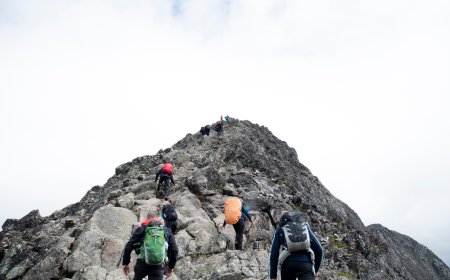
In short races, speed is decisive. The one who accelerates faster, who pushes harder in the first moments, often crosses the line ahead of the rest. But life is not a sprint. It unfolds as a long, uneven path, where the terrain shifts, the weather changes, and the distance is never fully visible. In such a landscape, speed loses its dominance. What begins to matter instead is breath—the ability to remain, to persist, to continue placing one step after another long after the initial energy has dissolved.
Motivation, for all its appeal, is a fragile force. It arrives suddenly and leaves just as quickly. It depends on conditions—on excitement, on clarity, on external signals that affirm the direction of movement. It is a moment, not a system. And moments, by nature, cannot sustain a life’s work. What sustains is something quieter, less visible, and far more demanding: patience. Not patience as passive waiting, but as an active, disciplined endurance—a willingness to move forward without the reward of immediate results, without the reassurance of applause.
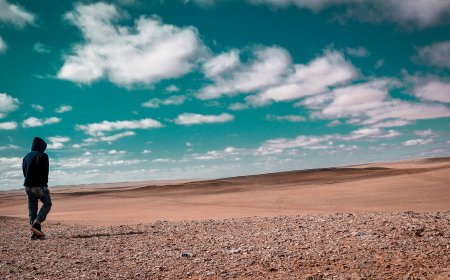
The true test of will does not appear at the beginning, when energy is abundant and the path feels open. It begins precisely when that energy fades. When the noise disappears. When the external world withdraws its attention, and the individual is left alone with the question that cannot be outsourced: will I continue? This is the moment where many trajectories dissolve—not because the goal was unattainable, but because the internal structure required to sustain the journey was never built.
It is here that self-motivation reveals its real meaning. Not as a surge of inspiration, but as a decision repeated in silence. A daily act of choosing continuity over comfort. The individual who continues does not do so because the path is easy, or even because the outcome is guaranteed. They continue because they have made an internal agreement that is no longer dependent on circumstances. The path becomes secondary. The commitment becomes primary.
This is why patience can be understood as a form of capital. Not in the financial sense, but in the structural sense—the resource that allows movement to persist across time. Each moment of resistance, each instance of continuing despite fatigue, accumulates. It builds a form of internal equity that compounds quietly, without spectacle. Others may not see it. There may be no visible indicators of progress. But something is being constructed—an ability to endure that, over time, becomes decisive.
Breath, in this sense, is not merely a metaphor. It is a measure of capacity. The one who manages their breath—who does not exhaust themselves in the early stages, who understands that energy must be distributed across an unknown distance—positions themselves differently. They are not competing in the same race as those who rely solely on intensity. They are operating on a different timeline, one where survival itself becomes an advantage.
And this reframes a fundamental question: who deserves to arrive? It is tempting to answer in terms of talent, intelligence, or even opportunity. But these factors, while influential at the beginning, often lose their power over time. The path filters differently. It does not necessarily reward the most gifted. It reveals the most enduring. The one who remains when others withdraw. The one who continues when the structure around them offers no support. The one who does not lose their breath.
Arrival, then, is not a moment of triumph granted to the fastest or the loudest. It is the natural consequence of continuity. A quiet, almost inevitable outcome for the individual who understood, from the beginning or learned along the way, that life does not ask for intensity—it asks for duration.
And in that understanding, the equation becomes clear. Survival, in the deepest sense, belongs to the one who can stay. Not the one who shines first, but the one who does not disappear.
What's Your Reaction?