Understanding Broken Heart Syndrome and Post-Traumatic Stress Disorders
Learn about the causes, psychological and physical symptoms of broken heart syndrome and PTSD, and how to seek professional help for these conditions.
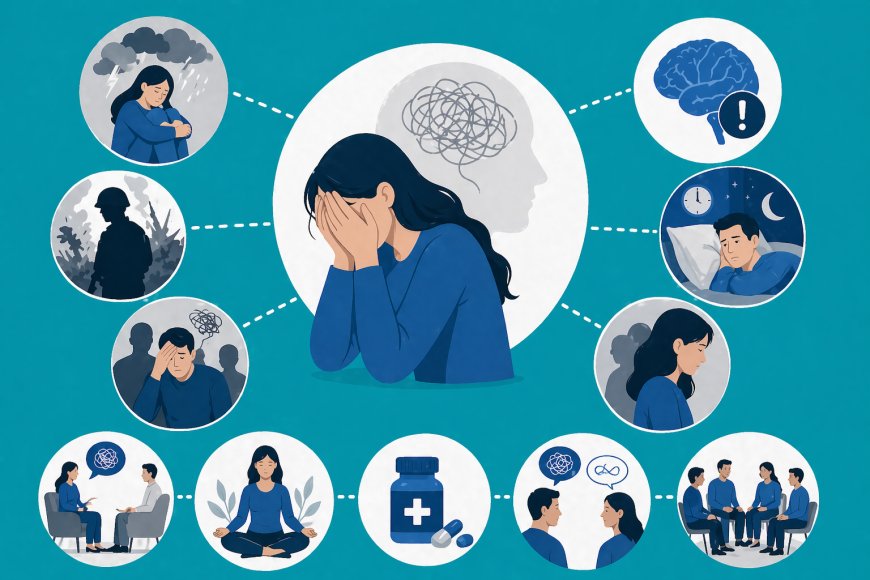
We speak often about “broken heart syndrome” and post-traumatic stress, yet the language we use is broader than our understanding. These are not abstract labels. They are expressions of a deeper disruption in the human system, where an experience exceeds our ability to process it, and leaves behind a trace that continues to act long after the event itself has ended.


Broken heart syndrome, in its psychological sense, is not simply sadness. It is a state where emotional shock translates into real physiological and psychological disturbance. It may begin with grief, loss, or fear, but in some cases it evolves into persistent anxiety, depression, or even chronic conditions that reshape how a person experiences the world.
To understand this, we must begin at the root.
Trauma is not defined by the event alone, but by its impact. It is any experience that overwhelms the individual’s capacity to cope, whether that harm is physical, emotional, or psychological. What may be tolerable for one person may be deeply destabilizing for another. This variability is not weakness; it is human complexity.
The sources of psychological trauma are wide and often intertwined. They include illness and physical pain, accidents, war, natural disasters, and acts of violence. They also include more personal and less visible experiences: the loss of a loved one, witnessing death, domestic conflict, emotional neglect, or prolonged instability within the family. Trauma is not always loud. Sometimes it accumulates quietly over time.
Post-traumatic stress disorder is what happens when the impact of trauma does not resolve. It is not limited to the moment of exposure. It extends into the present, shaping thoughts, emotions, and even the body’s responses. The duration varies. For some, it fades within weeks. For others, it persists for years, especially when the trauma is unprocessed or denied.
Denial is not a failure of awareness. It is often a protective response. Many individuals continue their lives while carrying unresolved trauma, unaware of how deeply it influences their behavior, relationships, and internal state.
This is where confusion often arises. Trauma, anxiety, and depression overlap, but they are not identical.
A person may experience intense grief after losing someone, or emotional instability after major life changes such as relocation, separation, or family conflict. These may fall under adjustment responses. Trauma, however, carries a different weight. It alters the baseline of how safety, trust, and control are perceived.
The symptoms reflect this shift.
Psychologically, trauma may manifest as persistent anxiety, loss of trust, emotional withdrawal, self-blame, fear, phobias, nightmares, and a heavy sense of sadness that does not easily lift. Concentration becomes difficult, and social interaction may feel burdensome rather than natural.
Physically, the body participates in the response. Symptoms may include gastrointestinal disturbances, chronic headaches, muscle tension, lower back pain, unexplained weight changes, and recurring discomfort in the stomach or colon. These are not separate from the psychological state; they are expressions of it.
Recognizing these patterns is the first step, but recognition alone is not sufficient.
One of the most important distinctions to make is between everyday stress and trauma-related anxiety. They may feel similar in intensity, but they arise from different mechanisms and require different approaches. This is why self-assessment tools can be useful, not as diagnostic instruments, but as indicators. They help individuals understand whether what they are experiencing may require professional attention.
If the indicators are high, the next step is not self-management, but consultation. A psychologist or behavioral therapist can provide structured evaluation and support. Early intervention does not only reduce symptoms; it prevents the gradual deepening of the condition.
Access to support has also evolved. Platforms such as the Qareeboon application, approved by the National Center for Mental Health Promotion, offer accessible psychological consultation under professional supervision. They also provide structured educational content that helps individuals understand their condition through clear and modern formats.
But beyond tools and services, there is a more fundamental point.
Trauma is not something that simply disappears with time. It either integrates into the person’s system in a healthy way, or it continues to operate in the background, shaping behavior without being acknowledged.
The real work, therefore, is not in suppressing the experience, but in understanding it. Not in escaping the memory, but in reprocessing its meaning.
Because healing is not the absence of what happened. It is the restoration of the ability to live without being defined by it.
What's Your Reaction?