




































































Simulation: How This Scientific Tool Shapes Our Future
Simulation is a powerful scientific tool that transforms real-world phenomena into predictable models. This article explores the history and types of simulation, from Monte Carlo to IDM's predictive models, and its strategic applications in economics and healthcare.
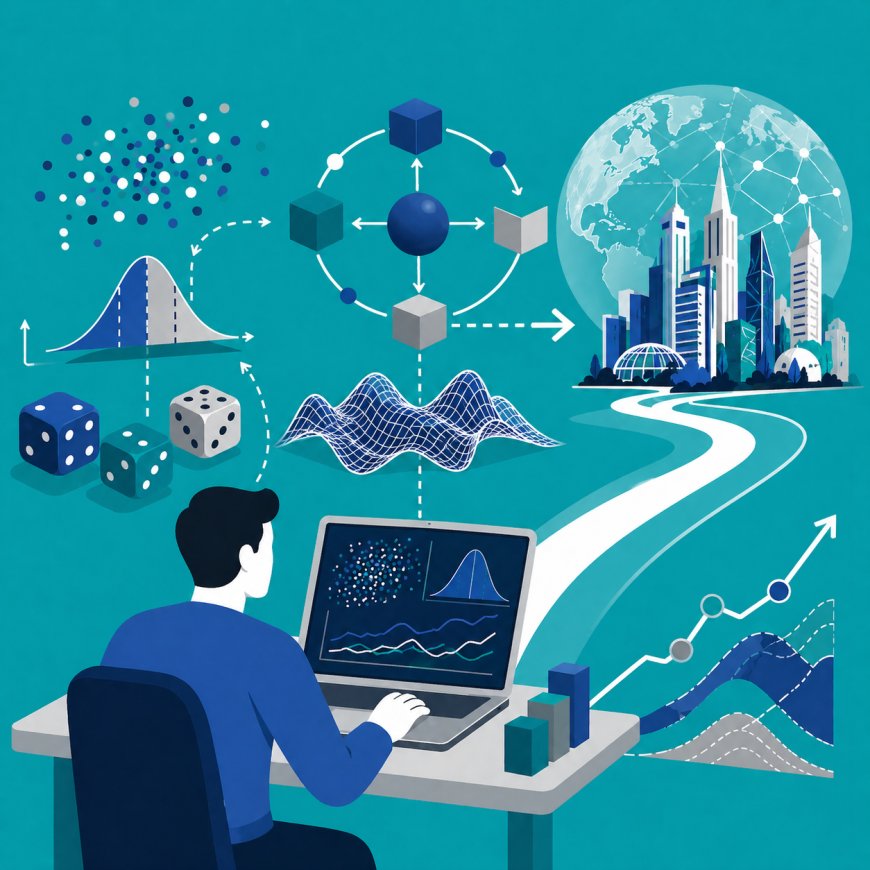
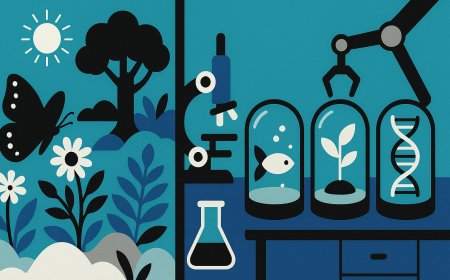
Simulation is often misunderstood as a technical instrument confined to laboratories or software environments. In reality, it is something far more profound. It is a way of thinking. A method through which reality is not merely observed, but reconstructed—abstracted into a form that can be tested, manipulated, and understood before its consequences unfold in the real world.


At its essence, simulation is the transformation of a complex phenomenon—physical, economic, or social—into a structured representation that can be explored under controlled, hypothetical conditions. It creates a parallel environment where decisions can be tested without risk, where outcomes can be anticipated without cost, and where uncertainty can be studied rather than feared.
This is what makes simulation powerful. It does not replicate reality as it appears; it reconstructs it as it behaves.
Historically, the concept of simulation predates its tools. Philosophically, one can trace its roots to early reflections on reality itself—where thinkers questioned whether what we perceive is a direct truth or a representation of something deeper. But the transformation of simulation into a scientific method began with the rise of modern physics and intensified dramatically in the twentieth century.
During World War II, when direct experimentation became either too dangerous or too expensive, scientists developed probabilistic approaches to predict outcomes. This led to the emergence of what is now known as Monte Carlo simulation—a method that relies on repeated random sampling to approximate complex systems governed by uncertainty.
From that point forward, simulation evolved rapidly. With the expansion of computing power, it moved from theoretical models into dynamic systems capable of representing entire environments—financial markets, urban systems, biological processes, and even human behavior.
To understand simulation clearly, one must distinguish between a model and a simulation. A model is the structure—the mathematical or conceptual framework that represents a system. A simulation is the act of activating that model, running it through time, and observing how it behaves under varying conditions. In simple terms, the model defines possibility; the simulation explores it.
This distinction becomes critical when dealing with different types of systems.
Some systems are predictable. In these cases, deterministic models are used. Given the same inputs, they produce the same outputs. These are suitable for controlled environments such as engineering systems or physical processes.
But most real-world systems are not deterministic. They are influenced by randomness, uncertainty, and variables that cannot be fully controlled. Here, stochastic models become essential. These models do not aim to produce a single outcome, but a range of possible outcomes, each with an associated probability. They do not simplify reality—they respect its complexity.
Monte Carlo simulation sits at the center of this approach. Instead of solving a system analytically, it runs thousands or millions of simulated scenarios, each slightly different, to build a statistical understanding of risk, variability, and potential futures. It is used in financial forecasting, risk analysis, resource planning, and any domain where uncertainty is not a problem to eliminate, but a condition to manage.
Beyond probabilistic simulation, there are computational models that incorporate time as a critical dimension. These models do not produce static outputs. They evolve. They simulate how systems behave over continuous periods, allowing analysts to observe patterns, interactions, and long-term effects.
Examples include dynamic simulations used in climate modeling, agent-based models that simulate interactions between individuals within a system, and queueing models that optimize service flows in logistics and operations. Each of these models transforms abstract systems into observable processes.
Choosing the right simulation approach is not merely a technical decision—it reflects how one understands the system itself. A deterministic model implies certainty. A stochastic model acknowledges uncertainty. A dynamic model recognizes the importance of time and interaction. In this sense, simulation is not just about tools. It is about perspective.
Its most transformative role, however, appears in decision-making.
Traditionally, decisions were made based on experience, intuition, or limited data. Simulation changes this paradigm. It allows decision-makers to explore alternatives before committing to them. To test policies without implementing them. To measure risks before encountering them. To transform uncertainty into structured scenarios.
This is why simulation is now central across sectors.
In finance, it evaluates investment strategies under volatile conditions. In public health, it models the spread of diseases and tests interventions. In logistics, it predicts disruptions and optimizes supply chains. In urban planning, it designs cities that can grow without collapsing under congestion. In government, it assesses the impact of policies before they affect real populations.
But perhaps the most important shift is conceptual.
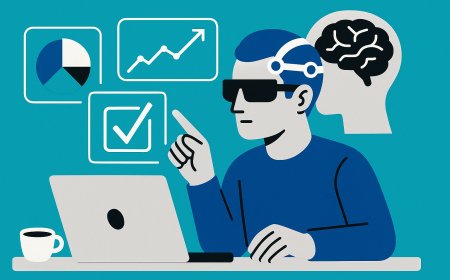
Simulation is no longer just a support tool for decisions. It is becoming a framework for designing decisions themselves. Leaders are no longer only choosing between predefined options. They are constructing systems where options can be generated, tested, and refined continuously. They move from decision-makers to system architects.
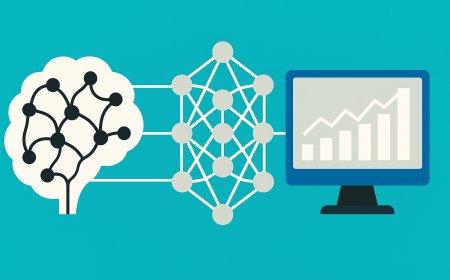
This is where institutions like IDM (Informed Decision Making) emerge as critical players. Their work goes beyond building technical models. They are developing integrated simulation environments that combine data, predictive algorithms, and domain expertise to create what can be described as strategic laboratories.
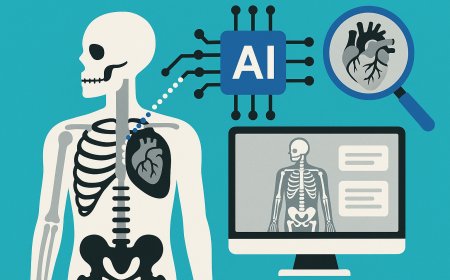
Platforms like ZDataCloud ensure the quality and structure of data inputs. Predictive simulators transform statistical models into actionable scenarios. Health diagnostic systems use non-invasive data to anticipate disease risks with high accuracy. Traffic simulation models allow cities to redesign mobility before infrastructure is built.
What these systems represent is a fundamental shift: from reacting to reality, to pre-designing it.
In a world where complexity is increasing and uncertainty is unavoidable, simulation becomes more than a convenience. It becomes a necessity. It allows individuals and institutions to engage with the future not as something abstract, but as something that can be explored, tested, and shaped.
Ultimately, simulation is not about prediction alone.
It is about preparation.
It is the ability to rehearse reality before it arrives—and in doing so, to influence how it unfolds.
What's Your Reaction?