










































































How Radar Works: From Echoes to Modern Signal Processing
Explore the science behind radar technology – how radio waves are transmitted, reflected and processed to detect aircraft, ships and storms. Learn about pulse Doppler radar, phased arrays and real-world applications from aviation to meteorology.


Radar is a ubiquitous technology that quietly keeps our skies safe, guides ships through fog, tracks storms and even measures the speed of a passing vehicle. The word “radar” originated as an acronym for “radio detection and ranging,” and that description captures its essence: radar systems send out radio waves and detect the echoes that bounce back from objects. By analyzing how long those echoes take to return and how their frequencies change, a radar can determine an object’s distance, direction and relative speed. Over the past century radar has evolved from bulky wartime equipment into sophisticated digital systems that fit on the nose of a jetliner or the bumper of a car.


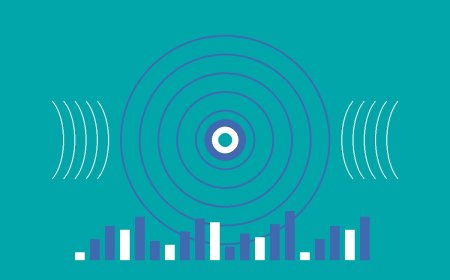
At the heart of radar is the physics of electromagnetic waves. Radio waves are part of the electromagnetic spectrum, occupying frequencies from kilohertz up to gigahertz. They travel at the speed of light, 300,000 kilometres per second in a vacuum, and can propagate through the atmosphere, clouds and precipitation much better than visible light. When a radar transmitter emits a pulse of radio energy, that pulse spreads out and interacts with objects in its path. Some of the energy is absorbed, some passes through and some is scattered in various directions. A tiny fraction of the scattered energy returns to the radar as an echo. By measuring the time between transmission and reception, the system calculates range using the simple relation distance = (speed × time)/2 (the factor of two accounts for the round trip).
A basic radar system consists of a transmitter to generate the high-power pulses, an antenna to direct those pulses into space and collect returning echoes, a receiver to amplify and detect the weak echoes, and signal-processing electronics to extract useful information. In early radars the transmitter and receiver took turns using the same antenna through an electromechanical switch called a duplexer; modern solid-state radars often use separate antennas or advanced circuits to transmit and receive simultaneously. Displays have evolved from oscilloscopes showing blips to digital screens overlaying radar data on maps.
There are many flavours of radar optimized for different tasks. Pulse radar transmits short bursts of radio energy and listens for the echoes in the “quiet” periods in between. This allows it to measure the range of multiple objects at once. Continuous-wave (CW) radar, on the other hand, emits a constant tone. Because a CW radar cannot directly measure range, it is mainly used to detect velocity through the Doppler effect: if a target is moving toward or away from the radar, the frequency of the reflected signal is shifted relative to the transmitted frequency. Police speed guns and some traffic sensors use this principle. Frequency-modulated continuous-wave radar sweeps its frequency in a known pattern to determine both range and speed. Modern weather radars and military surveillance systems often employ pulse-Doppler techniques, analyzing both time delay and frequency shift to distinguish moving targets from stationary clutter.
The Doppler effect plays a critical role in many radar applications. When a wave source and observer move relative to each other, the observed frequency changes. You have experienced this phenomenon when a siren lowers in pitch as it passes by. In radar, the relative motion between transmitter and target shifts the frequency of the echo. By measuring this shift, the radar can calculate the component of the target’s velocity along the line of sight. Doppler radars in meteorology measure the speed of raindrops and can infer wind velocities inside storms, providing crucial information about tornadoes and hurricanes. Air traffic control radars use Doppler processing to filter out stationary ground reflections and focus on moving aircraft.
Advances in electronics and computing have revolutionized radar. Digital signal processing algorithms filter noise, reject interference and extract weak signals buried in clutter. Phased-array antennas composed of many small elements can steer beams electronically without moving parts, allowing radars to switch directions almost instantaneously and track multiple targets simultaneously. Synthetic aperture radar, flown on aircraft or satellites, moves the antenna along a path to synthesize a much larger aperture and create high-resolution images of Earth’s surface day or night, through clouds and darkness. Automotive radar modules in modern vehicles use millimeter-wave frequencies and sophisticated processing to detect other cars, pedestrians and obstacles, enabling adaptive cruise control and collision avoidance systems.
Radar’s applications extend far beyond aviation and weather. Marine radars help ships navigate safely around coastlines and through crowded harbours in poor visibility. Astronomers bounce radar signals off planets and asteroids to map their surfaces and refine their orbits. Geologists use ground-penetrating radar to locate buried structures, and law enforcement agencies deploy radar to monitor vehicle speeds. Radar altimeters on aircraft and spacecraft measure precise altitude, while military radars track missiles, guide weapons and support air defence. Remote sensing radars on Earth-observing satellites monitor sea ice, deforestation, soil moisture and earthquakes.
Despite its versatility, radar is not without limitations. Target detection depends on the radar cross section, a measure of how much energy an object reflects; stealth aircraft and coatings are designed to reduce this reflection. Atmospheric conditions like heavy rain can attenuate signals or create false echoes, and mountains or buildings can block radar beams. Clutter from the ground or sea surface complicates the detection of small targets. Adversaries can also jam or spoof radar systems. Engineers continually develop techniques—such as adaptive filtering, multiple frequency bands and networked sensors—to mitigate these challenges.
From the crackle of wartime screens to the crisp digital images of today’s phased arrays, radar has transformed our ability to observe and navigate the world. By harnessing radio waves and the principles of reflection and frequency shift, radar delivers invaluable information across aviation, maritime, automotive, meteorology, astronomy and many other fields. As technology advances, radar systems will become even smaller, smarter and more integrated into the fabric of modern life, quietly watching over us with their invisible eyes.
What's Your Reaction?