















































































The Sovereignty of Action: Overcoming Doubt and Finding Your Purpose
Doubt is a test, not an enemy to be negotiated with. Learn the sovereignty of action, a philosophy that empowers you to move forward without waiting for certainty and to find your purpose through consistent progress.

There is a moment that repeats itself in every attempt to change—a moment that does not announce failure, but suspends action. It is not loud, not aggressive, and not obviously destructive. It comes in the form of a reasonable voice. Calm. Measured. Persuasive. It does not tell you to stop. It suggests delay. It offers you time to think, to prepare, to ensure that the next step is justified. And because it speaks the language of caution, it is often mistaken for wisdom.


But this voice is not there to guide you forward. It is there to test whether you are willing to move without certainty.
Doubt, in its essence, is not an obstacle placed in your path. It is a condition of the path itself. It appears precisely when movement becomes real—when the step you are considering has consequences, when it threatens to alter your current state. It does not need to be eliminated. It needs to be understood.
The mistake is not that doubt exists. The mistake is engaging with it as if it requires resolution before action.
Most people wait for clarity. They assume that understanding must precede movement, that confidence must be established before execution, that readiness is a prerequisite rather than a result. But this reverses the order. Clarity is not given in advance. It is produced through action. Confidence is not a condition for beginning. It is a consequence of continuing.
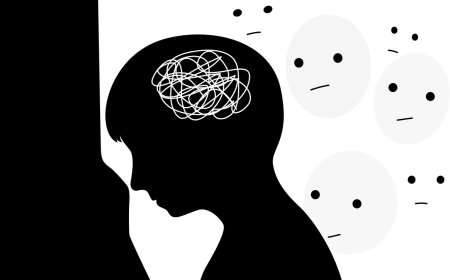
When you attempt to resolve doubt through thought alone, you enter a loop. Each question generates another. Each concern produces a new scenario. The mind expands possibilities faster than it resolves them. And in that expansion, the original intention loses its momentum.
Action interrupts this loop.
Not by answering every question, but by making some of them irrelevant. The moment you begin, certain uncertainties collapse. Not because they were solved, but because they were no longer necessary. The path, which appeared abstract, becomes concrete. What was imagined as complex reveals its structure through engagement.
This is why action must come earlier than feels comfortable.
Not reckless action, but deliberate initiation. A first step that is taken without requiring full understanding. This step does not need to be perfect. It needs to be real. Because reality reorganizes perception in ways that thought cannot. It provides feedback. It creates friction. It reveals gaps. And through this process, it generates a form of knowledge that cannot be obtained in advance.
Doubt, then, does not need to be convinced. It needs to be bypassed.
The more time you give it, the more refined it becomes. It adapts. It strengthens its arguments. It draws from memory, from past experiences, from perceived risks. It becomes increasingly difficult to overcome not because it is correct, but because it is well-supported.
The countermeasure is not better reasoning. It is earlier movement.
To act before the internal narrative completes itself. To reduce the distance between intention and execution. To treat action not as the final step, but as the first requirement.
This does not eliminate uncertainty. It repositions it.
You are no longer waiting for uncertainty to disappear. You are moving within it. And in doing so, you begin to notice something important: uncertainty does not prevent progress. It accompanies it.
This shift changes the role of discipline.
Discipline is often interpreted as consistency in behavior. But at a deeper level, it is consistency in initiation. The ability to begin repeatedly, regardless of internal conditions. To act even when the emotional state is not aligned. To remove the need for feeling ready.
This is what restores a person to their center.
Because hesitation disperses attention. It fragments focus across possibilities, risks, and imagined outcomes. Action consolidates it. It directs energy into a single line of movement. It simplifies what was previously complex.
Each day presents this same structure.
There is no accumulation of certainty that carries over from yesterday. Past success does not eliminate today’s hesitation. Past failure does not determine today’s outcome. Each day resets the condition. The decision must be made again.
To act, or to wait.
And waiting, in this context, is rarely neutral. It often leads to repetition. To returning to familiar patterns. To maintaining a state that no longer produces growth.
This is why the edge becomes necessary.
Not as a place of danger, but as a place of development. The area where you are not fully prepared. Where your current capabilities are stretched. Where the outcome is not guaranteed. This is where expansion occurs.
Comfort, while stable, is circular. It preserves what already exists. It does not extend it.
To move beyond it requires a different standard.
Not “am I ready?” but “is this necessary?”
If it is necessary for growth, then readiness becomes secondary.
From here, the structure becomes simpler.
You do not need to resolve every doubt. You need to act before it accumulates. You do not need to predict every outcome. You need to engage with one step. You do not need to feel confident. You need to reduce delay.
Because most people do not lack ability, knowledge, or vision.
They lack the decision to begin without permission from their internal state.
And this is where sovereignty appears.
Not in controlling circumstances, but in directing behavior despite them. Not in eliminating doubt, but in preventing it from governing action.
So when the moment comes—and it will—when the voice suggests waiting, when it offers its careful reasoning, when it presents delay as intelligence, the response does not need to be complex.
It needs to be immediate.
Begin.
Not because you are certain.
But because certainty does not come before movement.
It comes from it.
What's Your Reaction?