















































































Purslane: The Resilient Plant with Hidden Nutritional Power
An in-depth scientific look at purslane, a resilient plant with a powerful nutritional profile, including its health benefits and traditional uses.
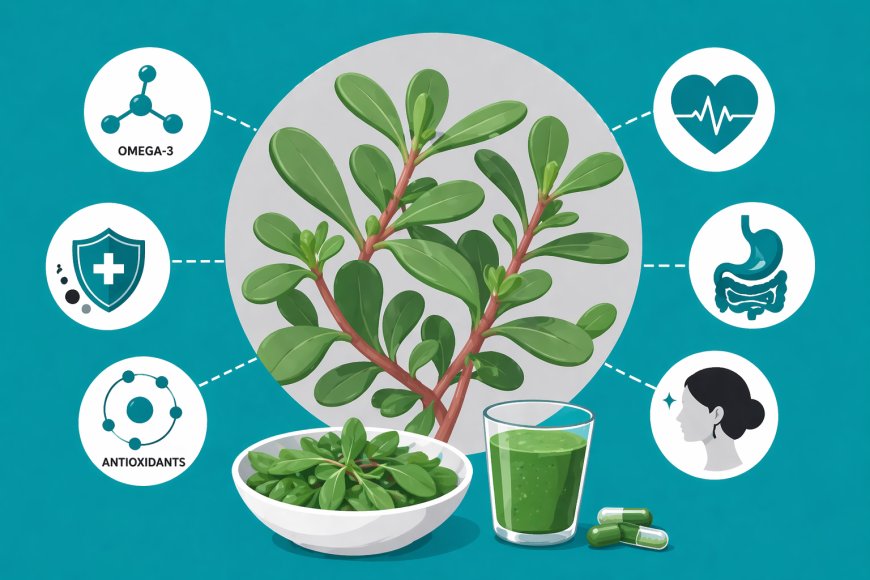
Understand this: the world is full of overlooked elements whose value is diminished not by their nature, but by human familiarity with them. Among these stands purslane, a plant that spreads quietly across harsh environments, carrying within it a biological efficiency that exceeds many cultivated crops. Its presence is not accidental, but a reflection of an adaptive intelligence that allows it to survive, expand, and function under conditions that eliminate more delicate species.


Environmental Origin and Geographic Distribution
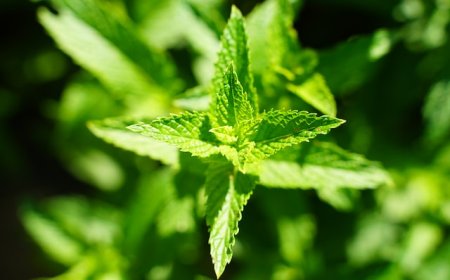
Purslane, scientifically known as Portulaca oleracea, is an annual succulent plant characterized by thick leaves and a creeping stem that extends horizontally across the soil. It thrives in hot and dry climates, tolerates salinity, and grows in poor soils with minimal resources.
Its origin is traced to the Middle East and Central Asia, from where it spread globally through trade and agriculture. Today, it appears spontaneously in fields, roadsides, and even urban cracks, reflecting its remarkable environmental flexibility.
In the Arabian Peninsula, including Saudi Arabia, purslane grows naturally and has been incorporated into traditional food practices, reinforcing its role as both a native and functional plant.
Nutritional Composition and Health Value
Purslane is one of the most nutrient dense leafy plants relative to its caloric content.
Vitamins and Minerals
It contains high levels of vitamin A in the form of beta carotene, vitamin C, vitamin E, folate, and several B vitamins. It also provides essential minerals such as calcium, magnesium, potassium, and iron, which support bone strength, nerve function, and cardiovascular balance.
Omega 3 Fatty Acids
Unlike most plants, purslane contains alpha linolenic acid, a form of omega 3 that contributes to reducing inflammation, supporting heart health, and enhancing cognitive function.
Antioxidants and Active Compounds
It is rich in polyphenols, betalains, melatonin, and glutathione, all of which help reduce oxidative stress and protect against chronic diseases.
Clinical Benefits
Regular consumption has been associated with:
- Reduction in cholesterol and triglycerides
- Improvement in insulin sensitivity and glucose regulation
- Lower blood pressure
- Support for liver function
- Hormonal regulation in certain conditions
Safety Considerations
Purslane contains oxalates, which may contribute to kidney stone formation in susceptible individuals. Moderation is therefore recommended, especially for those with renal conditions.
Practical Use and Preparation
Purslane can be easily integrated into daily nutrition through various methods.
Consumption Methods
- Raw in salads to preserve sensitive nutrients
- Lightly cooked in soups or stews
- Dried and ground as a nutritional additive
- Seeds consumed whole or soaked
Practical Applications
- Mixed with vegetables and olive oil for nutrient rich salads
- Added to eggs to enhance protein and mineral content
- Incorporated into soups to increase antioxidant value
Recommended Intake
- Fifty to one hundred grams of fresh leaves daily for general health
- Five to ten grams of seeds for therapeutic purposes under supervision
Preparation Guidelines
- Wash thoroughly to remove contaminants
- Avoid excessive cooking to preserve nutrients
- Rotate with other vegetables to limit oxalate accumulation
Therapeutic Applications
Purslane demonstrates multiple clinically supported effects across body systems.
Blood Sugar Regulation
It improves insulin sensitivity and reduces fasting glucose levels, especially in individuals with metabolic disturbances.
Liver Support
Its antioxidant profile helps reduce liver stress and improves biochemical markers associated with fatty liver conditions.
Lipid Profile Improvement
Omega 3 content and fiber contribute to lowering LDL cholesterol and triglycerides.
Hormonal Regulation
Purslane seeds have been associated with reduced menstrual bleeding and improved hormonal balance.
Digestive Support
It enhances gut function, reduces irritation, and supports microbiome balance.
Dermatological Use
Topical application may support healing of minor wounds and skin irritation due to antimicrobial and regenerative properties.
Precautions
High oxalate content requires caution in kidney disease. Excessive intake without medical supervision is not recommended, particularly in sensitive populations.
Conclusion
Purslane is not merely a wild plant but a functional nutritional system embedded within nature. Its resilience reflects efficiency, and its composition reflects density without excess. It represents a model of how simplicity, when understood correctly, can transform into a strategic health tool.
Integrating purslane into modern dietary systems does not require innovation in technology but awareness in choice. It stands as a reminder that some of the most effective interventions in health are not created in laboratories, but already exist in the natural environment, waiting to be recognized and used intelligently.
What's Your Reaction?