






















































































The Enemy Within: How to Defeat Self-Deception and Master Discipline
Your greatest enemy is not external, but the internal voice of self-deception. Learn how to master discipline as a quiet rebellion against psychological resistance and achieve true personal growth.

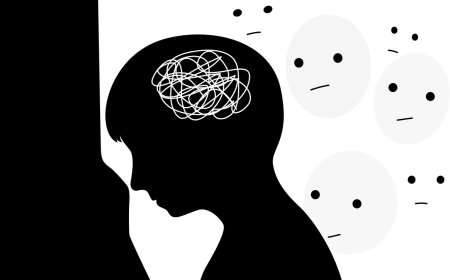
There is an adversary that requires no introduction because it has never been absent. It does not arrive from the outside, nor does it depend on circumstance to gain access. It is already positioned—familiar, articulate, and deeply informed. It knows your patterns, your hesitations, your unfinished attempts. It speaks in your tone, uses your logic, and presents its arguments as if they were your own conclusions. And this is precisely what makes it difficult to confront: it does not feel like opposition. It feels like truth.


In moments of intention—when you decide to begin, to change, to rise—this voice does not resist directly. It does something more sophisticated. It recalls. It reconstructs your past failures with precision, arranges them into a coherent narrative, and presents them as evidence. Not to stop you entirely, but to slow you. To introduce doubt at the exact moment where momentum is fragile. It rarely says “do not act.” It suggests “not now.” And in that small adjustment, entire trajectories are lost.
It is tempting to describe this as weakness. But that would be inaccurate. The mind is not weak. It is strategic. It is designed, at a fundamental level, to protect. The problem is not its intention, but its interpretation. It does not reliably distinguish between what harms and what develops. It treats unfamiliar effort as risk, exposure as threat, and uncertainty as something to be minimized. Growth, from its perspective, often resembles danger.
This is why discipline must be understood differently. It is not a performance, nor a trait displayed for recognition. It is a counter-strategy. A deliberate act that interrupts the automatic patterns of avoidance. When the mind signals retreat, discipline does not argue—it moves. When the mind proposes delay, discipline reduces the time between thought and action. It does not seek to eliminate internal resistance. It renders it less relevant.
And this is important: discipline is not born in ease. It does not emerge when conditions are favorable or when energy is abundant. It is constructed precisely in the moments where continuation feels least justified. When effort is not reinforced by results. When recognition is absent. When fatigue accumulates quietly. These are not interruptions to discipline—they are the environment in which it becomes real.
Because without pressure, there is no distinction between preference and principle.
In these moments, the internal voice becomes more persuasive. It adopts the language of maturity. It suggests that withdrawal is wisdom, that rest is strategic, that postponement is responsible. It does not present itself as fear. It presents itself as balance. And unless it is recognized, it can redirect behavior without being questioned.
So the response cannot be negotiation. Negotiation assumes that both sides are equally valid. But in this case, one side is structured to maintain the current state, regardless of its long-term consequences. The more effective response is interruption. To act before the argument completes itself. To move before the internal narrative consolidates. To begin while the idea is still forming, not after it has been evaluated into paralysis.
This is why speed, at a micro level, becomes critical. Not speed in execution, but speed in initiation. The shorter the gap between intention and action, the less space the mind has to reorganize resistance. Action, in this context, is not the result of confidence. It is the source of it. Each completed act weakens the authority of the opposing voice. Not by defeating it once, but by making its predictions less accurate over time.
Consistency then transforms from effort into identity. What begins as a series of decisions gradually becomes a pattern. The behavior repeats enough times that it no longer requires continuous justification. It becomes expected. And when something becomes expected, it becomes stable. The individual no longer asks whether they feel like acting. The action is integrated into how they function.
This does not eliminate fatigue. It does not remove difficulty. It changes the response to both. Exhaustion is no longer a command. It is a condition. And conditions, unlike commands, do not dictate behavior.
Understanding this internal dynamic also produces a different kind of fairness toward oneself. What is often labeled as laziness is not always a lack of will. It is frequently a result of being outmaneuvered by a system that is more practiced, more consistent, and more embedded. The mind has been rehearsing these patterns for years. Expecting to override them instantly is unrealistic. But recognizing them changes the nature of the engagement.
Once the tactics are visible, they become predictable. And once predictable, they can be countered. Not with intensity, but with structure. With systems that reduce decision-making, with routines that minimize negotiation, with environments that limit distraction, and with commitments that are small enough to execute consistently but strong enough to accumulate.
From there, something shifts. Small actions begin to carry a different meaning. They are no longer insignificant tasks. They become evidence. Evidence that the internal voice is not absolute. Evidence that behavior can be directed rather than negotiated. Evidence that control, even if partial, is possible.
And this is where discipline reaches its deeper function. Not as a tool for productivity, but as a method of reclaiming authorship. Each act of continuation, however small, redefines the balance of power. It demonstrates that the individual is not entirely governed by internal resistance.
So when the moment arrives again—and it will—when the voice suggests delay, when it presents its familiar reasoning, when it reconstructs its arguments with precision, the response becomes simpler.
Not louder. Not more emotional. Just earlier.
Act.
Not to prove strength, but to prevent surrender.
What's Your Reaction?