
















































































Automation vs. Augmentation: Is Technology Replacing Humans or Unlocking Them?
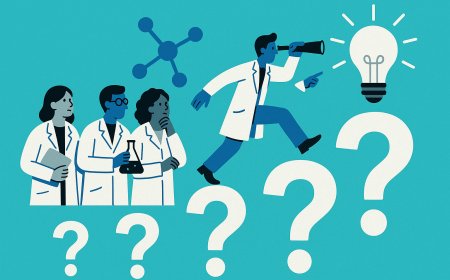
Two researchers debate a critical question: does technology ultimately replace human workers, or does it unlock new forms of human potential and collaboration?


The following is a structured dialogue between two researchers with different perspectives on how technology is reshaping the human role in work and society. Their views are illustrative of a genuine debate in labor economics, sociology, and science and technology studies.


Opening Positions
Researcher A (Displacement Thesis): The historical pattern is consistent. Every major wave of labor-saving technology produces a period of disruption where certain categories of workers lose their economic relevance before new categories emerge — if they emerge at all. What makes the current moment different is the cognitive breadth of the tools involved. Previous automation affected physical labor, routine clerical tasks, and predictable decision-making. AI systems now threaten to automate reasoning, communication, creative production, and judgment. The range of human capacities being substituted has expanded significantly, and the timeline is compressed.
Researcher B (Augmentation Thesis): That framing assumes a fixed supply of tasks. But work doesn't work that way. When a technology automates a component of a job, what typically happens is that the remaining human components become more valuable, the overall productivity of the worker increases, demand for the output grows, and new forms of complexity emerge that require human attention. The loom didn't eliminate textile workers — it transformed what they did, scaled production dramatically, and created an entirely new economic ecosystem around clothing. The same pattern has repeated with nearly every major productivity technology.
The Crux of the Disagreement
Researcher A: The loom analogy breaks down when the cognitive demands of the remaining work exceed what the displaced population can readily develop. A nineteenth-century agricultural laborer could transition to factory work with some adjustment. The transition from, say, junior financial analyst to the kinds of roles that remain valuable in an AI-augmented economy requires substantially different cognitive profiles and years of formal education. Technological transitions always produce winners and losers; the question is whether the transition costs are being socially distributed or privately borne by the people with the least ability to absorb them.
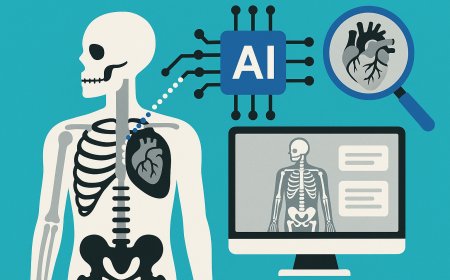
Researcher B: I don't disagree that transitions are costly or that distribution matters. My objection is to the deterministic framing — the idea that replacement is the inevitable endpoint. Look at what actually happens when professionals get access to powerful AI tools. Radiologists using AI diagnostic assistance catch more pathologies, review more cases, and spend more of their time on complex edge cases requiring clinical judgment. Lawyers with AI research tools handle more nuanced matters and dedicate more attention to client strategy. The augmentation pattern is empirically robust across a range of knowledge work domains.
Where the Evidence Points
Researcher A: The radiologist example is real, but it's worth noting that the same augmentation tools affect the number of radiologists required per unit of diagnostic output. Even if individual radiologists become more capable, the market may not require proportionally more radiologists. Productivity gains don't automatically translate to employment stability. The question isn't whether AI makes specific workers more effective — it's whether it shifts the demand curve for that category of labor upward or downward overall.
Researcher B: Fair point, and I think the honest answer is that it depends heavily on elasticity of demand. In healthcare, increased diagnostic capacity tends to induce demand — people get more scans, more follow-ups, more preventive monitoring. In other sectors with more inelastic demand, the same productivity gains might translate differently. The outcome isn't predetermined. It's shaped by policy choices, market structure, professional organization, and how the benefits of productivity growth are distributed.
Finding Common Ground
Researcher A: If that's the frame, then I'd agree that the augmentation vs. replacement outcome is not technologically determined — it's politically and institutionally determined. The technology creates capabilities; what we do with those capabilities is a choice. Which means the relevant questions aren't primarily about the technology itself.
Researcher B: Agreed. The question is not "will technology replace humans?" but rather "what institutional arrangements will we build to ensure that technological productivity gains are shared broadly, that transitions are supported rather than simply endured, and that human capacities continue to develop in relation to rather than in competition with machine capabilities?" Those are governance questions, not engineering ones. The technology is only part of the story.
This dialogue represents a synthesis of ongoing debates in the field. Neither position is fully settled, and the evidence continues to evolve as AI systems are deployed across more sectors of the economy.
What's Your Reaction?