

















































































Emergence: Why the Whole is Genuinely Greater Than the Sum of Its Parts
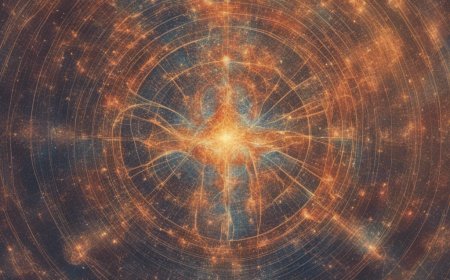
Emergence explains how complex patterns and behaviors arise from simple interactions between components. From ant colonies to human consciousness, this concept reshapes how we understand systems at every scale.


What Is Emergence?
Emergence is the phenomenon where complex, organized behaviors and properties arise from relatively simple interactions between components. It's the reason ant colonies can solve problems without a central authority, why consciousness emerges from neurons, and why weather patterns form from molecular interactions. The hallmark of emergence is that the whole genuinely possesses properties that cannot be predicted from analyzing the individual parts in isolation.


The Three Markers of True Emergence
Genuine emergence exhibits three critical characteristics. First, novelty: the system produces genuinely new patterns and behaviors not present in the components themselves. A neuron alone has no consciousness; a collection produces it. Second, coherence: despite the apparent chaos, emergent systems maintain stability and order. Third, irreducibility: understanding the full system requires studying the system level—reductionism alone fails.
Why It Matters Now
Understanding emergence is becoming increasingly critical in the 2020s. AI systems exhibit emergent behaviors that engineers didn't explicitly program. Climate systems show emergent tipping points where small changes create catastrophic shifts. Biological systems from immune responses to ecosystems demonstrate that controlling outcomes requires understanding emergence, not just controlling inputs.
From Ants to Artificial Intelligence
Ant colonies have no queen directing operations, yet they optimize foraging routes, build sophisticated nests, and adapt to threats. This decentralized intelligence arises purely from local pheromone signals and simple behavioral rules. Similarly, large language models show emergent capabilities—like reasoning or creativity—that appear only at sufficient scale, not coded explicitly. This pattern repeats across nature and technology: complexity emerges from simplicity.
The Philosophical Implications
Emergence challenges reductionism—the belief that understanding parts fully explains the whole. It suggests that at each level of organization, fundamentally new properties emerge. This has profound implications for fields from neuroscience to economics. It also raises uncomfortable questions: if consciousness is emergent from neurons, what does that mean for free will and identity? Understanding emergence forces us to reconsider the nature of reality itself.
What's Your Reaction?