





















































































The Power of Social Science to Alter Reality: A Thought Experiment
In this article, we explore an unconventional approach to social science, examining its potential to change perceived reality. Through detailed experimental designs, such as a color perception study, the article challenges established norms within the discipline. By considering how social science can redefine social constructs and cognitive frameworks, we propose a radical shift in understanding human behavior and societal norms. Emphasizing the potential of social science to impact real-world perceptions, this piece advocates for a reassessment of its role in shaping reality. The future outlook ponders the transformative possibilities of social science in a rapidly evolving world.


Consider a behavioral experiment where participants are placed in a room painted entirely in shades of green. They are told that the room is actually blue and asked to interact with objects and other participants under this pretense. Over time, most participants begin to discuss their experiences in terms of blue hues, ignoring the reality of the green surroundings. This scenario exemplifies a profound question: can social science fundamentally alter an individual's perception of reality?


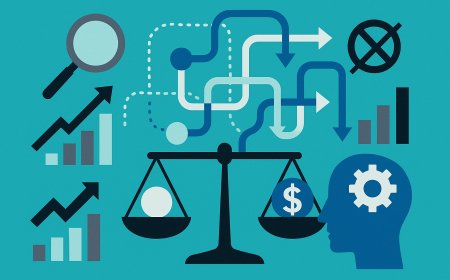
The potential of social science to influence human perception and behavior is immense. This capacity raises intriguing questions about the power dynamics embedded in societal norms and constructs. If social science can manipulate such perceptions, what ethical considerations arise? The implications resemble those in Orwellian narratives, where control over perception equates to control over reality itself. Despite the ethical quandaries, it invites a reevaluation of how social constructs are formed and perpetuated, offering a glimpse into the fluidity of reality as perceived through the collective human experience.
Behavioral Experiments as Tools of Perception Shift
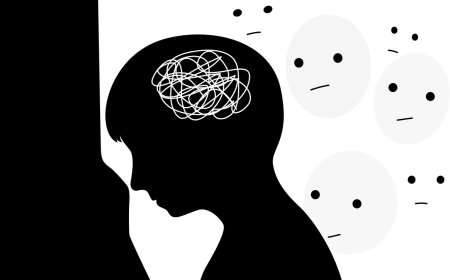
In a typical observational study, researchers could investigate the impacts of cognitive load on decision-making in a simulated environment. Participants are required to make rapid choices while being bombarded with stimuli designed to overload their cognitive capacities. The study aims to observe shifts in perception and decision-making processes under stress. Findings suggest that when cognitive load is increased, individuals are more susceptible to suggestion, thereby altering their perception of reality.
This experimental framework echoes historical precedents where propaganda and media have been employed to shape public perception on a mass scale. It demonstrates how, in a controlled setting, social science can mimic these effects to understand underlying mechanisms. Such insights not only inform cognitive psychology and behavioral economics but also hint at the potential for social science to redefine how reality is collectively understood.
Consider the implications of these findings for public policy and education. By understanding the malleability of perception, policymakers and educators could design interventions that promote critical thinking and resilience against manipulative external influences. Such initiatives could fortify society against the perils of misinformation and cognitive manipulation, highlighting the ethical responsibility of social scientists in wielding this power judiciously.
Redefining Social Constructs Through Social Science
Beyond individual perception, social science possesses the potential to redefine societal constructs. Consider a hypothetical study where social scientists alter the societal perception of age. Participants from diverse age groups are exposed to media and narratives emphasizing the relativity of age-related norms and roles. Over time, participants begin to adopt more fluid and less stereotypical views on age, challenging ingrained societal norms.
This concept mirrors cultural shifts witnessed in the 20th century, where changing narratives around gender and race led to significant societal transformations. The study illustrates that by altering the narrative, social science can catalyze changes in societal constructs. This power poses a question: if social constructs such as age are malleable, to what extent is reality itself a construct shaped by collective perception?
The societal implications of such power are vast. It suggests a framework for addressing systemic issues through narrative shifts, thereby reshaping public consciousness. Social science, therefore, emerges not just as a discipline of observation but as an active participant in crafting societal realities. This repositioning of social science as a creator of reality forces a reevaluation of its methods, objectives, and ethical boundaries.
The Ethical Frontiers of Social Science and Reality
The potential to alter reality through social science invites critical ethical considerations. In a speculative scenario, imagine a society that employs social science to engineer perceptions that promote societal cohesion at the expense of individual autonomy. Such a society might prioritize collective harmony, yet it risks infringing on personal freedom and truth.
This ethical dilemma underscores the pivotal role of ethical frameworks in guiding social scientific endeavors. The manipulation of perception must be balanced with respect for individual autonomy and truth. As we explore the boundaries of social science, the discipline must grapple with the implications of its power to redefine reality.
The ethical responsibilities of social scientists are further compounded by the rapid developments in technology that amplify the reach and impact of social scientific interventions. As digital platforms increasingly mediate human interaction, the role of social science in shaping digital realities grows ever more significant. It emphasizes the need for robust ethical guidelines to navigate these uncharted waters.
The exploration of social science's power to alter reality is both unsettling and inspiring. It presents an opportunity to harness this power for positive societal change while acknowledging the profound ethical responsibilities it entails. As the boundaries between perception and reality blur, social scientists are called to consider the future of their discipline with both caution and creativity.
In pondering the future, one might envisage a world where social science is not merely descriptive but inherently transformative. A discipline that shapes realities, not for control, but for the enrichment of human experience and understanding. This vision challenges social scientists to innovate while remaining ethically vigilant, ensuring that their work serves the greater good in a world where perception and reality increasingly converge.
What's Your Reaction?