









































































Beyond Cartesian Dualism: Envisioning a Unified Framework for Mind-Body Interactions
The traditional Cartesian dualism, which separates mind and body into distinct entities, has long been dominant in scientific thought. However, contemporary science reveals interconnectedness and interdependence between mental and physical realms. By exploring alternative frameworks that unify these aspects, such as systems theory and emergent properties, this article challenges the status quo and proposes a more integrated approach to understanding human existence. It calls for a paradigm shift in scientific inquiry, encouraging exploration beyond reductionist boundaries to embrace complexity and interconnectedness, thereby fostering a more comprehensive understanding of the human condition.


Introduction: The Legacy of Cartesian Dualism
The dichotomy between mind and body, a paradigm embedded in the bedrock of Cartesian philosophy, has long reigned over the discourse of science and philosophy. René Descartes, the progenitor of this dualistic worldview, posited that the immaterial mind and the physical body are distinct entities, interacting in a yet unexplained mechanism. This perspective gave birth to an enduring legacy, shaping centuries of scientific inquiry and philosophical debate. However, as we stand at the precipice of a new era of scientific understanding, the question arises: is this dualistic model still adequate for explaining the complexities of our existence?


The Limitations of a Dualistic Framework
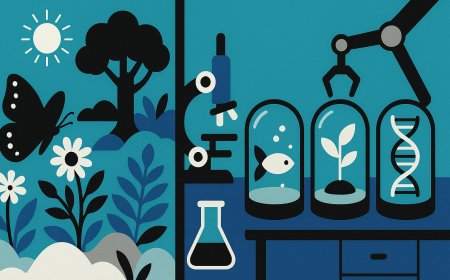
The Cartesian dualistic model, while foundational, presents limitations in its reductionist approach. It assumes a clear demarcation between the mental and the physical, neglecting the intricate ways in which they influence each other. This reductionism often leads to an oversimplified understanding of phenomena that are inherently complex and multifaceted. For instance, in medical science, the mind-body split can result in overlooking the psychological factors that impact physical health and vice versa.
Emerging Paradigms: Systems Theory and Beyond
In recent years, the inadequacies of the dualistic paradigm have prompted a shift towards more integrated frameworks. Systems theory, a field that emphasizes the interconnections and interdependencies within complex systems, offers a holistic approach that transcends traditional boundaries. It posits that the characteristics of the whole are not merely the sum of its parts, suggesting that mind-body interactions manifest as emergent properties that cannot be fully understood in isolation.
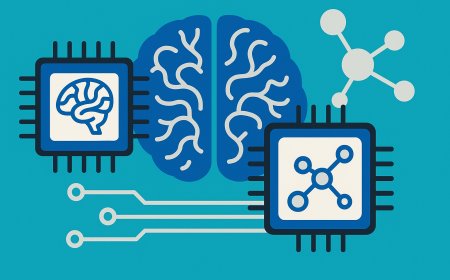
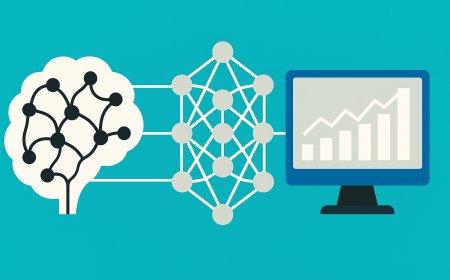
Furthermore, the field of consciousness studies has begun to explore the notion of consciousness as an emergent property of complex neural networks, a perspective that further blurs the lines between the mental and the physical. This approach challenges researchers to reconsider the strict segregation of mind and body, advocating for a model that acknowledges the dynamic interplay between these two spheres.
Towards a Unified Framework
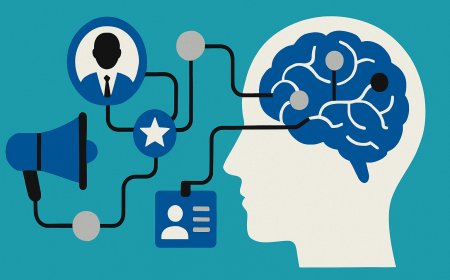
The pursuit of a unified framework for understanding mind-body interactions necessitates an openness to interdisciplinary approaches. Neuroscience, psychology, and even quantum physics offer insights into the nature of consciousness and the relationship between mind and body. By integrating these diverse fields of study, a more comprehensive model of human existence can emerge, one that is capable of accommodating the complexity and nuance of our lived experiences.
Moreover, such a framework would encourage a re-evaluation of scientific methodologies, moving away from rigid compartmentalization towards a more fluid and integrative approach. This shift could foster innovations in research and practice, encouraging scientists to embrace uncertainty and complexity as inherent aspects of the human condition.
Conclusion: Embracing Complexity and Interconnectedness
As we stand at the frontier of scientific exploration, the call to move beyond Cartesian dualism towards a more unified and integrative model of mind-body interactions is both timely and necessary. This paradigm shift holds the potential to deepen our understanding of human consciousness and the very nature of existence. By acknowledging the limitations of traditional dualistic thought and embracing the complexity and interconnectedness of the world, we pave the way for a future where scientific inquiry is enriched by a diversity of perspectives.
In this new paradigm, the mind and body are not separate entities operating in isolation, but rather integral components of a complex system. By fostering dialogue between disciplines and challenging entrenched assumptions, we can move towards a richer, more nuanced understanding of what it means to be human.
What's Your Reaction?